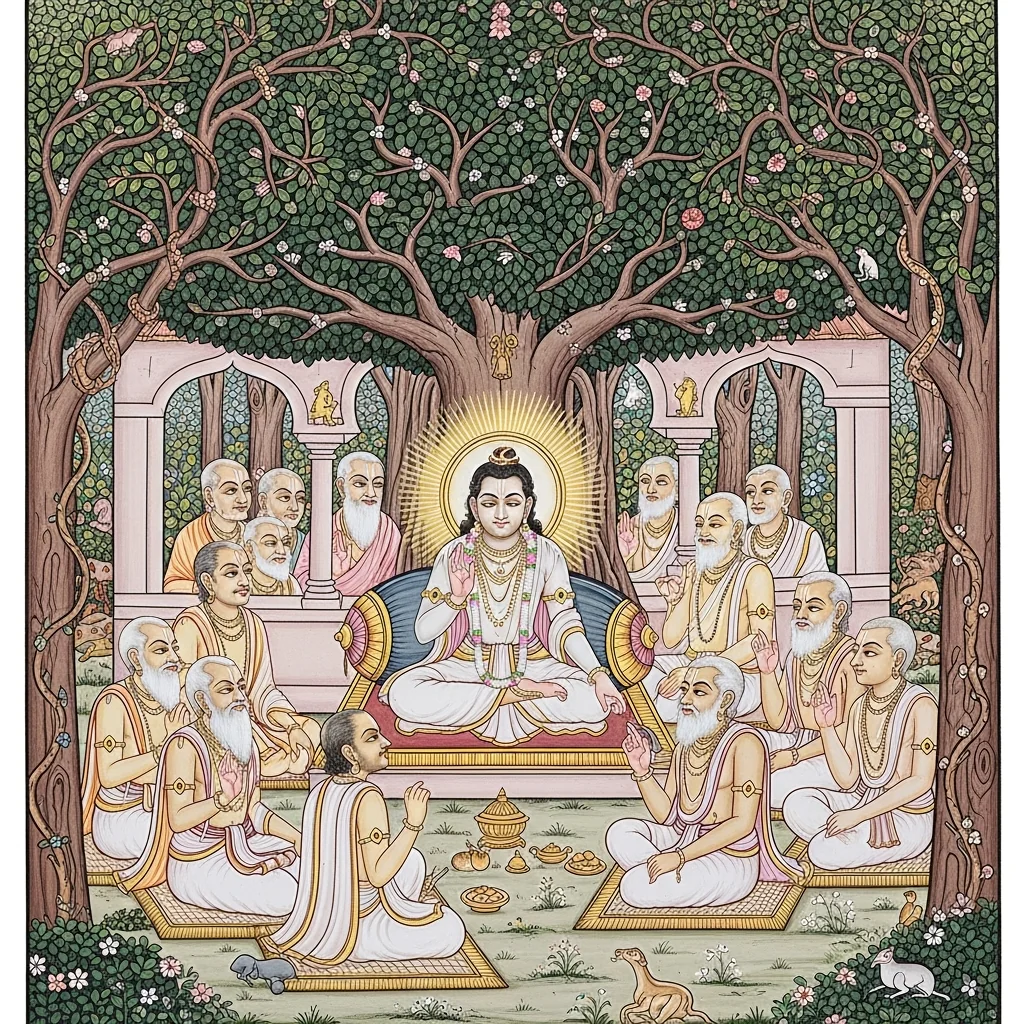
Adhyaya 32
Chapter 32 consolidates the Vāsudeva-centered teaching through a formal chain of speakers and listeners. Skanda relates that Nārada, after praising Īśāna, goes to Vyāsa’s āśrama (Śamyāprāsa) and teaches an “ekāntika dharma” to a questioner. The discourse is then set in Brahmā’s assembly, where gods, Pitṛs, and sages are instructed; Bhāskara (Sūrya) is said to hear again what Nārada had earlier heard from Nārāyaṇa. The teaching continues by successive transmission—among the Vālakhilyas, to Indra and the devas gathered on Meru, then through Asita to the Pitṛs, onward to King Śantanu, to Bhīṣma, and finally to Yudhiṣṭhira at the close of the Bhārata war. The chapter explains that hearing this māhātmya generates supreme bhakti aimed at liberation, and it identifies Vāsudeva as the ultimate cause and the source behind the vyūhas and avatāras. It culminates in a dense phalaśruti: the text is called the extracted “essence” of Purāṇic narration and the “rasa” of the Veda–Upaniṣads, Sāṅkhya–Yoga, Pañcarātra, and Dharmaśāstra. It promises purity of mind, destruction of inauspiciousness, and both worldly and liberative fruits (dharma, kāma, artha, mokṣa), including role-specific benefits and auspicious results for rulers and women. Sūta closes by urging learned listeners to worship the one Vāsudeva, ending with salutations to Vāsudeva as lord of Goloka and as a luminous principle that increases devotional joy.
Shlokas
No shlokas available for this adhyaya yet.