Adhyaya 3
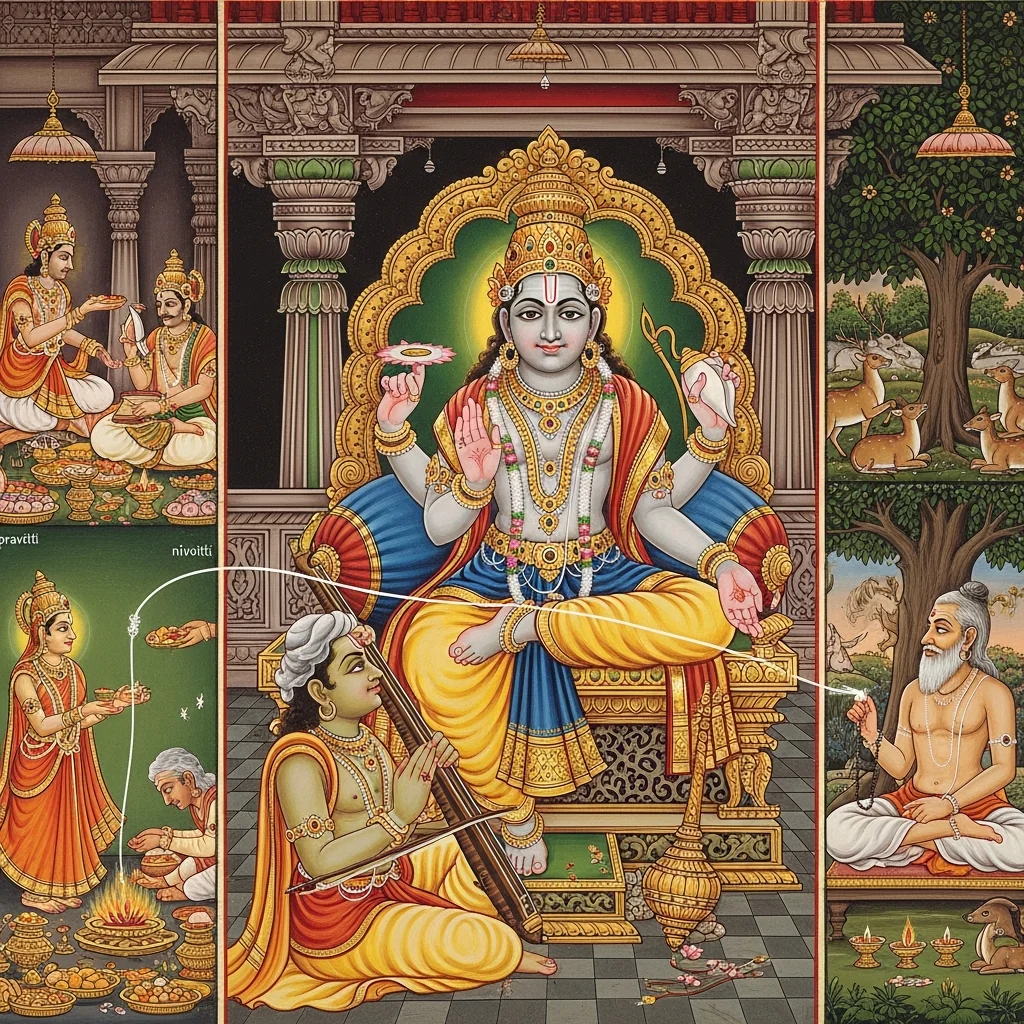
Adhyāya 3 unfolds as a doctrinal dialogue sparked by Nārada’s praise and question: if Vāsudeva is celebrated in the Vedas and Purāṇas as the eternal creator and ruler, and worshipped by all varṇas and āśramas in many forms, then which deity does even Vāsudeva worship as Father or God? Śrī Nārāyaṇa replies that the truth is subtle, and teaches in an Upaniṣadic vein that the Supreme is satya–jñāna–ananta brahman, beyond the three guṇas, manifest as the divine Puruṣa—Mahāpuruṣa—known as Vāsudeva, Nārāyaṇa, Viṣṇu, and Kṛṣṇa. He then sets forth the world’s “maryādā”: daiva and pitṛ duties should be performed, yet in their ultimate intent both are offered to the one Lord who is the Self of all. Vedic karma is classified into pravṛtti and nivṛtti: pravṛtti comprises social duties (marriage, lawful wealth, desire-based sacrifices, civic works) that yield finite heavenly rewards, ending when merit is exhausted and one returns to earth; nivṛtti comprises renunciation, self-control, tapas, and higher yajñas (brahma/yoga/jñāna/japa) leading to higher lokas beyond the tri-loka, though even these remain subject to cosmic dissolution. The decisive pivot is that karma, though guṇa-based, becomes “nirguṇa” when done as viṣṇu-sambandha—connected to Viṣṇu—producing imperishable (akṣaya) fruit and culminating in Bhagavān’s dhāma. Exemplars of pravṛtti (Prajāpatis, devas, ṛṣis) and nivṛtti (Sanaka and related sages, steadfast naiṣṭhika munis) are shown worshipping the same Lord within their respective disciplines. The chapter closes by stressing the Lord’s responsiveness: even small acts done with bhakti yield great, enduring results; exclusive devotees attain transcendent service with non-material bodies; and any genuine relation to Him arrests saṃsāra and supports success in karma-yoga and jñāna-yoga.
Shlokas
No shlokas available for this adhyaya yet.