Adhyaya 25
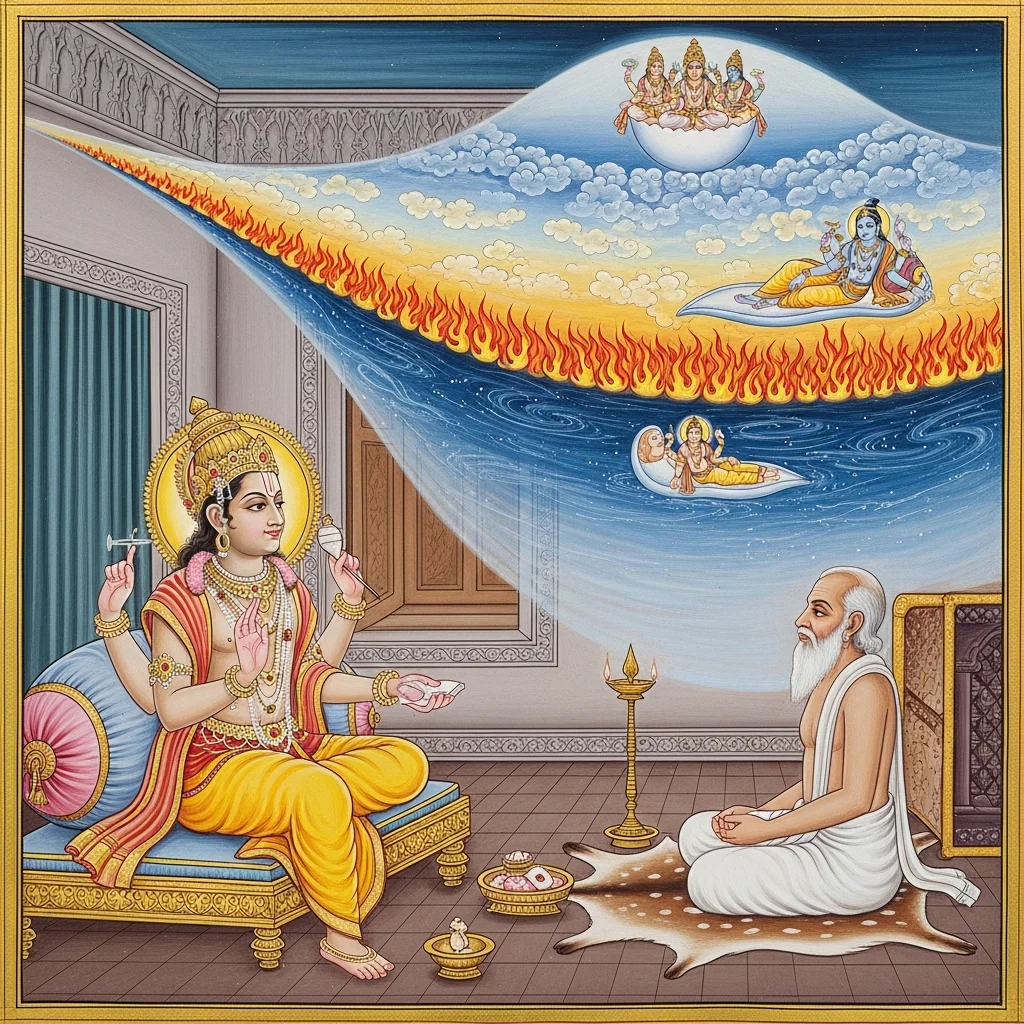
Chapter 25 is a tightly structured theological teaching delivered by Śrī Nārāyaṇa to a sage. It opens by defining vairāgya (dispassion) as a sustained lack of interest in perishable objects, supported by multiple pramāṇas—perception, inference, and scriptural testimony—showing the unreliability of conditioned forms. It then sets out four time-governed dissolutions (pralaya): (1) the “daily” or constant decay seen in bodily change and recurring suffering; (2) naimittika pralaya aligned with Brahmā’s day–night cycle, describing the succession of fourteen Manus, the drying of worlds, cosmic fire, and the ensuing inundation; (3) prākṛtika pralaya as the stepwise reabsorption of elements and faculties into prakṛti; and (4) ātyantika pralaya as the final cessation in which māyā, puruṣa, and time withdraw into the imperishable, leaving the One Lord alone. Having established impermanence and cosmic retraction, the chapter turns to practice: exclusive devotion to Vāsudeva is defined, the nine modes of bhakti are enumerated, and “ekāntika dharma” is praised as the most effective liberation-oriented discipline. It concludes with a strong Vāsudeva-centered fruit statement affirming the salvific power of the divine Name even when uttered imperfectly.
Shlokas
No shlokas available for this adhyaya yet.