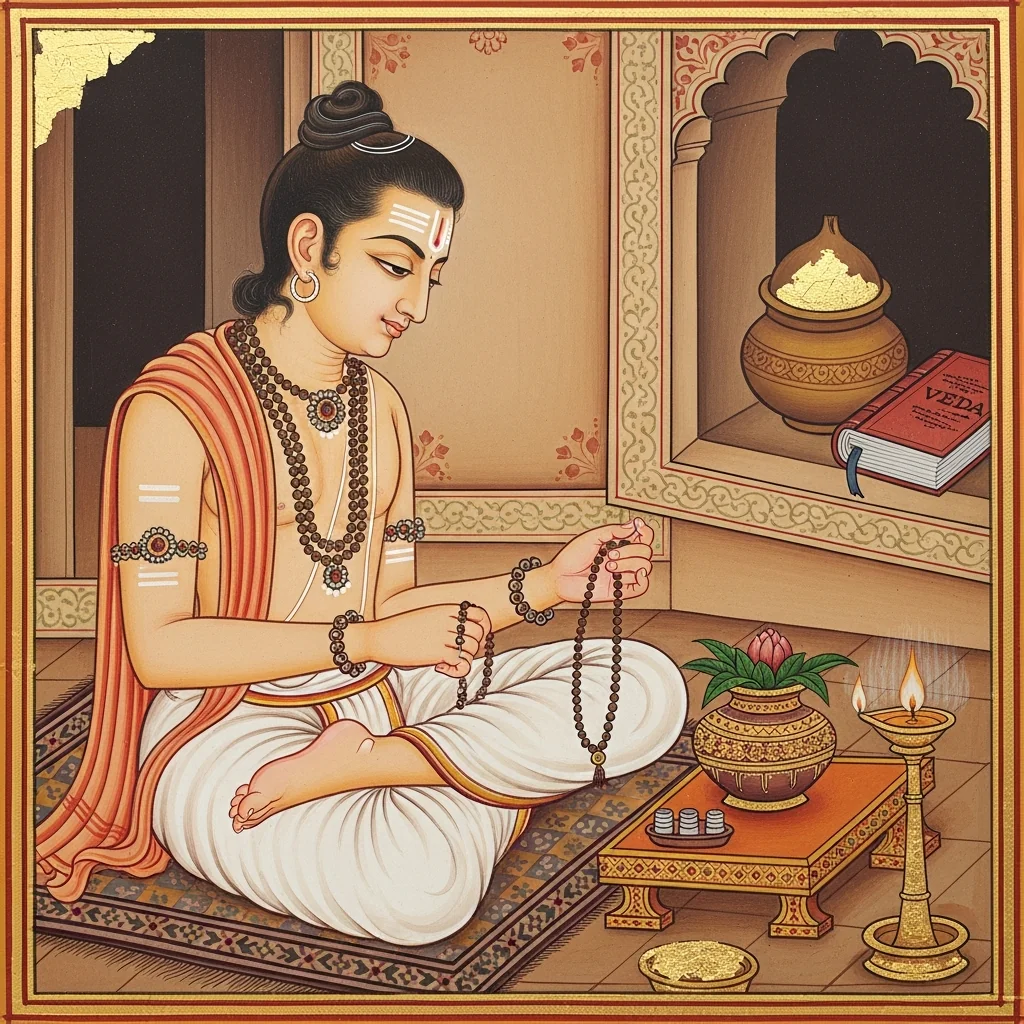
Adhyaya 21
This chapter, spoken by Śrī Nārāyaṇa, classifies the four āśramas (brahmacārin, gṛhastha, vānaprastha, yati) and then sets forth the dharma of the brahmacārin as a dvija refined by the saṃskāras. It prescribes study and residence—Veda study while living in the guru’s house—and commends virtues such as śauca (purity), self-control, truthfulness, and humility. It enumerates daily duties: morning and evening homa, a regulated alms-round, tri-kāla sandhyā, and daily worship of Viṣṇu. Obedience to the guru, moderation in food, and conduct-rules that uphold restraint and purity are detailed, including silence during bathing, eating, homa, and japa; limits on grooming and display; and avoidance of intoxicants and meat. A substantial section lays down strict boundaries against eroticized attention—avoiding looking at, touching, conversing with, or mentally dwelling on women with desire—while still maintaining respectful behavior toward the guru’s wife. The chapter closes with guidance on life transitions after study (renunciation or continued disciplined studentship), notes that certain lifelong-student vows are not eligible in Kali-yuga, and lists four forms of brahmacarya (prājāpatya, sāvitra, brāhma, naiṣṭhika) to be adopted according to one’s capacity.
Shlokas
No shlokas available for this adhyaya yet.