Adhyaya 95
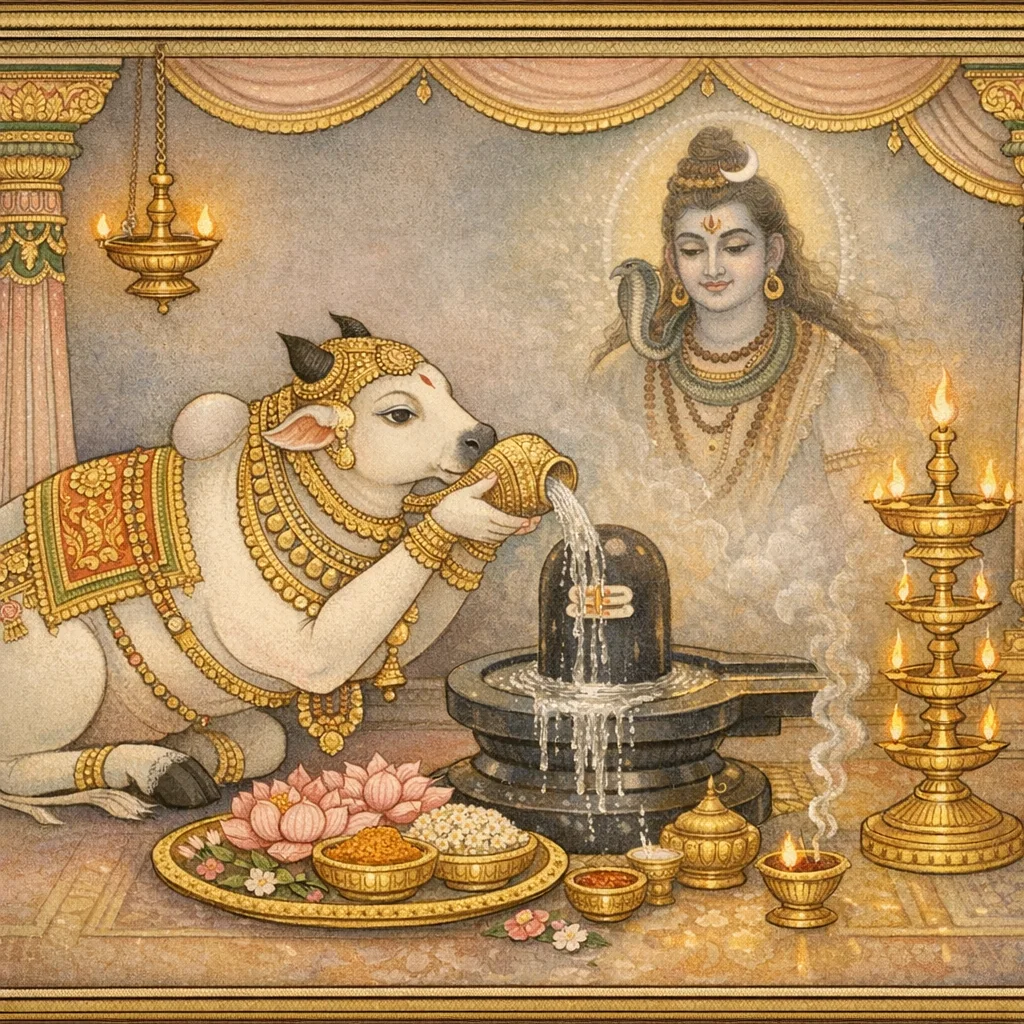
Chapter 95 records Īśvara’s instruction on a particular liṅga in Prabhāsa-kṣetra known as Mṛtyuñjayeśvara (the Mṛtyuñjaya Liṅga). It first identifies the shrine by directions and measured distances (dhanu counts), praising it as pāpa-ghna—one that removes demerit through mere sight and touch. It then gives the origin account: in an earlier yuga the place was called Nandīśvara, where a gaṇa named Nandin performed intense austerities, established a mahā-liṅga, and worshiped it regularly. By sustained mantra-japa—explicitly the Mahāmṛtyuñjaya mantra—Śiva is pleased and grants gaṇeśatva (rank among Śiva’s attendants), sāmīpya (saving proximity), and liberation-oriented boons. Next the chapter prescribes a liṅga-pūjā sequence: abhiṣeka with milk, curd, ghee, honey, and sugarcane juice; application of kuṅkuma; fragrant offerings (camphor, uśīra, musk essence), sandalwood, and flowers; dhūpa and aguru; clothing offerings according to one’s means; naivedya with a lamp; and concluding prostration. It ends with dāna instruction—gold to a Veda-versed brāhmaṇa—and a phalaśruti stating that correct observance yields the “fruit of birth,” universal pāpa-kṣaya, and wish-fulfillment.
Shlokas
Verse 1
ईश्वर उवाच । ततो गच्छेद्वरारोहे लिंगं मृत्युञ्जयेश्वरम् । तस्यैव वह्नि कोणस्थं धनुषां दशके स्थितम्
Īśvara said: Then, O fair-hipped one, one should go to the Liṅga called Mṛtyuñjayeśvara. It is situated in the fire-direction (southeast) of that very place, at a distance of ten dhanu-measures.
Verse 2
पश्चिमे सागरादित्यात्स्थितं धनुश्चतुष्टये । पापघ्नं सर्वजन्तूनां दर्शनात्स्पर्शनादपि
To the west of Sāgarāditya, it lies at a distance of four dhanu-measures. It destroys the sins of all beings—by sight, and even by touch.
Verse 3
पूर्वे युगे समाख्यातं नाम नन्दीश्वरेति च । यत्र तप्तं तपो घोरं नन्दिनाम्ना गणेन मे
In a former age it was renowned by the name “Nandīśvara”. There my gaṇa named Nandin performed fierce austerity.
Verse 4
प्रतिष्ठाप्य महालिंगं नित्यं पूजापरेण च । तत्र जप्तो महामन्त्रो मृत्युञ्जय इति श्रुतः
Having installed the great Liṅga and worshipping it daily with devoted attention, the great mantra recited there is renowned as the Mṛtyuñjaya—the “Conqueror of Death” mantra.
Verse 5
कोटीनां नियुतं देवि ततस्तुष्टो महेश्वरः । ददौ गणेशतां तस्य मुक्तिं सामीप्यगां तथा
O Goddess, after the worship had continued for ten million, Maheśvara was pleased and granted him the status of a gaṇa among Śiva’s attendants, and also liberation leading to sāmīpya—nearness to the Lord.
Verse 6
मृत्युञ्जयेन मन्त्रेण तस्य तुष्टो यतो हरः । तेन मृत्युञ्जयेशेति ख्यातं लिंगं धरातले
Because Hara (Śiva) was pleased with him through the Mṛtyuñjaya mantra, that Liṅga became famous on earth by the name “Mṛtyuñjayeśa”.
Verse 7
यस्तं पूजयते भक्त्या पश्येद्वा भावितात्मवान् । नाशयेत्तस्य पापानि सप्तजन्मार्जितान्यपि
Whoever worships that Liṅga with devotion—or even beholds it with a purified, contemplative mind—the Lord destroys that person’s sins, even those accumulated over seven births.
Verse 8
स्नापयेत्पयसा लिंगं दध्ना घृतयुतेन च । मधुनेक्षुरसेनैव कुंकुमेन विलेपयेत्
One should bathe the Liṅga with milk, and with curd mixed with ghee; and with honey and sugarcane-juice as well—then anoint it with saffron.
Verse 9
कर्पूरोशीर मिश्रेण मृगनाभिरसेन च । चन्दनेन सुगन्धेन पुष्पैः संपूजयेत्ततः
Then one should worship (the Liṅga) with fragrant sandalwood, with a mixture of camphor and uśīra, with musk-essence, and with flowers.
Verse 10
दद्याद्धूपं पुरो देवि ततो देवस्य चागुरुम् । वस्त्रैः संपूज्य विविधैरात्मवित्तानुसारतः
O Goddess, one should first offer incense; then offer fragrant aguru to the Deity, and worship with various garments according to one’s means.
Verse 11
नैवेद्यं परमान्नं च दत्त्वा दीपसमन्वितम् । अष्टांगं प्रणिपातं च ततः कार्यं च भक्तितः
After offering naivedya—especially fine food—together with a lamp, one should then perform prostration with the eight limbs, and thereafter carry out the remaining observances with devotion.
Verse 12
हेमदानं प्रदातव्यं ब्राह्मणे वेदपारगे
A gift of gold should be offered to a Brāhmaṇa who is well-versed in the Vedas.
Verse 13
एवं यात्रा भवेत्तस्य शास्त्रोक्ता नात्र संशयः । एवं कृत्वा नरो देवि लभते जन्मनः फलम्
Thus is his pilgrimage, as taught by the śāstras—of this there is no doubt. Having done so, O Goddess, a person attains the true fruit of human birth.
Verse 14
इति संक्षेपतः प्रोक्तं मृत्युञ्जयमहोदयम् । पापघ्नं सर्वजंतूनां सर्वकामफलप्रदम्
Thus, in brief, the great glory of Mṛtyuñjaya has been declared—a destroyer of sins for all living beings, and a bestower of the fruits of every rightful desire.
Verse 95
इति श्रीस्कांदे महापुराण एकाशीतिसाहस्र्यां संहितायां सप्तमे प्रभास खण्डे प्रथमे प्रभासक्षेत्रमाहात्म्य एकादशरुद्रमाहात्म्ये मृत्युञ्जयमाहात्म्यवर्णनंनाम पञ्चनवतितमोऽध्यायः
Thus ends the ninety-fifth chapter, entitled “The Description of the Greatness of Mṛtyuñjaya,” within the Ekādaśa-rudra Māhātmya, in the Prabhāsakṣetra Māhātmya, in the first part of the Prabhāsa Khaṇḍa of the Śrī Skanda Mahāpurāṇa (the Saṃhitā of eighty-one thousand verses).