Adhyaya 91
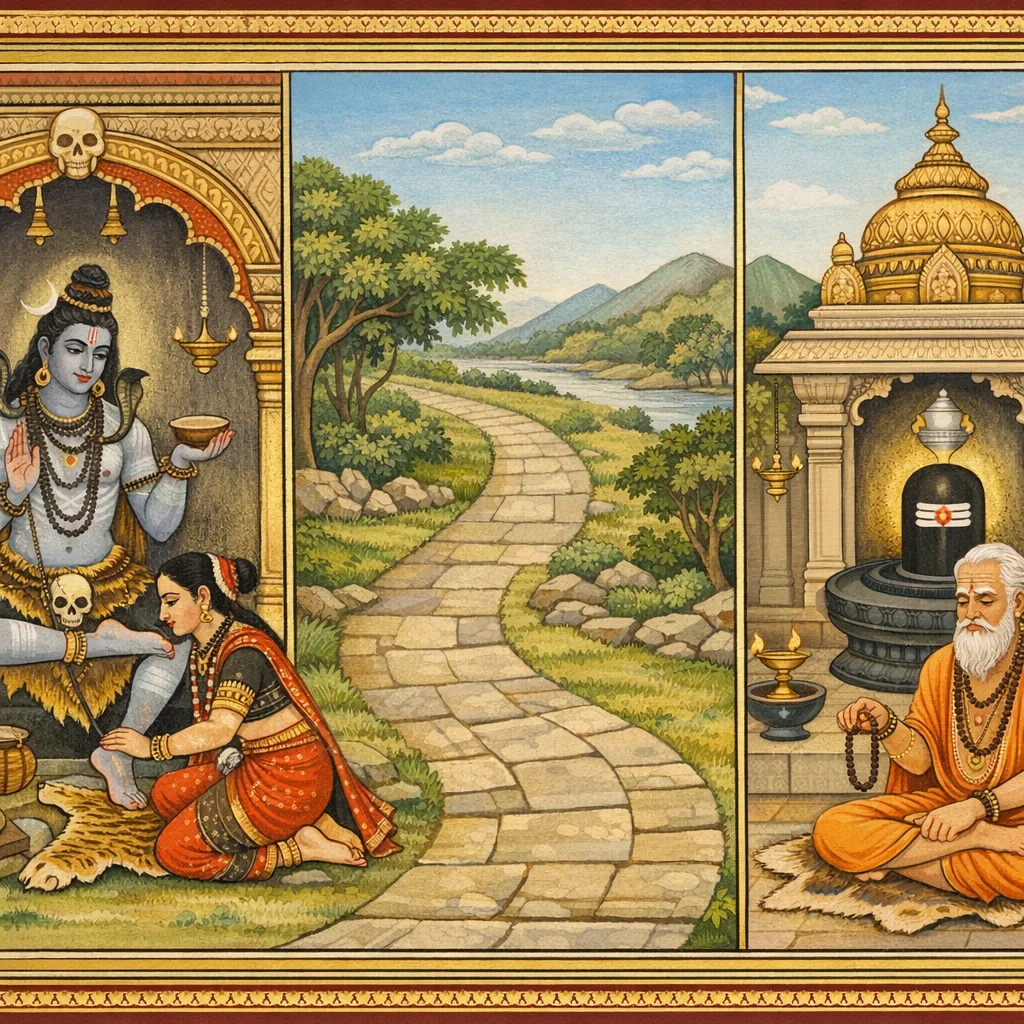
Īśvara instructs Devī to go to the imperishable Tr̥yambakeśvara, praised as the fifth among the Rudras and as a primordial divine form. The chapter maps the shrine within a precise sacred landscape: near Sāmbapura, with mention of Śikhāṇḍīśvara from an earlier yuga, and beside a Kapālikā-sthāna where Kapāleśvara, in liṅga form, removes wrongdoing through darśana (holy sight) and sparśana (sacred touch). Tr̥yambakeśvara is placed to the northeast at a measured distance and is lauded as universally beneficent and a giver of desired results. A sage named Guru performs intense tapas and recites the Tr̥yambaka mantra according to divinely set rules, worshiping Śaṅkara three times daily; by Śiva’s grace he attains divine lordship and establishes the shrine’s name. The phala is then declared: sins are destroyed by proximity, worship, and mantra-japa; faults are removed through devotion with the Vāmadeva mantra; and special power is gained on the night of Caitra-śukla-caturdaśī by keeping vigil with pūjā, praise, and recitation. Finally, those seeking the full fruit of pilgrimage are enjoined to gift a cow, and the māhātmya is affirmed as puṇya-producing and pāpa-destroying.
Shlokas
Verse 1
ईश्वर उवाच । ततो गच्छेन्महादेवि त्र्यंबकेश्वरमव्ययम् । तत्पंचमं समाख्यातं रुद्राणामादिदैवतम्
Īśvara said: Then, O Mahādevī, one should proceed to imperishable Tryambakeśvara. He is declared to be the fifth (in the sequence), the primal divinity among the Rudras.
Verse 2
शिखंडीश्वरमाख्यातं पूर्वं त्रेतायुगे प्रिये । तच्चाद्याहं प्रवक्ष्यामि यथा संज्ञायते नरैः
Beloved, in the Tretā age it was formerly renowned as Śikhaṇḍīśvara. Now I shall explain it, as it is recognized by people today.
Verse 3
अस्ति सांबपुरं देवि तत्रस्थं परमेश्वरि । तस्यैवोत्तरदिग्भागे स्थानं कापालिकं स्मृतम्
O Goddess, there is a city there called Sāmbapura, O Supreme Lady. In its northern quarter is remembered a place known as the Kā pālika-sthāna.
Verse 4
कपालेश्वरनामा च यत्रेशो लिंगमूर्तिमान् । संस्थितः पापनाशाय दर्शनात्स्पर्शनान्नृणाम्
There, the Lord, embodied as a Liṅga, is established under the name Kapāleśvara, for the destruction of human sins—by mere sight, and even by touch.
Verse 5
तस्मादीशानदिग्भागे धनुषां षोडशांतरे । त्र्यंबकेश्वरनामा च तत्र रुद्रः स्थितः स्वयम्
From that place, in the north-eastern quarter, at a distance of sixteen bow-lengths, Rudra Himself abides there, known as Tryambakeśvara.
Verse 6
सर्वानुग्रहकर्त्ता च सर्वकामफलप्रदः । पुरा यत्रातपद्देवि तपो घोरं सुदुष्करम् । गुरुर्नामा ऋषिवरो देवदानवदुःसहम्
He bestows grace upon all and grants the fruits of every rightful desire. O Goddess, long ago at that very place, the eminent sage named Guru performed fierce and exceedingly difficult austerity—an ordeal intolerable even to gods and demons.
Verse 7
कोटीनां त्रितयं येन त्र्यंबको मंत्रनायकः । जप्तो दिव्येन विधिना त्रिकालं पूज्य शंकरम्
By him the Tryambaka mantra—the foremost among mantras—was recited three crores of times, by a divine rite, while worshipping Śaṅkara at the three times of day.
Verse 8
ततः प्रसाद्य देवेशं दिव्यैश्वर्यमवाप सः । चक्रे नाम स्वयं तस्य त्र्यंबकेश्वरमव्ययम्
Then, having pleased the Lord of the gods, he attained divine lordship; and he himself bestowed upon that (Liṅga) the imperishable name “Tryambakeśvara”.
Verse 9
जप्त्वा तु त्र्यंबकं मंत्रं यतः सिद्धिमवाप सः । दिव्याष्टगुणमैश्वर्यं तेनासौ त्र्यंबकेश्वरः
Because he attained success by reciting the Tryambaka mantra, he gained divine sovereignty endowed with eight excellences; therefore that (Liṅga) is known as Tryambakeśvara.
Verse 10
सर्वपातक विध्वंसी दर्शनात्स्पर्शनादपि । यस्त्र्यंबकं जपेद्विप्रस्त्र्यंबकेश्वरसंनिधौ । स प्राप्नोति महासिद्धिं प्रत्यक्षं रुद्र एव सः
It destroys all sins even by sight and by touch. Any brāhmaṇa who recites the Tryambaka (mantra) in the presence of Tryambakeśvara attains great siddhi—manifestly, he becomes Rudra himself.
Verse 11
दर्शनादपि तस्याथ पापं याति सहस्रधा । यस्तं पूजयते भक्त्या विधिना भावमास्थितः । वामदेवेन मंत्रेण स मुक्तः पातकैर्भवेत्
Even by seeing him, sin is shattered a thousandfold. One who worships him with devotion, according to proper rite and with the right inner disposition, is freed from sins by means of the Vāmadeva mantra.
Verse 12
चैत्रशुक्लचतुर्दश्यां तत्र यो जागृयान्निशि । पूजास्तुतिकथाभिश्च स प्राप्नोतीप्सितं फलम्
On the fourteenth lunar day of the bright fortnight of Caitra, whoever keeps vigil there at night—engaging in worship, hymns, and sacred recitations—obtains the desired fruit.
Verse 13
धेनुस्तत्रैव दातव्या सम्यग्यात्राफलेप्सुभिः
Those who seek the complete fruit of the pilgrimage should donate a cow right there at that sacred place.
Verse 14
इति ते कथितं देवि माहात्म्यं पापनाशनम् । त्र्यंबकेश्वररुद्रस्य नृणां पुण्यफलप्रदम्
Thus, O Goddess, I have told you the sin-destroying greatness of Tryaṃbakeśvara Rudra, bestowing upon people the fruits of merit.
Verse 91
इति श्रीस्कांदे महापुराण एकाशीतिसाहस्र्यां संहितायां सप्तमे प्रभास खण्डे प्रथमे प्रभासक्षेत्रमाहात्म्य एकादशरुद्रमाहात्म्ये त्र्यंबकेश्वरमाहात्म्यवर्णनंनामैकोनवतितमोऽध्यायः
Thus ends the ninety-first chapter, called “The Description of the Greatness of Tryaṃbakeśvara,” in the Prabhāsa Khaṇḍa of the Śrī Skanda Mahāpurāṇa, within the Prabhāsakṣetra Māhātmya and the Ekādaśa-Rudra Māhātmya.