Adhyaya 88
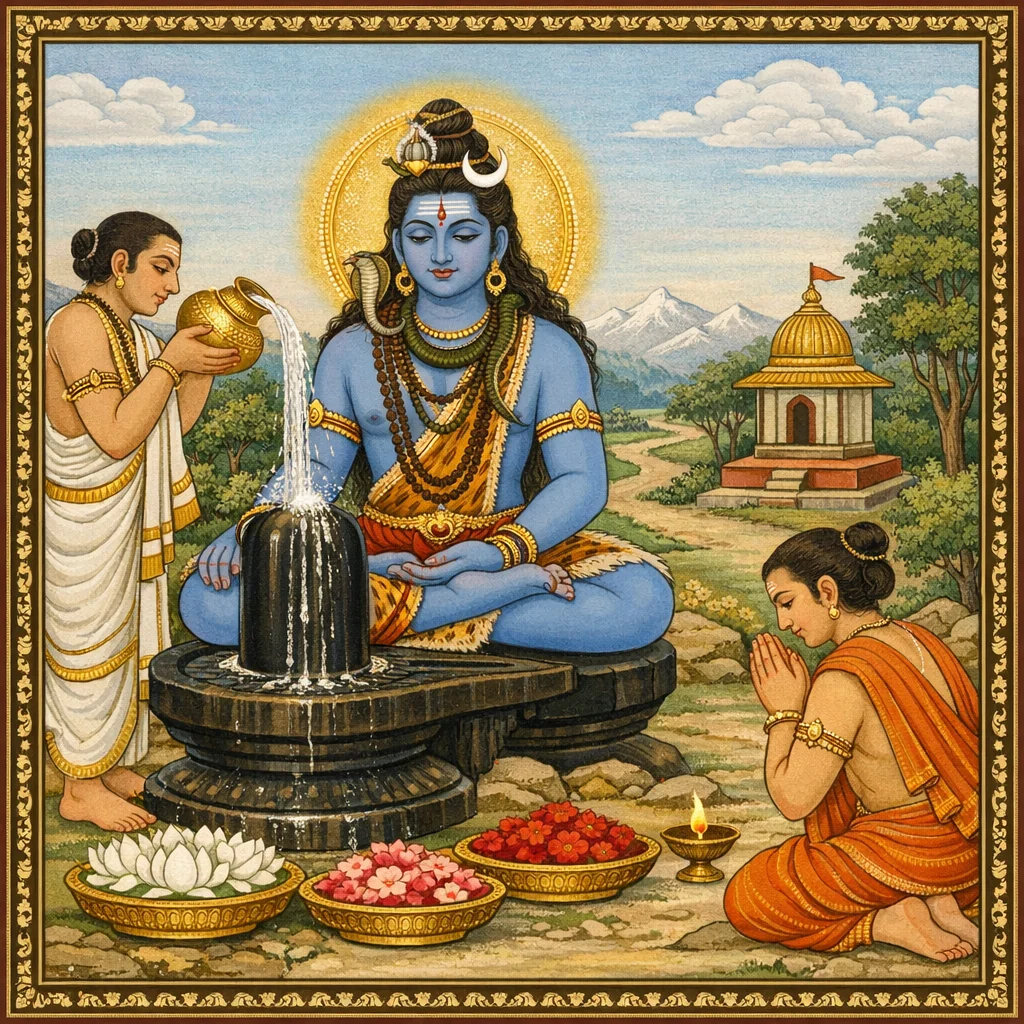
Adhyāya 88 records Īśvara’s instruction to Mahādevī on sacred geography, directing pilgrims to the shrine of Nīlarudra, praised as a “second” Nīlarudra. The location is given with exactness: north of Bhūteśa, at a traditional distance marker described as the “sixteenth” measure connected with the dhanuṣ (bow) standard. The chapter’s core sets out the worship sequence: ceremonial bathing of the mahāliṅga, mantra-based pūjā with the Īśa-mantra, offerings of kumuda and utpala flowers, followed by pradakṣiṇā and namaskāra. The phala declares that this observance yields merit comparable to the Rājasūya, and adds a dāna requirement—donation of a bull (vṛṣa) for those seeking the full fruit of the yātrā. In closing, the epithet “Nīlarudra” is explained through an ancient deed: the deity once slew a dark, collyrium-hued daitya named Āntaka, and is remembered as “Nīlarudra,” also in connection with women’s lamentation (rodana). This māhātmya is praised as sin-destroying and to be heard and received with śraddhā by those eager for darśana.
Shlokas
Verse 1
ईश्वर उवाच । ततो गच्छेन्महादेवि नीलरुद्रं द्वितीयकम् । भूतेशादुत्तरे भागे धनुषां षोडशे स्थितम्
Īśvara said: “Then, O great goddess, one should go to Nīlarudra, the second (of the Rudras). It is situated to the north of Bhūteśvara, at a distance of sixteen dhanuṣ (bow-lengths).”
Verse 2
महालिंगं महादेवि गणगंधर्वपूजितम् । संस्नाप्य तं विधानेन ईशमंत्रेण पूजयेत्
“(There is) a great liṅga, O Mahādevī, worshipped by the Gaṇas and Gandharvas. After bathing it according to due rite, one should worship it with the Īśa-mantra.”
Verse 3
कुमुदोत्पलसंभारैः सम्यक्संभावितात्मवान् । कृत्वा प्रदक्षिणां तस्य नमस्कारेण पूजयेत्
With offerings of kumuda and utpala flowers, and with a mind well-composed in reverence, having circumambulated him (pradakṣiṇā), one should worship with salutations and prostrations.
Verse 4
एवं कृत्वा नरो देवि राजसूयफलं लभेत् । वृषस्तत्रैव दातव्यः सम्यग्यात्राफलेप्सुभिः
Having done so, O Goddess, a man attains merit equal to the fruit of the Rājasūya sacrifice. And those who seek the full reward of the pilgrimage should gift a bull right there.
Verse 5
नीलांजननिभो दैत्यो निहतश्चांतकः पुरा । तस्य रोदयिता स्त्रीणां नीलरुद्रस्ततः स्मृतः
Formerly a daitya named Antaka, dark as blue collyrium, was slain. Because he became the cause of women’s lamentation, he is therefore remembered as “Nīlarudra”.
Verse 6
तस्य संक्षेपतः प्रोक्तं माहात्म्यं पापनाशनम् । सम्यक्छ्रद्धान्वितैः प्राप्यं श्राव्यं तद्दर्शनोत्सुकैः
Thus its greatness has been stated in brief, and it destroys sin. It should be approached with true faith, and heard by those eager for its darśana.
Verse 88
इतिश्रीस्कांदे महापुराण एकाशीतिसाहस्र्यां संहितायां सप्तमे प्रभासखण्डे प्रथमे प्रभासक्षेत्रमाहात्म्य एकादशरुद्रमाहात्म्ये नील रुद्रमाहात्म्यवर्णनंनामाष्टाशीतितमोऽध्यायः
Thus ends the eighty-eighth chapter, entitled “The Description of the Greatness of Nīlarudra,” in the holy Skanda Mahāpurāṇa, within the Prabhāsa Khaṇḍa, in the Prabhāsa-kṣetra Māhātmya and the glorification of the Eleven Rudras.