Adhyaya 82
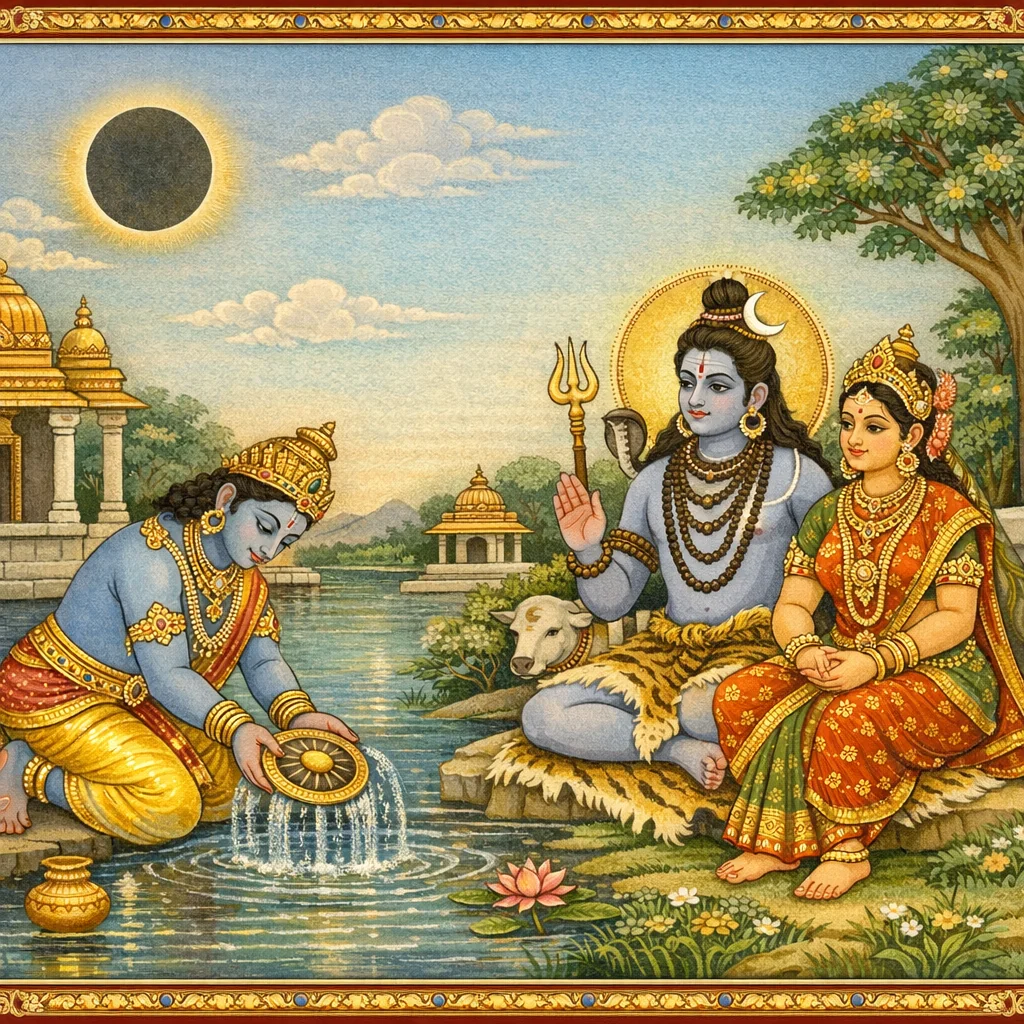
The chapter unfolds as a dialogue: Devī asks Īśvara to explain the meaning, location, and power of “Cakratīrtha.” Īśvara recounts a mythic episode from a deva–asura war: Hari (Viṣṇu), after slaying the demons, washes the blood-stained Sudarśana-cakra at a particular spot; that cleansing becomes the sanctifying act by which the tīrtha is established. He then describes the site’s inner plenitude: countless subsidiary tīrthas abide there, and its ritual potency is especially heightened on Ekādaśī and during solar and lunar eclipses. Bathing there yields the combined fruit of bathing in all tīrthas, and gifts given there are said to bear immeasurable merit. The region is declared a Viṣṇu-kṣetra with a defined extent. The chapter lists kalpa-variant names—Koṭitīrtha, Śrīnidhāna, Śatadhāra, and Cakratīrtha—and emphasizes that austerities, Vedic study, agnihotra observance, śrāddha, and expiatory vows (prāyaścitta) performed there multiply in merit beyond other places. It concludes with a broad phalāśruti: the tīrtha destroys sin, fulfills wishes, extends grace even to marginalized births, and promises an exalted destiny to those who die there.
Shlokas
Verse 1
। देव्युवाच । चक्रतीर्थेति किं नाम त्वया प्रोक्तं वृषध्वज । कुत्र तिष्ठति तत्तीर्थं किं प्रभावं वदस्व मे
The Goddess said: “O Bull-bannered Lord, you spoke of ‘Cakra-tīrtha’—what is it by name? Where is that sacred ford situated, and what is its power? Tell me.”
Verse 2
ईश्वर उवाच । पुरा देवासुरे युद्धे हत्वा दैत्याञ्जनार्द्दनः । चक्रं प्रक्षालयामास तत्र वै रक्तरंजितम्
Īśvara said: “Formerly, in the war between gods and demons, Janārdana, having slain the daityas, washed his discus there—stained with blood.”
Verse 3
अष्टकोटिसुतीर्थानि तत्रानीय स्वयं हरिः । तीर्थे प्रकल्पयामास शुद्धिं कृत्वा सुदर्शने । तीर्थस्य चक्रे नामापि चकतीर्थमिति श्रुतम्
Hari himself brought there eight crores of excellent tīrthas and established them in that place. Having purified Sudarśana, he bestowed a name upon that sacred ford, and it became renowned as “Cakra-tīrtha.”
Verse 4
अष्टायुतानि तीर्थानामष्टौ कोट्यस्तथैव च । तत्र संति महादेवि चक्रतीर्थे न संशयः
O Mahādevī, in Cakra-tīrtha there are eight myriads of tīrthas—and likewise eight crores—present there; of this there is no doubt.
Verse 5
यस्तत्र कुरुते स्नानमेकचित्तो नरोत्तमः । सर्वतीर्थाभिषेकस्य स प्राप्नोत्यखिलं फलम्
O best of men, whoever bathes there with a one-pointed mind obtains the entire fruit that comes from ritual bathing (abhiṣeka) at all sacred fords (tīrthas).
Verse 6
तीर्थानामष्टकोटिस्तु निवसंति वरानने । एकादश्यां विशेषेण चन्द्रसूर्यग्रहे तथा
O fair-faced one, eight crores of tīrthas dwell there—most especially on the eleventh lunar day (Ekādaśī), and likewise at lunar and solar eclipses.
Verse 7
तत्र स्नात्वा महादेवि यज्ञकोटिफलं लभेत् । तस्यैव कल्पनामानि शृणु ते कथयाम्यहम्
O Mahādevī, by bathing there one gains the fruit of a koṭi of sacrifices—ten million yajñas. Now hear from me the names by which that very tīrtha is known in the various ages (kalpas).
Verse 8
कोटितीर्थं पूर्वकल्पे श्रीनिधानं द्वितीयके । तृतीये शतधारं च चक्रतीर्थं चतुर्थके
In the former kalpa it was called Koṭitīrtha; in the second, Śrīnidhāna; in the third, Śatadhārā; and in the fourth, Cakratīrtha.
Verse 9
एवं ते कल्पनामानि ह्यतीतान्यखिलानि वै । कथितान्येवमन्यानि ज्ञेयानि विबुधैः क्रमात्
Thus, all those names belonging to past kalpas have been told to you; the remaining names too should be understood by the wise in due order.
Verse 10
तत्र यद्दीयते दानं तस्य संख्या न विद्यते । अर्द्धक्रोशप्रमाणं हि विष्णुक्षेत्रं प्रकीर्त्तितम्
Whatever gift is given there becomes beyond measure in its reckoning. That Viṣṇu-kṣetra is proclaimed to extend for half a krośa in dimension.
Verse 11
ब्रह्महत्या नोपसर्पेत्सत्यमेतन्मयोदितम् । मासोपवासी तत्क्षेत्रे अग्निहोत्री यतव्रतः
The sin of brahma-hatyā does not approach (one there)—this is the truth I declare. In that kṣetra, one who fasts for a month, maintains the agnihotra, and keeps disciplined vows—
Verse 12
स्वाध्यायी यज्ञयाजी च तपश्चांद्रायणा दिकम् । तिलोदकं पितॄणां च श्राद्धं च विधिपूर्वकम्
—(such a person becomes) devoted to sacred study (svādhyāya) and to the performance of sacrifices (yajña); engaged in austerities such as the Cāndrāyaṇa; offering sesame-water (tilodaka) to the ancestors; and performing śrāddha according to proper rule.
Verse 13
एकरात्रं त्रिरात्रं वा कृच्छ्रं सांतपनं तथा । मासोपवासं तच्चैव अन्यद्वा पुण्यकर्म तत्
Whether a fast of one night or three nights, the Kṛcchra and Sāṃtapana penances, a month-long fast, or any other meritorious rite—performed there, all becomes especially holy.
Verse 14
दैत्यारिक्षेत्रमासाद्य यत्किंचित्कुरुते नरः । अन्यक्षेत्रात्कोटिगुणं पुण्यं भूयान्न संशयः
Having reached Daityāri-kṣetra, whatever a person does—even a little—yields merit a crore times greater than in other sacred places; of this there is no doubt.
Verse 15
सुदर्शने वरे तीर्थे गोदानं तत्र दापयेत् । सम्यग्यात्राफलप्रेप्सुः सर्वपापविशुद्धये
At that excellent sacred ford called Sudarśana, one who seeks the full fruit of pilgrimage and longs for cleansing from all sins should have the gift of a cow (go-dāna) bestowed there.
Verse 16
चंडालः श्वपचो वाऽपि तिर्यग्योनिगतस्तथा । तस्मिंस्तीर्थे मृतः सम्यगाच्युतं लोकमाप्नुयात्
Even a caṇḍāla, a śvapaca, or one born in an animal womb—if such a being dies rightly at that tīrtha—attains the world of Acyuta, the Imperishable Lord.
Verse 17
इति संक्षेपतः प्रोक्तं चक्रतीर्थसमुद्भवम् । माहात्म्यं सर्वपापघ्नं सर्वकामफलप्रदम्
Thus, in brief, has been told the account of the arising of Cakratīrtha—its māhātmya, which destroys all sins and grants the fruits of every worthy desire.
Verse 82
इति श्रीस्कान्दे महापुराण एकाशीतिसाहस्र्यां संहितायां सप्तमे प्रभासखण्डे प्रथमे प्रभासक्षेत्रमाहात्म्ये दैत्यसूदन माहात्म्यप्रसंगेन चक्रतीर्थोत्पत्तिवृत्तान्तमाहात्म्यवर्णनंनाम द्व्यशीतितमोऽध्यायः
Thus ends the eighty-second chapter, entitled “The Description of the Glory of the Account of Cakratīrtha’s Origin, in connection with the episode of Daityasūdana,” in the first Prabhāsakṣetra Māhātmya of the seventh Prabhāsa Khaṇḍa of the Śrī Skanda Mahāpurāṇa, within the Ekāśītisāhasrī Saṃhitā.