Adhyaya 79
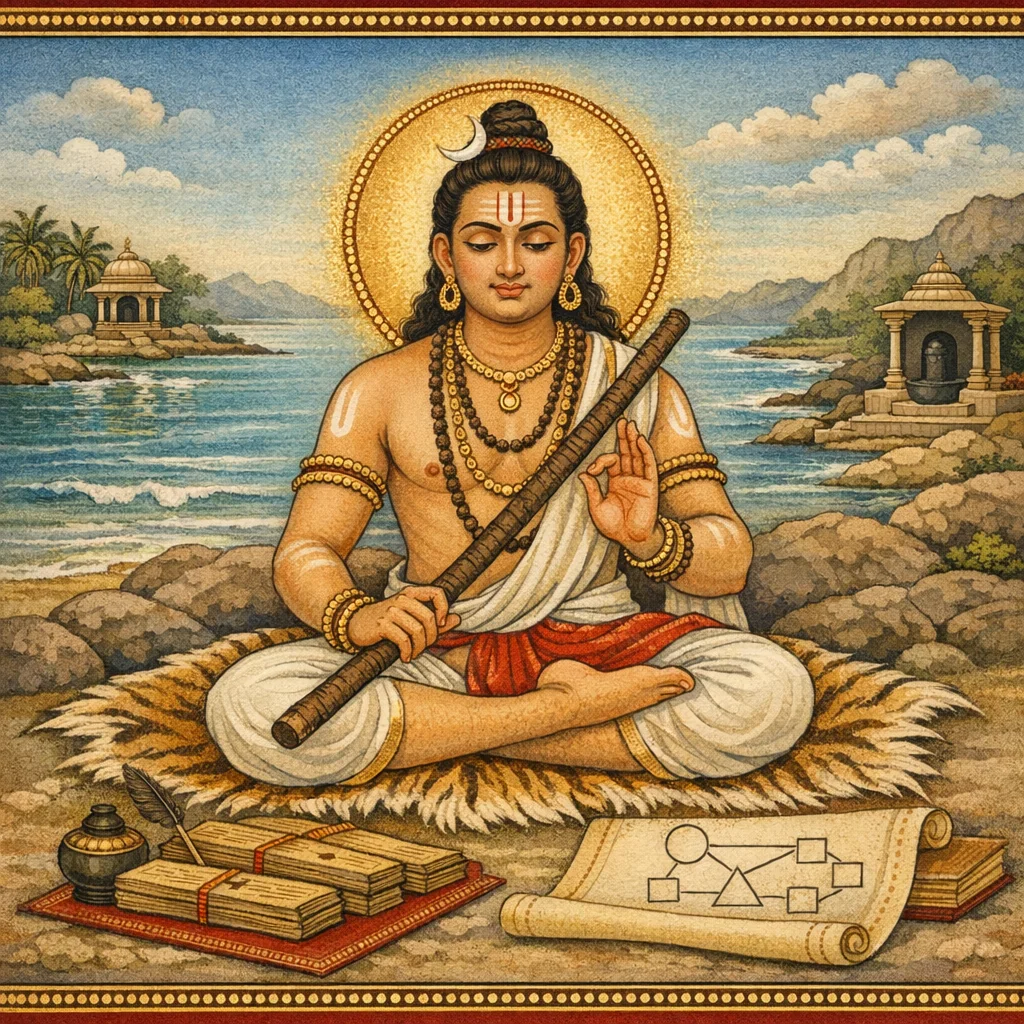
This adhyāya, spoken by Īśvara, turns attention to Lakulīśa/Lakulīśvara as a revered presence within Prabhāsa-kṣetra. It locates the deity to the west at a distance measured as “dhanusāṃ saptake,” and praises his tranquil, beneficent form—explicitly as pāpa-ghna, the remover of sin for all beings—linking the site with divine descent and manifestation in the great sacred field. It then portrays Lakulīśa as an austere ascetic and teacher: performing intense tapas, granting dīkṣā to disciples, and repeatedly instructing them in multiple śāstric systems, including Nyāya and Vaiśeṣika, culminating in parā siddhi, the supreme attainment. The chapter ends with guidance for devotees: worship should be done properly; its efficacy is heightened in Kārttika and during Uttarāyaṇa; and vidyā-dāna—gifting or imparting learning—should be offered to a qualified brāhmaṇa. The stated fruit is repeated auspicious births in prosperous brāhmaṇa lineages, marked by intelligence and prosperity.
Shlokas
Verse 1
ईश्वर उवाच । ततो गच्छेन्महादेवि लकुलीशं महाप्रभम् । तस्य पश्चिमदिग्भागे धनुषां सप्तके स्थितम्
Īśvara said: “Then, O great Goddess, one should go to Lakulīśa, mighty and radiant. He is situated in the western quarter, at a distance of seven bow-lengths.”
Verse 2
पापघ्नं सर्वजंतूनां शांतं मूर्तिस्थितं प्रभुम् । समायातं महाक्षेत्रे तत्र कायावरोहणात्
From that holy descent (kāyāvarohaṇa), the Lord—peaceful, established in a manifest form, and the destroyer of sins for all beings—came to that great sacred field (Mahākṣetra/Prabhāsa).
Verse 3
कृत्वा तत्र तपश्चोग्रं दीक्षयित्वात्मशिष्य कान् । कुशकादींश्च चतुर उक्त्वा शास्त्राण्यनेकशः
There he performed fierce austerities; he bestowed dīkṣā upon his own disciples, instructed the four skilled teachers beginning with Kuśaka, and expounded the śāstras many times over.
Verse 4
न्यायवैशेषिकादीनि ततः सिद्धिं परां गतः । एवं ज्ञात्वा तु यः सम्यक्तं समर्चयते नरः
Having established and taught Nyāya, Vaiśeṣika, and the other disciplines, he then attained the highest perfection. Knowing this, the person who worships him rightly, with proper understanding, worships in the true manner.
Verse 5
कार्त्तिक्यां तु विशेषेण अयने चोत्तरेपि वा । विद्यादानं च तत्रैव दद्याद्विप्राय शालिने
Especially in the month of Kārttika—or again in the season of uttarāyaṇa—one should, in that very place, bestow the gift of learning, offering it to a worthy and disciplined brāhmaṇa.
Verse 6
सप्तजन्मानि विप्रस्य धनाढ्यस्य कुले शुभे । जायते मतिमान्धीमाञ्छ्रीमानेवं पुनःपुनः
For seven births, one is born again and again in the auspicious family of a wealthy brāhmaṇa—intelligent, wise, and endowed with prosperity.
Verse 79
इति श्रीस्कांदे महापुराण एकाशीतिसाहस्र्यां संहितायां सप्तमे प्रभासखण्डे प्रथमे प्रभास क्षेत्रमाहात्म्ये लकुलीश्वरमाहात्म्य वर्णनंनामैकोनाशीतितमोऽध्यायः
Thus ends the seventy-ninth chapter, called “The Description of the Greatness of Lakulīśvara,” in the Prabhāsa Kṣetra Māhātmya (first part) of the seventh book, the Prabhāsa-khaṇḍa, within the Skanda Mahāpurāṇa, the Saṃhitā of eighty-one thousand verses.