Adhyaya 70
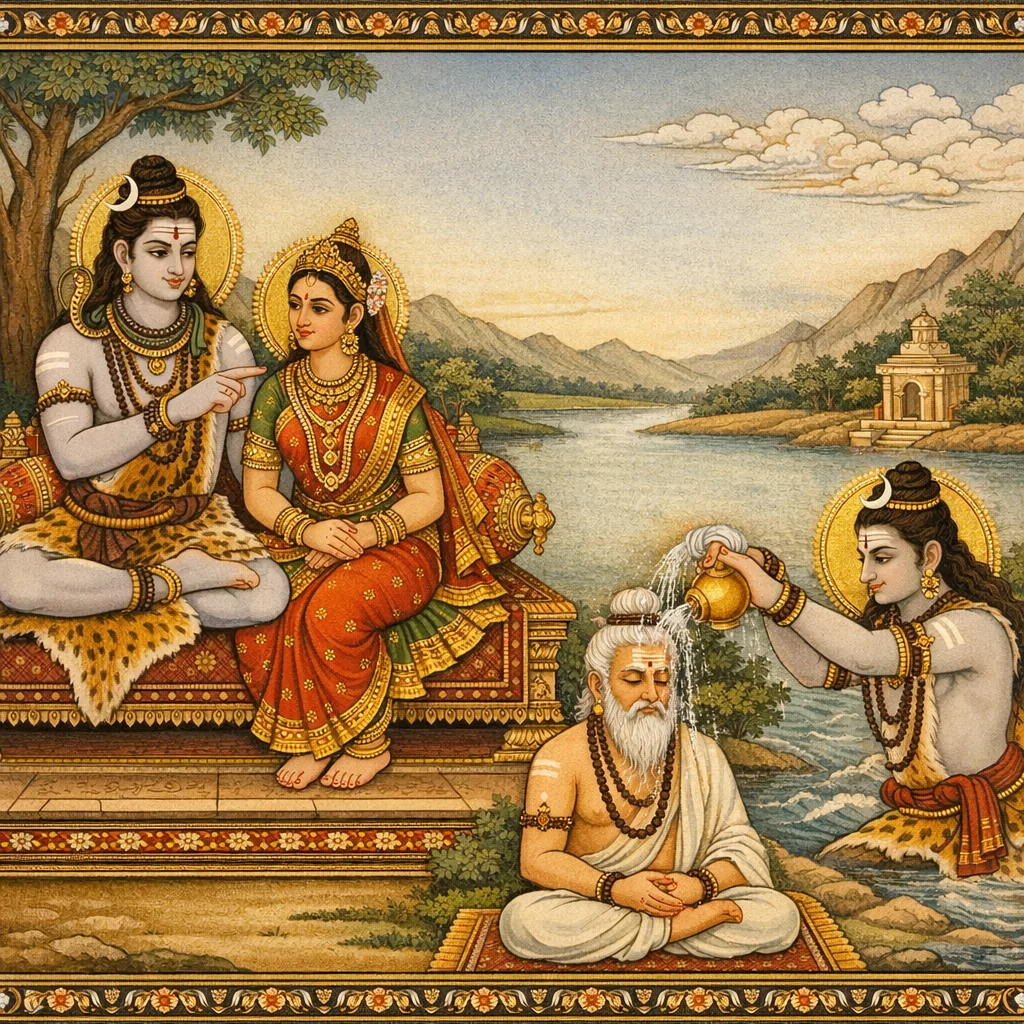
This chapter is a sacred site-instruction set within divine dialogue. Īśvara addresses the Goddess and directs her to the renowned Varuṇeśvara-liṅga, situated in Gaurī’s tapas-grove in the south-east (āgneya) quarter, marked at a distance of about twenty dhanu. The shrine’s origin is explained through a cosmic disturbance: when Kumbhaja (Agastya) once “drank” the ocean, Varuṇa, lord of waters, was afflicted by anger and burning heat. Seeing Prābhāsika-kṣetra as the proper field for severe austerity, Varuṇa performs difficult tapas, establishes a powerful mahāliṅga, and worships it with devotion for a long span—one yuta of years. Pleased, Śiva refills the emptied ocean with his own Gaṅgā-water and grants boons; thereafter the seas remain replenished, and the liṅga is known as Varuṇeśvara. The chapter then gives phalaśruti and ritual observances: mere darśana of Varuṇeśvara is said to yield the fruit of all tīrthas. On the 8th and 14th lunar days, bathing the liṅga with curd is linked with Vedic excellence, and the saving merit is extended to many social groups and bodily conditions. Acts done there—bathing, japa, bali, homa, pūjā, stotra, and sacred dance—are declared akṣaya (imperishable). Gifts such as a golden lotus and pearls are recommended for those seeking pilgrimage-fruit and heavenly aims.
Shlokas
Verse 1
ईश्वर उवाच । ततो गच्छेन्महादेवि वरुणेश्वरमुत्तमम् । गौरीतपोवनाग्नेय्यां धनुषां विंशतौ स्थितम् । लिंगं महाप्रभावं हि वरुणेन प्रतिष्ठितम्
Īśvara said: Then, O Mahādevī, one should go to the excellent Varuṇeśvara. Twenty dhanuṣ away, in the southeastern part of Gaurī’s grove of tapas, stands a Liṅga of great power, established by Varuṇa.
Verse 2
पूर्वं पीतो यदा देवि समुद्रः कुम्भजन्मना । तदा कोपेन सन्तप्तो वरुणः सरितां पतिः
Formerly, O Devī, when the ocean was drunk up by the pot-born sage, Varuṇa—the lord of waters—was then inflamed with anger.
Verse 3
कामिकं तु समाज्ञाय क्षेत्रं प्राभासिकं तदा । तत्रातपद्देवि तपः स वै परमदुश्चरम्
Recognizing then that the Prābhāsa region is the most wish-fulfilling sacred field, he performed there, O Devī, an exceedingly difficult austerity.
Verse 4
प्रतिष्ठाप्य महालिंगं संपूजयति भक्तितः । वर्षाणामयुतं साग्रं पूजितो वृषभध्वजः
After establishing a great Liṅga, he worshipped with devotion. For a full ten thousand years, the Bull-bannered Lord (Vṛṣabhadhvaja, Śiva) was worshipped.
Verse 5
ततः प्रसन्नो देवेशि निजगंगाजलेन तु । पूरयामास तं रिक्तं समुद्रं यादसांपतिम्
Then, O Lady of the Lord, being pleased, he filled that emptied ocean—the ruler of aquatic beings—using the water of his own Gaṅgā.
Verse 6
छंदयामास तं लिंगं वरदानैरनेकधा । तत्प्रभृत्येव ते सर्वे समुद्राः परिपूरिताः
He gratified that Liṅga with many gifts and boons. From that time onward, all the oceans remained fully filled.
Verse 7
वरुणेश्वरनामेति तल्लिंगं तत्प्रभृत्यभूत्
From that time onward, that liṅga came to be known by the name “Varuṇeśvara.”
Verse 8
को ह्यर्थो बहुभिर्लिंगैर्दृष्टैर्वा सुरसुन्दरि । वरुणेशेन दृष्टेन सर्वतीर्थफलं लभेत्
O divine beauty, what need is there to see many liṅgas? By merely beholding Varuṇeśvara, one obtains the fruit of all tīrthas.
Verse 9
अष्टम्यां च चतुर्दश्यां तद्दध्ना स्नापयेद्यदि । स ब्राह्मणश्चतुर्वेदो जायते नात्र संशयः
If on the eighth and the fourteenth lunar days one bathes the liṅga with that curd, then he is born as a Brāhmaṇa learned in the four Vedas—of this there is no doubt.
Verse 10
ब्राह्मणाः क्षत्रिया वैश्याः शूद्राश्चान्ये वरानने । मूकांधबधिरा बालाः स्त्रियश्चैव नपुंसकाः
O fair-faced lady, Brāhmaṇas, Kṣatriyas, Vaiśyas, Śūdras, and others—those who are mute, blind, deaf, children, women, and even the neuter—are all included.
Verse 11
दृष्ट्वा गच्छंति ते देवि स्वर्गं धर्मपरायणाः । स्नानं जाप्यं बलिं होमं पूजां स्तोत्रं च नर्तनम् । तस्मिन्स्थाने तु यः कुर्यात्तत्सर्वं चाक्षयं भवेत्
O Goddess, having beheld (that sacred presence), those devoted to dharma go to heaven. Bathing, japa, offerings (bali), fire-offerings (homa), worship, hymns, and even sacred dancing—whatever one performs in that place becomes imperishable in merit.
Verse 12
हैमं पद्मं मौक्तिकं च दानं तत्रैव दापयेत् । सम्यग्यात्राफलापेक्षी स्वर्गापेक्षी तथा नरः
A man seeking the full fruit of pilgrimage—and seeking heaven as well—should have gifts given right there: a golden lotus and pearls as charity.
Verse 70
इति श्रीस्कांदे महापुराण एकाशीतिसाहस्र्यां संहितायां सप्तमे प्रभासखण्डे प्रथमे प्रभासक्षेत्रमाहात्म्ये वरुणेश्वरमाहात्म्यवर्णनंनाम सप्ततितमोऽध्यायः
Thus ends the seventieth chapter, called “The Description of the Greatness of Varuṇeśvara,” in the first Prabhāsa-kṣetra-māhātmya of the seventh book, the Prabhāsa Khaṇḍa, within the Śrī Skanda Mahāpurāṇa of eighty-one thousand verses.