Adhyaya 67
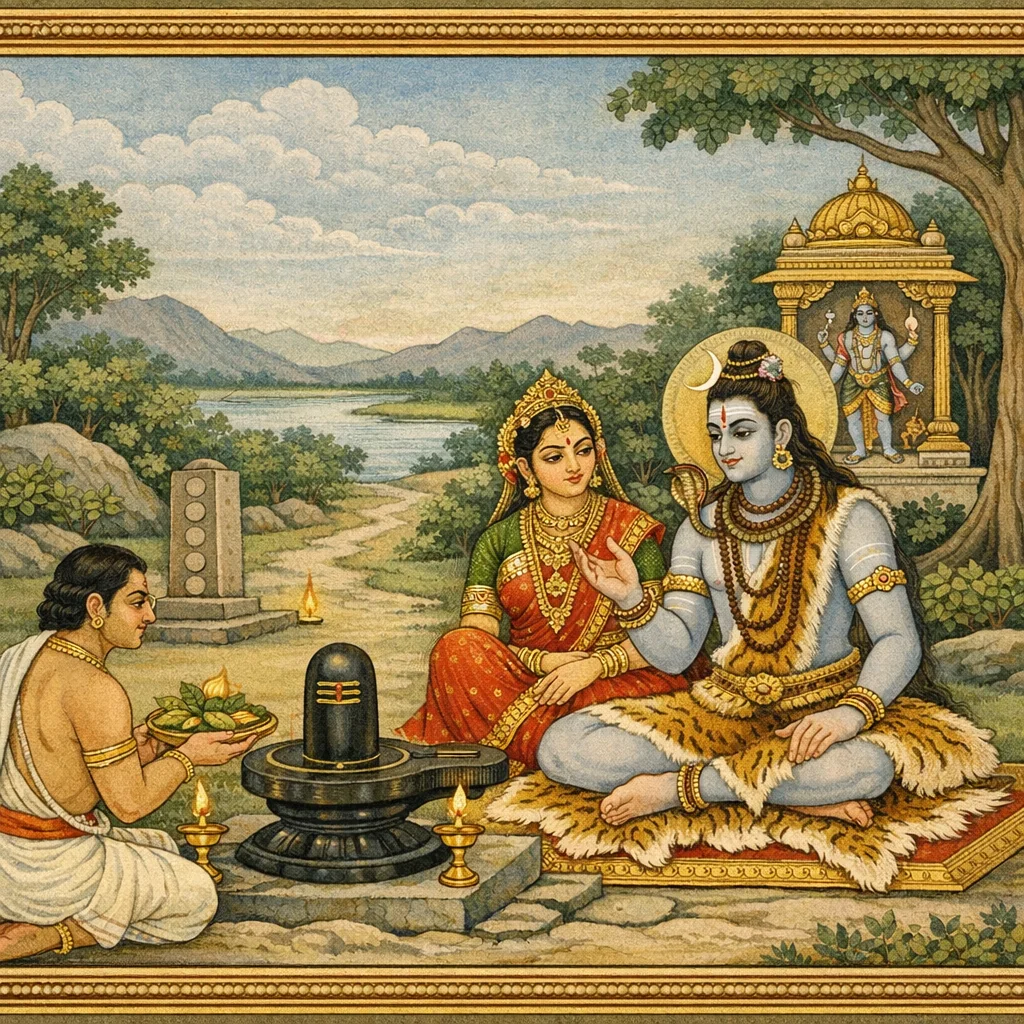
This chapter is Śiva’s instruction to Devī, identifying a mahāliṅga named Kāmeśvara within Prabhāsa-kṣetra. Īśvara directs the pilgrim to go to “Mahāliṅga Kāmeśvara,” formerly worshiped by Kāma, located west of Daityasūdana and within a distance of seven bow-lengths. The discourse recalls how Kāma was burned by the fire of Śiva’s third eye. Thereafter Kāma worshiped Maheśvara for a thousand years and regained a power connected with desire and creation (kāmanā-sarga), while retaining the memory of his Ananga, “bodiless,” state. This liṅga is renowned on earth, removes all sins, and grants desired fruits. A specific observance is prescribed: on the bright fortnight’s thirteenth lunar day (śukla trayodaśī) in the month of Mādhava (Vaiśākha), one should worship Kāmeśvara according to proper rite (vidhāna). The promised result is expressed in purāṇic merit language, including prosperity and the flourishing of desire/attractiveness for women.
Shlokas
Verse 1
ईश्वर उवाच । ततो गछेन्महालिंगं कामेश्वरमिति श्रुतम् । कामेनाराधितं पूर्वं दैत्यसूदनपश्चिमे
Īśvara said: “Then one should go to the great liṅga renowned as Kāmeśvara. In former times it was worshipped by Kāma, and it stands to the west of Daityasūdana.”
Verse 2
धनुषां सप्तके तत्र स्थितं देवि महाप्रभम् । निर्दग्धस्तु यदा काम स्तृतीयेनाग्निना मम
O Devī, there stands that greatly radiant (liṅga) at a distance of seven bow-lengths. When Kāma was burnt by my third fire (from the third eye),
Verse 3
तदा वर्षसहस्रं तु समाराध्य महेश्वरम् । प्रपेदे कामनासर्गं यत्रानंगः पुरा किल
Then, having worshipped Maheśvara for a thousand years, he attained the re-arising of desire—at that very place where, indeed, Ananga, the bodiless one, once stood.
Verse 4
तेन कामेश्वरंनाम ख्यातं लिंगं धरातले । सर्वपापहरं देवि सर्वकामफलप्रदम्
Therefore that Liṅga is renowned on earth as “Kāmeśvara.” O Devī, it removes all sins and grants the fruits of every rightful desire.
Verse 5
त्रयोदश्यां विधानेन शुक्लायां मासि माधवे । संपूज्य तं विधानेन स स्त्रीणां कामवद्भवेत्
By duly worshipping him according to rule on Trayodaśī, the thirteenth lunar day of the bright fortnight in the month of Mādhava (Vaiśākha), a man becomes charming and desirable to women.
Verse 67
इति श्रीस्कांदे महापुराण एकाशीतिसाहस्या संहितायां सप्तमे प्रभासखण्डे प्रथमे प्रभासक्षेत्रमाहात्म्ये कामेश्वरमाहात्म्यवर्णनं नाम सप्तषष्टितमोऽध्यायः
Thus, in the revered Skanda Mahāpurāṇa, within the eighty-one-thousand-verse Saṃhitā, in the seventh book called the Prabhāsa Khaṇḍa, in the first part known as the Prabhāsakṣetra Māhātmya, ends the sixty-seventh chapter entitled “The Description of the Greatness of Kāmeśvara.”