Adhyaya 66
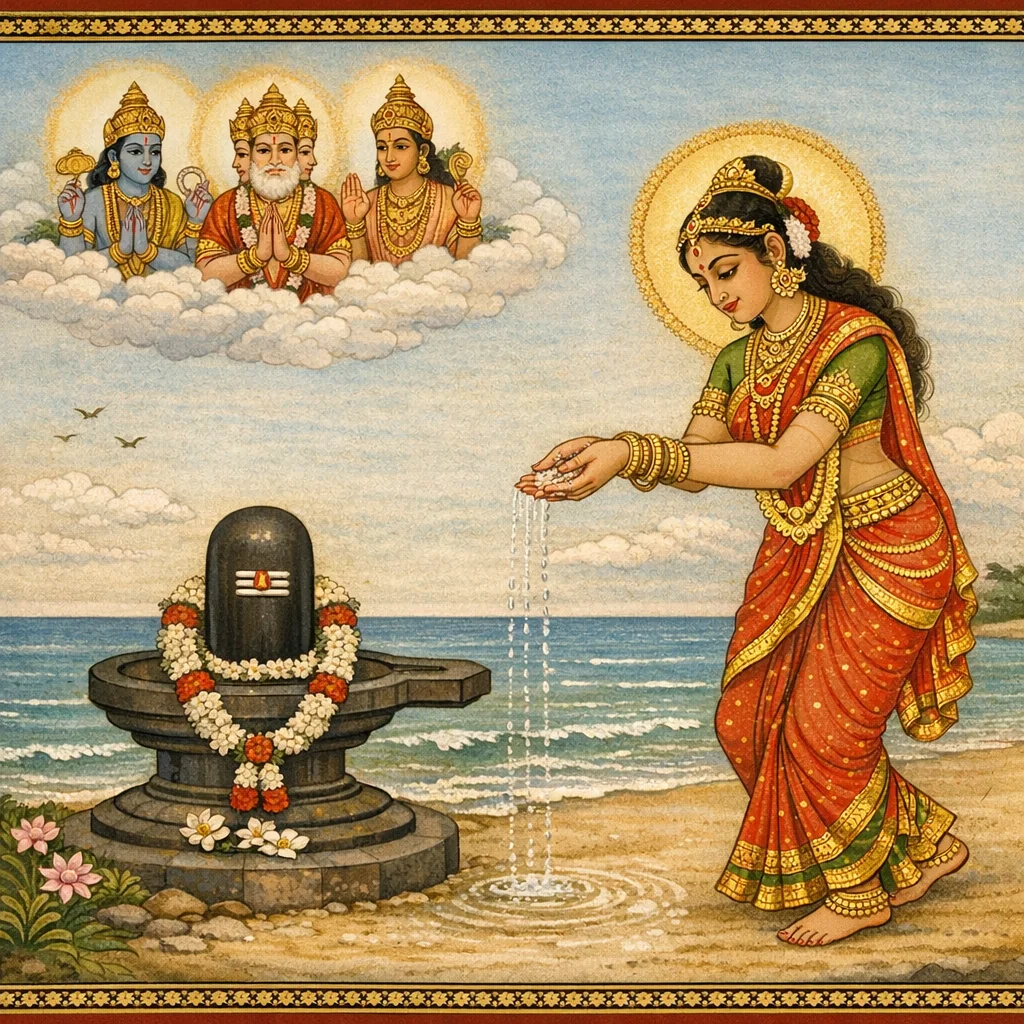
Īśvara describes a movement within Prabhāsa-kṣetra to a potent liṅga called Arghyeśvara, situated north of Viśālākṣī and nearby. This liṅga is praised as highly efficacious and is worshipped by devas and gandharvas. The narrative recalls the Devī’s arrival, said to bear the vāḍavānala (submarine fire). Reaching Prabhāsa and beholding the great ocean (mahodadhi), she offers arghya to the ocean according to the prescribed rite (vidhi). She then establishes (pratiṣṭhāpya) a great liṅga, performs the proper worship, and afterwards enters the ocean for ritual bathing. The text explains the sacred naming: because arghya was offered first and then the Lord was established, the liṅga became known as Arghyeśa/Arghyeśvara, explicitly declared a pāpa-praṇāśana, destroyer of sin. A ritual teaching follows: one who bathes the liṅga with pañcāmṛta and worships it by rule attains vidyā across seven births, becoming a capable teacher of śāstra and a knower who resolves doubts. The colophon closes the chapter as the 66th adhyāya of this portion of the Prabhāsa Khaṇḍa.
Shlokas
Verse 1
ईश्वर उवाच । ततो गच्छेन्महालिंगमर्घ्येश्वरमिति श्रुतम् । उत्तरे तु विशालाक्ष्या नातिदूरे व्यवस्थितम्
Īśvara said: Then one should go to the great liṅga known as Arghyeśvara. It is situated to the north of Viśālākṣī, not very far away.
Verse 2
लिंगं महाप्रभावं हि सुरगन्धर्वपूजितम् । यदा देवी समायाता वडवानलधारिणी
This liṅga is indeed of great power, worshiped by the gods and Gandharvas. When the Goddess arrived there, bearing the Vāḍavānala (submarine fire)…
Verse 3
प्रभासक्षेत्रमासाद्य दृष्ट्वा तत्र महोदधिम् । अर्घ्यं दत्तवती तत्र विधिना तन्महोदधेः
Having reached Prabhāsa Kṣetra and beholding the great ocean there, she offered arghya to that mighty sea in accordance with the proper rite.
Verse 4
प्रतिष्ठाप्य महल्लिंगं संपूज्य विधिना ततः । प्रविवेशाथ देवेशि स्नानार्थं च महोदधौ
After installing the great liṅga and worshiping it fully according to rite, O Devī, she then entered the great ocean for the purpose of sacred bathing.
Verse 5
यस्मादर्घ्यं पुरा दत्त्वा पश्चा दीशः प्रतिष्ठितः । तेनार्घ्येशेति विख्यातं लिंगं पापप्रणाशनम्
Because in ancient times arghya was offered first, and only afterward the Lord was installed, that liṅga became renowned as Arghyeśa—the destroyer of sins.
Verse 6
पंचामृतेन संस्नाप्य विधिना यस्तमर्चयेत् । सप्तजन्मानि देवेशि स विद्यामधिगच्छति । सम्यक्छास्त्रप्रवक्ता च सर्वसंदेहवित्तमः
O Devī, whoever, according to the prescribed rite, bathes Him with pañcāmṛta and worships Him, for seven births attains true vidyā, becomes a proper expounder of the śāstras, and the finest knower for resolving every doubt.
Verse 66
इति श्रीस्कांदे महापुराण एकाशीतिसाहस्र्यां संहितायां सप्तमे प्रभासखण्डे प्रथमे प्रभासक्षेत्रमाहात्म्येऽर्घ्येश्वरमाहात्म्यवर्णनंनाम षट्षष्टितमोऽध्यायः
Thus, in the holy Skanda Mahāpurāṇa, within the Saṃhitā of eighty-one thousand verses, in the seventh book called the Prabhāsa Khaṇḍa, in the first part known as the Prabhāsakṣetra Māhātmya, ends the sixty-sixth chapter entitled “The Description of the Greatness of Arghyeśvara.”