Adhyaya 65
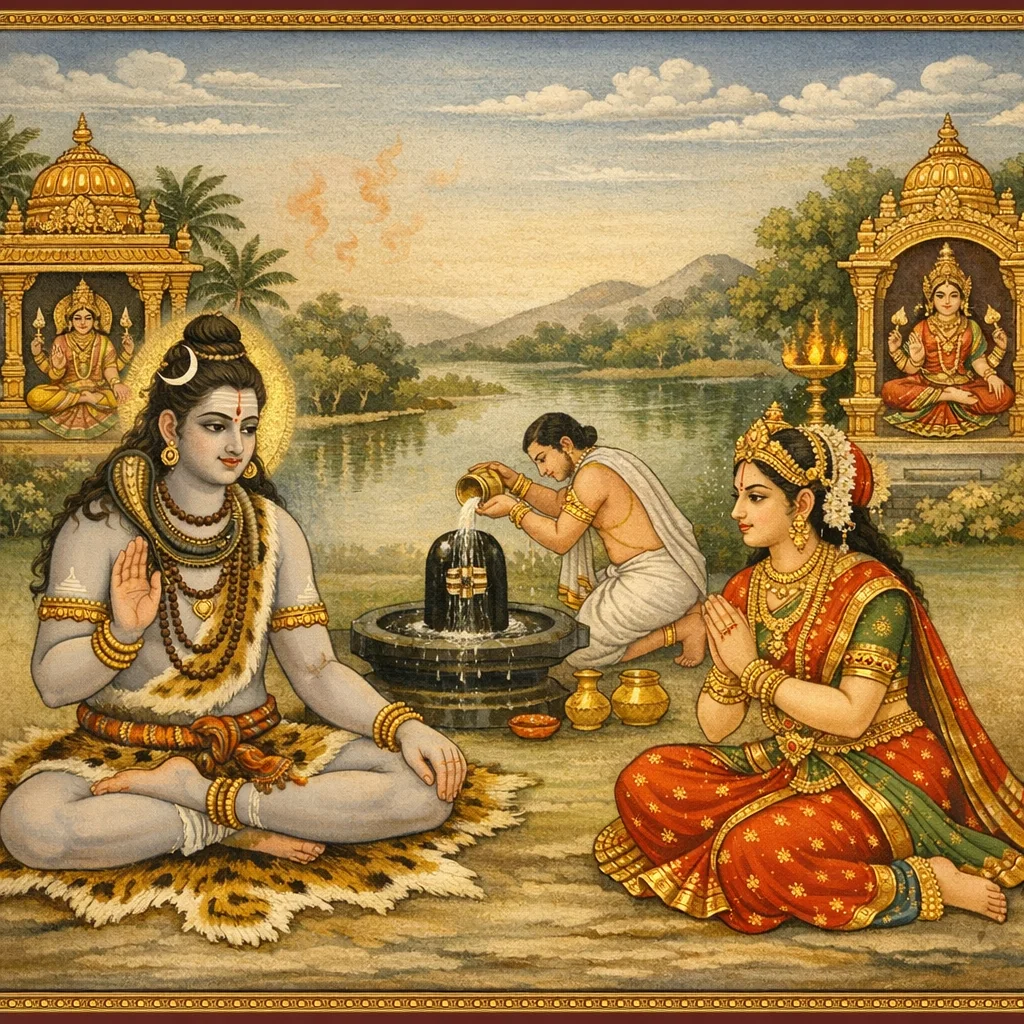
This chapter is a brief Śaiva instruction: Īśvara speaks to Devī and directs the pilgrim to the Vāḍaveśvara-liṅga. Its position within Prabhāsa-kṣetra is given through sacred relational landmarks—north of Lakṣmīśa and south of Viśālākṣī—so the devotee may navigate the holy ground. An origin account follows: when Kāma (Kṛtasmarā) was burned, a mountain was leveled by the Vāḍavā fire, and in that setting Vāḍava installed this liṅga, marking the site as one of great power. The rite prescribed is worship according to rule, with a tenfold bathing/abhiṣeka of Śaṅkara, and a gift of curd (dadhi) to a Veda-proficient brāhmaṇa at that place. The phalaśruti promises attainment of Agni-loka and the full, properly completed fruit of pilgrimage.
Shlokas
Verse 1
ईश्वर उवाच । ततो गच्छेन्महादेवि लिंगं वै वाडवेश्वरम् । लक्ष्मीशादुत्तरे भागे विशालाक्ष्याश्च दक्षिणे
Īśvara said: Then, O great Goddess, one should go to the liṅga called Vāḍaveśvara, situated to the north of Lakṣmīśvara and to the south of Viśālākṣī.
Verse 2
स्थितं महाप्रभावं हि वाडवेन प्रतिष्ठितम् । कृतस्मरो यदा दग्धः पर्वतो वाडवाग्निना
This liṅga stands in mighty power, established by Vāḍava. When Kṛtasmarā was burned—when the mountain was consumed by the Vāḍava fire—this sacred presence became renowned.
Verse 3
समीकृत्याखिलं स्थानं तेन लिंगं प्रतिष्ठितम् । पूजयेत्तं विधानेन दश संस्नाप्य शंकरम्
Having properly prepared and leveled the entire spot, he consecrated the liṅga there. One should worship Śaṅkara according to rule, after bathing Him ten times in the prescribed manner.
Verse 4
दधि दद्याच्च वै तत्र ब्राह्मणे वेदपारगे । सोऽग्निलोकमवाप्नोति सम्यग्यात्राफलं लभेत्
There, one should indeed give curd as a gift to a Brāhmaṇa learned in the Vedas. He attains the world of Agni and receives the full and proper fruit of the pilgrimage.
Verse 65
इति श्रीस्कांदे महापुराण एकाशीतिसाहस्र्यां संहितायां सप्तमे प्रभासखण्डे प्रथमे प्रभासक्षेत्रमाहात्म्ये वाडवेश्वरमाहात्म्यवर्णनंनाम पञ्चषष्टितमोऽध्यायः
Thus ends the sixty-fifth chapter, entitled “The Description of the Glory of Vāḍaveśvara,” in the first Prabhāsa-kṣetra Māhātmya of the seventh Prabhāsa Khaṇḍa of the Śrī Skanda Mahāpurāṇa, within the Saṃhitā of eighty-one thousand verses.