Adhyaya 62
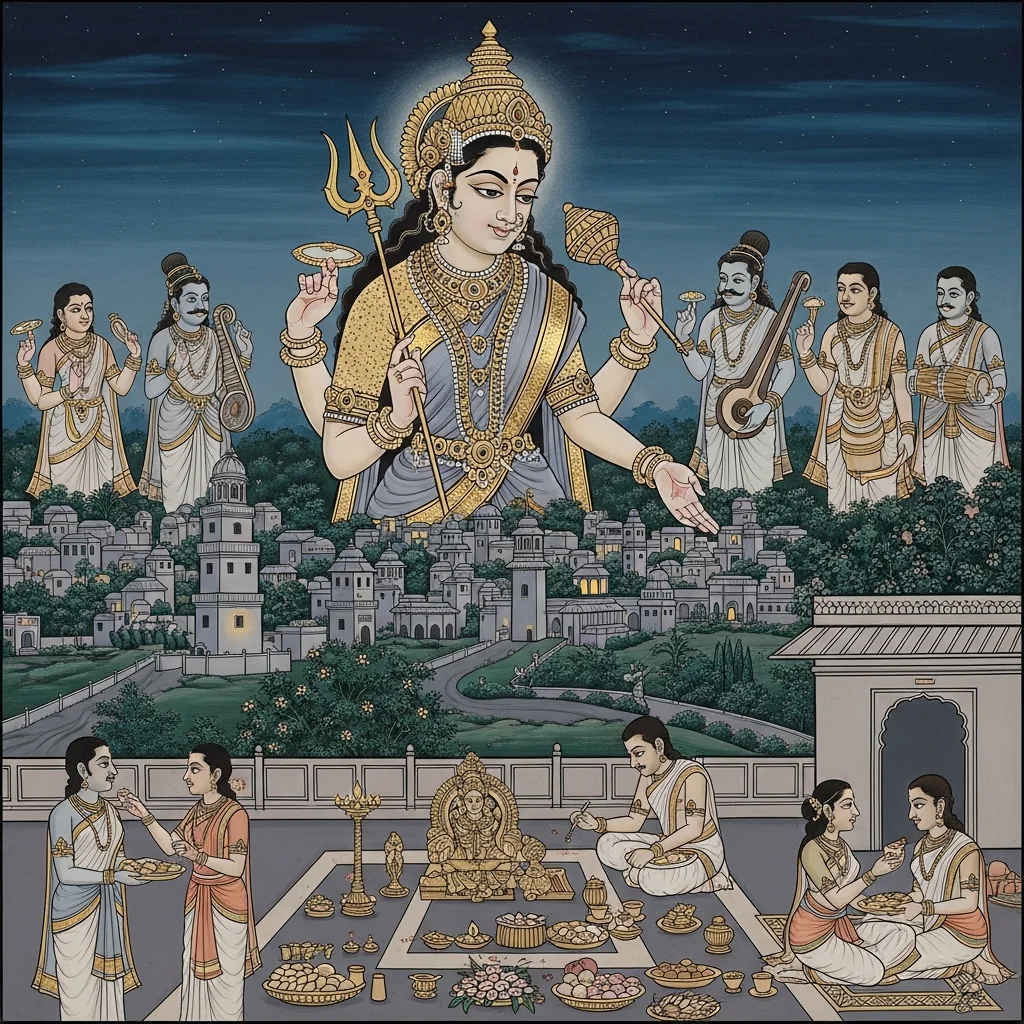
Chapter 62 gives a brief theological and sacred-geographical instruction in which Īśvara describes a third holy catvara (crossroads/courtyard node) dear to the deity, situated to the east of Lalitā at a measured distance of daśa-dhanvantara. There Īśvara installs a mighty protective Goddess—called Kṣetra-dūtī, Mahāraudrī, and Rudraśakti—for kṣetra-rakṣā, the guardianship of the sacred region. Her form is conveyed through her function: attended by multitudes of bhūtas, she moves through ruined houses, gardens, palaces, towers, roads, and every crossing, and by night patrols the center of the kṣetra. On Mahānavamī, any woman or man should worship her with varied offerings according to proper rite. The phalaśruti declares this māhātmya sin-destroying and prosperity-giving; when pleased, the Goddess grants desired aims. As a practical pilgrimage ethic, those seeking the fruit of yātrā should provide a meal for a married couple (dampatyoḥ-bhojana) at the site.
Shlokas
Verse 1
ईश्वर उवाच । ततो गच्छेन्महादेवि तृतीयां चत्वरप्रियाम् । ललितापूर्वदिग्भागे दशधन्वंतरे स्थिताम्
Īśvara said: “Then, O Mahādevī, one should go to the Third Goddess, beloved of the crossroads (catvara). She is situated in the eastern quarter of Lalitā, at a distance of ten dhanus.”
Verse 2
क्षेत्रदूतीं महारौद्रीं रुद्रशक्तिं महाप्रभाम् । क्षेत्ररक्षाविधौ तत्र मया मुक्तां तु मध्यतः
“She is Kṣetra-dūtī, the Great Fierce One (Mahāraudrī)—Rudra’s śakti, resplendent. For the protection of that sacred field, I stationed her there, in the very midst of the kṣetra.”
Verse 3
कोटिभूतसमायुक्ता महाकाया महाप्रभा । जीर्णे गृहे तथोद्याने प्रासादाट्टालके पथि
Accompanied by crores of spirits, vast-bodied and brilliantly radiant—she is seen in ruined houses, in gardens, in palace-towers, and along the roads.
Verse 4
चत्वरेषु च सर्वेषु क्षेत्र मध्यस्थिता सती । रात्रौ पर्यटते देवी भूतानां कोटिभिर्वृता
Established at the center of the sacred field and present at all the crossroads, the Goddess roams by night, surrounded by crores of spirits.
Verse 5
महानवम्यां यस्तत्र नारी वाथ नरोपि वा । नानापूजोपचारैश्च पूजयेद्विधिवच्छुभाम्
On Mahānavamī, whoever is there—whether woman or man—should worship that auspicious Goddess according to rule, with many offerings and acts of honor.
Verse 7
इति संक्षेपतः प्रोक्तं माहा त्म्यं पापनाशनम् । क्षेत्रदूत्यास्तृतीयायाः श्रुतमैश्वर्यकारकम्
Thus, in brief, the sin-destroying greatness has been told. Hearing the account of the Third Kṣetra-dūtī brings prosperity and lordly fortune.
Verse 9
तस्य तुष्टाऽखिलान्कामान्सादेवी संप्रदास्यति । दंपत्योर्भोजनं तत्र देयं यात्राफलेप्सुभिः
Pleased with that devotee, the Goddess will grant all desires. And there, those who seek the fruits of pilgrimage should provide a meal to a married couple.
Verse 62
इति श्रीस्कांदे महापुराण एकाशीतिसाहस्र्यां संहितायां सप्तमे प्रभासखण्डे प्रथमे प्रभासक्षेत्रमाहात्म्ये चत्वरादेवीमाहात्म्यवर्णनंनाम द्विषष्टितमोऽध्यायः
Thus ends the sixty-second chapter, called “The Description of the Greatness of Catvarā-devī,” in the Prabhāsa Khaṇḍa—within the Prabhāsa-kṣetra Māhātmya—of the Śrī Skanda Mahāpurāṇa (the compilation of eighty-one thousand verses).