Adhyaya 60
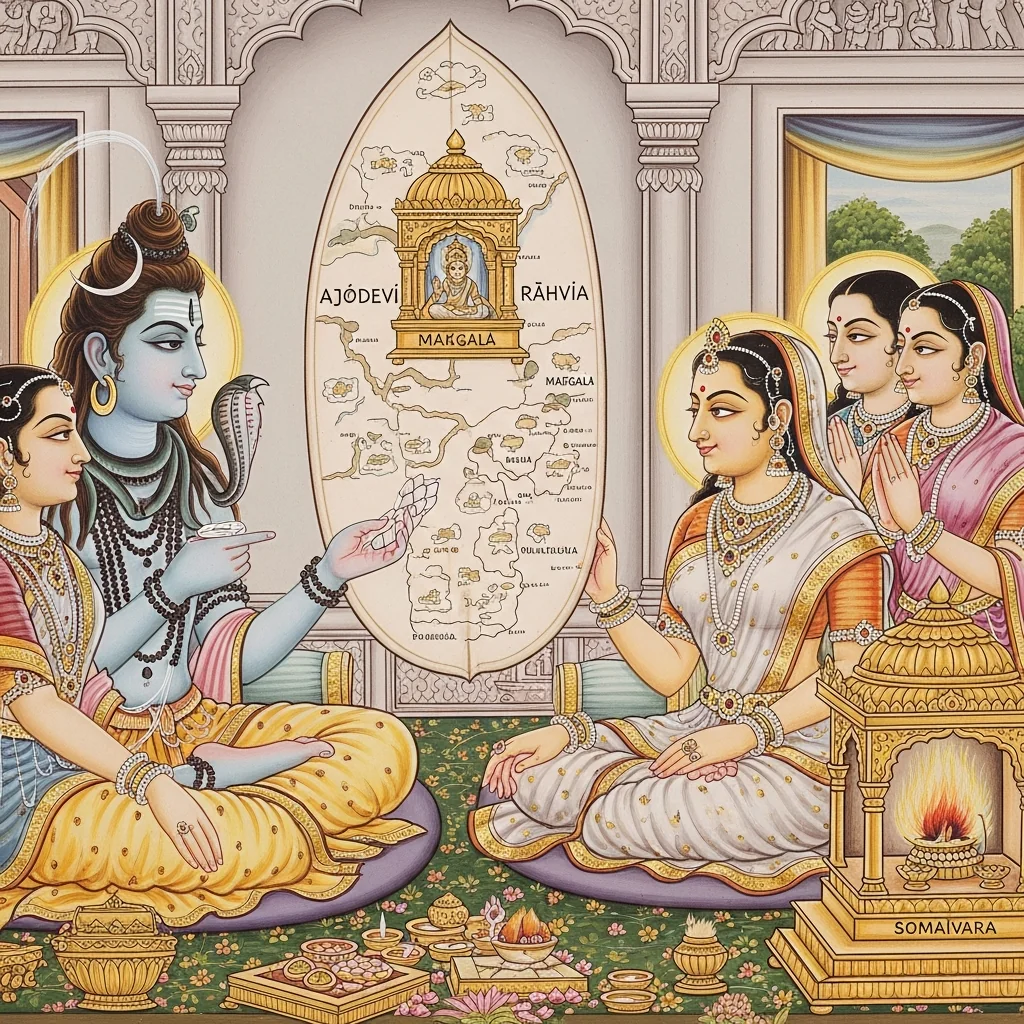
This chapter unfolds as a question-led theological dialogue between Devī and Īśvara. Īśvara first names three Prabhāsa-kṣetra dūtīs—guardian female powers significant for pilgrims seeking the fruits of the Prabhāsa-yātrā: Mangalā, Viśālākṣī, and Catvara-devī. When Devī asks for exact details of their stations and modes of worship, Īśvara identifies them as śakti-forms: Mangalā as Brāhmī, Viśālākṣī as Vaiṣṇavī, and Catvara-devī as a Raudrī-śakti. Īśvara then anchors Mangalā’s location: north of Ajādevī and not far south of Rāhvīśa. Her name is explained through an origin account tied to Somadeva’s rite at Somēśvara, where she is said to have bestowed auspiciousness upon Brahmā and other deities; thus she is praised as Sarva-māṅgalya-dāyinī, “the giver of all auspiciousness.” A practical phala is also taught: worship on the third day (tṛtīyā) destroys inauspiciousness and sorrow. Merit-making acts are recommended—feeding a married couple (dampatī-bhojana), gifting fruits along with garments, and taking clarified butter (ghṛta) with pṛṣad as a purificatory observance. The chapter concludes by affirming Mangalā’s māhātmya as the destroyer of all sins (sarva-pātaka-nāśana).
Shlokas
Verse 1
ईश्वर उवाच । प्रभासक्षेत्रदूतीनां त्रितयं वरवर्णिनि । अथ ते संप्रवक्ष्यामि शृणु ह्येकमनाः प्रिये
Īśvara said: O beloved of fair complexion, I shall now clearly tell you of the triad of the messengers (dūtīs) of Prabhāsa-kṣetra. Listen with a single-pointed mind.
Verse 2
प्रथमा मंगला देवी विशालाक्षी द्वितीयिका । तथा चत्वरदेवी तु तृतीया परिकीर्तिता
The first is the Goddess Maṅgalā; the second is Viśālākṣī; and the third is proclaimed as Catvarā-devī.
Verse 3
यथानुक्रमतः पूज्याः शक्तयस्ता वरानने । प्रभासक्षेत्रयात्रायाः फलप्रेप्सुर्नरो यदि
O fair-faced one, if a man longs to gain the fruit of pilgrimage to Prabhāsa-kṣetra, he should worship those Śaktis in their proper sequence.
Verse 4
देव्युवाच । कस्मिन्स्थाने स्थिता देव दूत्यस्ताः क्षेत्ररक्षिकाः । कस्य ताः कथमाराध्याः कथं पूज्या जगत्पते
The Goddess said: “O Lord, in what place are those dūtīs—guardians of the sacred region—situated? Whose attendants are they? How are they to be propitiated, and how are they to be worshipped, O Lord of the world?”
Verse 5
ईश्वर उवाच । ब्राह्मी तु मंगला प्रोक्ता विशालाक्षी तु वैष्णवी । रौद्रीशक्तिः समाख्याता देवी सा चत्वरप्रिया
Īśvara said: “As the Brāhmī power she is called Maṅgalā; as the Vaiṣṇavī power she is renowned as Viśālākṣī. She is also praised as Raudrī-Śakti—the Goddess who delights in the sacred crossroads (catvara).”
Verse 6
मंगला प्रथमं पूज्या अजादेव्युत्तरे स्थिता । राह्वीशाद्दक्षिणेभागे नातिदूरे वरानने
“Maṅgalā should be worshipped first. She is situated to the north of Ajādevī and, O fair-faced one, not far away on the southern side of Rāhvīśa.”
Verse 7
सोमेश्वरप्रतिष्ठाप्य प्रारब्धे यज्ञकर्मणि । सोमेन तत्र देवानामागता सा दिदृक्षया
“When Soma had installed the liṅga of Someśvara and the sacrificial rite had begun, she came there with Soma, longing to behold the gods.”
Verse 8
ब्रह्मादीनां च सा यस्मान्मांगल्यं कृतवत्युमे । तस्मात्सा मंगला प्रोक्ता सर्वमांगल्यदायिनी
Because she brought auspiciousness to Brahmā and the other gods, O Umā, therefore she is called Maṅgalā—the bestower of every auspicious good.
Verse 9
तृतीयायां तु या नारी नरो वा पूजयिष्यति । तस्याऽमंगल्यदुःखानि नाशं यास्यंति कृत्स्नशः
But whichever woman or man worships her on the third lunar day (tṛtīyā), all that person’s inauspiciousness and sorrows will be completely destroyed.
Verse 10
दम्पतीभोजनं तत्र फलदानं सकञ्चुकम् । प्रशस्तं पृषदाज्यस्य प्राशनं पापनाशनम्
There, feeding a married couple and giving fruits along with a garment is highly praised; and consuming pṛṣadājya is commended as a destroyer of sins.
Verse 11
इति संक्षेपतः प्रोक्तं महाभाग्यं महोदयम् । मंगलायाश्च माहात्म्यं सर्वपातकनाशनम्
Thus, in brief, has been declared this great fortune and great uplift: the glory of Maṅgalā, which destroys all sins.
Verse 60
इति श्रीस्कांदे महापुराण एकाशीतिसाहस्र्यां संहितायां सप्तमे प्रभासखण्डे प्रथमे प्रभासक्षेत्रमाहात्म्ये मङ्गलामाहात्म्यवर्णनंनाम षष्टितमोऽध्यायः
Thus ends the sixtieth chapter, called “The Description of the Glory of Maṅgalā,” in the Prabhāsa Khaṇḍa—within the first Prabhāsa-kṣetra Māhātmya—of the Śrī Skanda Mahāpurāṇa (in the eighty-one-thousand-verse compilation).