Adhyaya 58
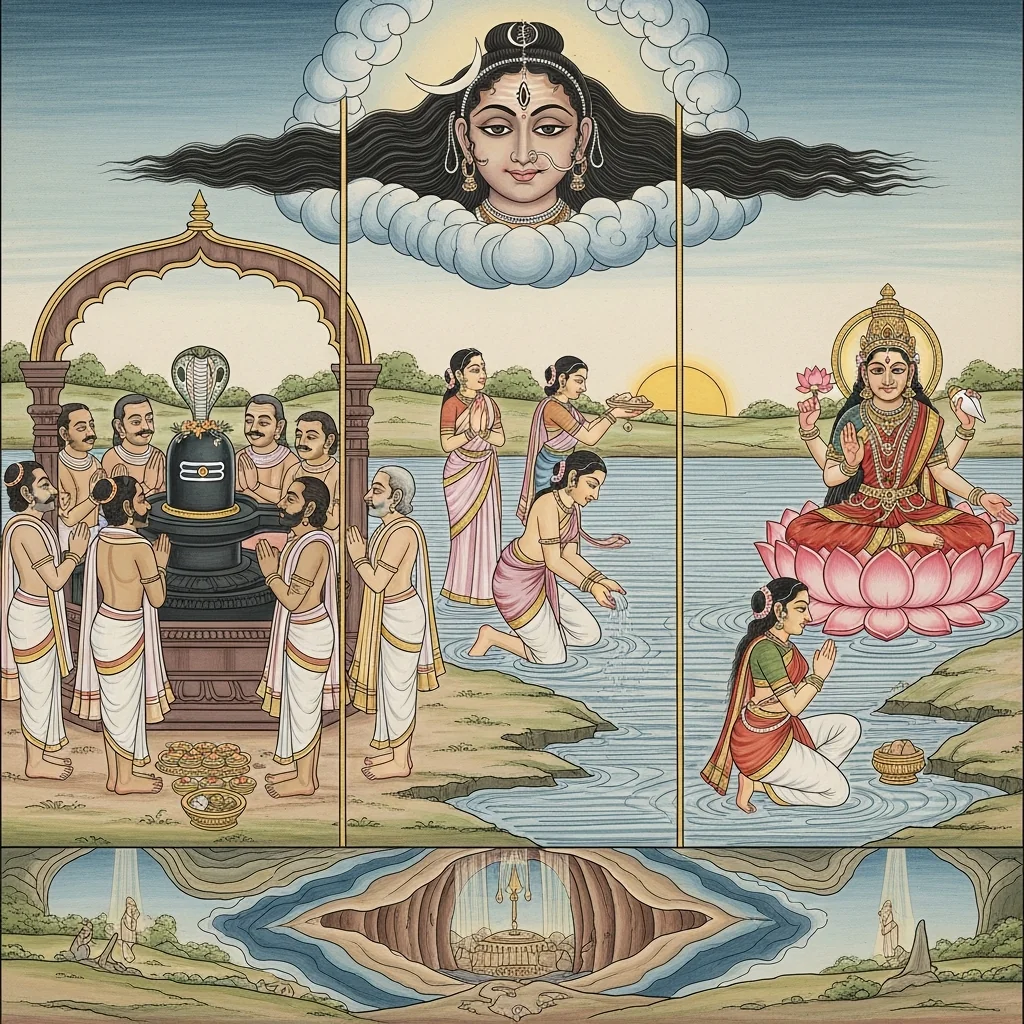
Īśvara describes a second manifestation of Śakti, kriyātmikā—effective divine agency—established in Prabhāsa and pleasing to the gods. Between Somēśa and Vāyu lies a yoginī-venerated pīṭha near a great pātāla-vivara (subterranean fissure), where hidden treasures are spoken of—nidhis, divine medicines, and rasāyana—granted to devoted worshippers. The Goddess there is known as Bhairavī. In Tretā-yuga, King Ajāpāla, stricken with disease, worships Bhairavī for five hundred years. Pleased, the Devī removes all bodily ailments; the diseases depart his body in the form of goats. He is commanded to protect them, and thus his epithet Ajāpāla and the Goddess’s name Ajāpāleśvarī are established for the span of the four yugas. Ritual observances are then taught: worship on aṣṭamī and caturdaśī yields heightened prosperity. On Ashvayuk-śukla-aṣṭamī one performs three pradakṣiṇās with Somēśvara as the center, then bathes and worships the Goddess separately, gaining freedom from fear and grief for three years. Women facing infertility, illness, or misfortune are enjoined to observe a navamī vow before the Devī. The chapter extends into royal genealogy and a political myth: Ajāpāla, linked to solar lineages, becomes a mighty ruler. When Rāvaṇa subdues the deities, Ajāpāla dispatches “Jvara” (fever personified) to afflict him, forcing retreat. The conclusion affirms Ajāpāleśvarī’s power to pacify diseases and destroy obstacles, recommending worship with gandha, dhūpa, ornaments, and garments, and presenting the account as a complete alleviation of suffering and sin.
Shlokas
Verse 1
ईश्वर उवाच । अथ द्वितीयां ते वच्मि शक्तिं देवि क्रियात्मिकाम् । प्रभासस्थां महादेवीं देवानां प्रीतिदायिनीम्
Īśvara said: “Now, O Goddess, I shall tell you of the second Śakti—the power embodied as sacred action. She is the great Goddess abiding at Prabhāsa, the giver of delight to the gods.”
Verse 2
सोमेशाद्वायवे भागे षष्टिधन्वतरे स्थिता । तत्र पीठं महादेवि योगिनीगणवन्दितम्
She is situated in the Vāyavya quarter from Someśvara, at a distance of sixty dhanus. There, O great Goddess, is her sacred seat (pīṭha), revered by hosts of Yoginīs.
Verse 3
तस्मिन्स्थाने स्थितं देवि पातालविवरं महत् । तस्मिन्महाप्रभे स्थाने रक्षारूपेण संस्थिताम्
In that place, O Goddess, there is a great opening into Pātāla. In that intensely radiant spot, she abides in the form of a protectress (rakṣā-rūpa).
Verse 4
पातालनिधि निक्षेपदिव्यौषधिरसायनम् । क्षेत्रमध्ये स्थितं सर्वं तदर्चनरतो लभेत्
The hidden treasures of Pātāla, and divine medicines and rasāyana elixirs—everything abides within this sacred kṣetra. One who worships there with devotion attains their blessed benefits.
Verse 5
भैरवीति च तद्देव्याः पूर्वं नाम प्रकीर्त्तितम् । अस्मिन्पुनश्चांतरे तु अष्टाविंशे चतुर्युगे । त्रेतायुगमुखे राजा अजापालो बभूव ह
Formerly, that Goddess was renowned by the name “Bhairavī.” Now, in this Manvantara—during the twenty-eighth cycle of the four yugas—at the dawn of the Tretā Yuga, there arose a king named Ajāpāla.
Verse 6
तेन चागत्य क्षेत्रेस्मिन्पंचवर्षशतानि च । भैरवी पूजिता देवी व्याधिग्रस्तेन भामिनि
Having come to this sacred kṣetra, for five hundred years that one—afflicted and tormented by disease, O fair lady—worshipped the Goddess Bhairavī here.
Verse 7
ततः प्रोवाच तं देवी संतुष्टा राजसत्तमम् । अलं क्लेशेन राजर्षे तुष्टाहं तव भक्तितः
Then the Goddess, well pleased, spoke to that best of kings: “Enough of hardship, O royal sage; by your devotion I am satisfied.”
Verse 8
इत्युक्तः स तदा राजा कृताञ्जलिपुटः सुधीः । प्रणम्योवाच तां देवीमानंदास्राविलेक्षणः
Thus addressed, the wise king, with hands joined in reverent añjali, bowed low and spoke to the Goddess, his eyes overflowing with tears of joy.
Verse 9
यदि तुष्टासि मे देवि वरार्हो यदि वाप्यहम् । सर्वे रोगाः शरीरान्मे नाशं यांतु बहिः कृताः
O Goddess, if you are pleased with me and if I am worthy to receive a boon, then let all diseases depart from my body—cast out—and go to destruction.
Verse 10
एवमुक्ता तु सा देवी पुनः प्रोवाच तं नृपम् । सर्वमेव महाराज यथोक्तं ते भविष्यति
Thus addressed, the Goddess again spoke to the king: “O great king, everything shall happen for you exactly as you have said.”
Verse 11
इत्युक्ते तु तदा देव्या तस्य राज्ञः कलेवरात् । निर्गता व्याधयस्तत्र अजारूपेण वै पृथक्
When the Goddess had spoken thus, the diseases emerged from the king’s body there, each separately, taking the form of goats.
Verse 12
सहस्राणां तु पञ्चैव नियतं सार्द्धमेव च । इति वृत्ते महादेव्या पुनः प्रोक्तो नराधिपः
Their number was fixed with certainty as five and a half thousand. When this had occurred, the Great Goddess again addressed the lord of men, the king.
Verse 13
राजन्नेतानजारूपान्व्याधीन्पालय कृत्स्नशः । किंकुर्वाणा भविष्यंति तवैवादेशकारिणः
“O king, protect and maintain these diseases that have taken goat-form—every one of them. They shall become your servants, acting only under your command.”
Verse 14
अजापालेति ते नाम ख्यातं लोके भविष्यति । तव नाम्ना मम नाम अजापालेश्वरीति च । भविष्यति धरापृष्ठे तच्च यावच्चतुर्युगम्
Your name shall become renowned in the world as Ajāpāla, the Keeper of Goats. And by your name, my own name too shall be Ajāpāleśvarī. Upon the earth this fame shall endure for as long as the four yugas last.
Verse 15
अष्टम्यां च चतुर्द्दश्यां योऽत्र मां पूजयिष्यति । तस्याष्टगुणमैश्वर्यं दास्ये तुष्टा न संशयः
Whoever worships me here on the eighth and on the fourteenth lunar day, to him—being pleased—I shall grant eightfold prosperity and lordliness; of this there is no doubt.
Verse 16
अश्वयुक्छुक्लाष्टम्यां च त्रिः कृत्वा तु प्रदक्षिणाम् । सोमेशं मध्यतः कृत्वा संस्नाप्याभ्यर्च्य मां पृथक् । तस्य वर्षत्रयं राजन्न भीः शोको भविष्यति
On the bright eighth day of Āśvayuja, having circumambulated three times—placing Someśvara at the center—and then bathing the deity, worshipping with offerings, and venerating me separately as well—O King, for three years thereafter there will be no fear or sorrow for him.
Verse 17
या तु वंध्या भवेन्नारी रोगिणी दुर्भगा तथा । तयोक्ता नवमी कार्या ममाग्रे तुष्टिवर्द्धिनी
A woman who is barren, or afflicted by illness, or unfortunate—she should observe the Navamī rite as prescribed, before me, the Goddess; it increases divine satisfaction and favor.
Verse 18
ईश्वर उवाच । इत्युक्त्वा तु तदा देवी तत्रैवांतर्हिताऽभवत् । प्रभासक्षेत्रमध्यस्थः स राजातुलविक्रमः
Īśvara said: Having spoken thus, the Goddess then vanished right there. And that king of incomparable valor remained in the very midst of Prabhāsakṣetra.
Verse 19
पालयामास धर्मात्मा तानजान्व्याधिरूपिणः । औषधीर्विविधाकारास्तेषां याः पुष्टिहेतवः
That dharma-abiding king tended those goats that had assumed the form of diseases, nourishing them with herbs of many kinds—those that were the causes of their growth and strength.
Verse 20
तत्र वर्षशतं साग्रं पुष्टिं नीता अजाः पृथक् । महानिधानसंस्थानमजापालेन निर्मिंतम्
There, for a full hundred years and more, the goats were nurtured separately into flourishing. And the keeper of the goats constructed a great treasury-establishment.
Verse 21
अथ तस्याः प्रसादेन स राजा पृथुविक्रमः । सप्तद्वीपाधिपो जातः सूर्यवंशविभूषणः
Then, by her grace, that king—broad in valor—became the lord of the seven continents, an ornament of the Solar dynasty.
Verse 22
देव्युवाच । अत्याश्चर्यमिदं देव अजा देव्याः समुद्भवम् । पुनश्च श्रोतुमिच्छामि तस्य राज्ञोद्भुतं महत्
The Goddess said: This is most astonishing, O Lord—these goats arising from the Goddess. And again I wish to hear the great marvel concerning that king.
Verse 23
कथं राजा स देवेश सप्तद्वीपां वसुन्धराम् । शशास एक एवासौ कथं ते व्याधयः कृताः
How did that king, O Lord of gods, rule the earth with its seven continents—he alone? And how were those diseases brought about?
Verse 24
ईश्वर उवाच । पुरा बभूव राजर्षिर्दिलीप इति विश्रुतः । दीर्घो नाम सुतस्तस्य रघुस्तस्मादजायत
Īśvara said: In former times there was a royal sage renowned as Dilīpa. His son was named Dīrgha, and from him Raghu was born.
Verse 25
अजःपुत्रो रघोश्चापि तस्माद्यश्चातिवीर्यवान् । स भैरवीं समाराध्य कृत्वा व्याधीनजागणान्
Aja too was the son of Raghu; and from him arose one of extraordinary might. He worshipped Bhairavī, and by that power turned the diseases into a multitude of goats.
Verse 26
पालयामास संहृष्टो ह्यजापालस्ततोऽभवत् । तस्मिन्काले बभूवाथ रावणो राक्षसेश्वरः
Rejoicing, he ruled the realm and thus became established as Ajāpāla, its protector. In that very period, Rāvaṇa too rose to prominence as the lord of the Rākṣasas.
Verse 27
लंकास्थितः सुरगणान्नियुयोज स्वकर्मसु । अखंडमंडलं चन्द्रमातपत्रं चकार ह
Stationed in Laṅkā, he assigned the hosts of gods to their respective duties. And he had the moon itself made into an unbroken, circular parasol of royal state.
Verse 28
इन्द्रं सेनापतिं चक्रे वायुं पांसुप्रमार्जकम् । वरुणं दूतकर्मस्थं धनदं धनरक्षकम्
He made Indra his commander-in-chief; Vāyu his dust-sweeper; Varuṇa his messenger; and Dhanada (Kubera) the guardian of wealth.
Verse 29
यमं संयमनेऽरीणां युयुजे मन्त्रणे मनुम् । मेघाश्छर्दंति लिंपंति द्रुमाः पुष्पाणि चिक्षिपुः
He appointed Yama to restrain the foes, and Manu for sacred counsel. The clouds poured forth in abundance, and the trees cast down showers of flowers.
Verse 31
प्रेक्षणीयेऽप्सरोवृंदं वाद्ये विद्याधरा वृताः । गंगाद्याः सरितः पाने गार्हपत्ये हुताशनः
For spectacle there stood a company of Apsarases; for music, hosts of Vidyādharas encircled. For drinking were rivers beginning with the Gaṅgā, and for the household fire, Hutaśana—Agni himself.
Verse 32
विश्वकर्मांगसंस्कारे तेन शिल्पी नियोजितः । तिष्ठंति पार्थिवाः सर्वे पुरः सेवाविधायिनः
For bodily adornment and subtle refinements, he appointed the divine craftsman Viśvakarman. And all the kings of the earth stood before him, rendering devoted service.
Verse 33
दृश्यंते भास्वरै रत्नैः प्रस्खलंतो विभूषणैः । तान्दृष्ट्वा रावणः प्राह प्रहस्तं प्रतिहारकम्
They were seen glittering with radiant jewels, their ornaments slipping and clattering. Beholding this, Rāvaṇa spoke to Prahasta, his chamberlain.
Verse 34
सेवां कर्त्तुं मम स्थाने ब्रूहि केऽत्र समागताः । उवाच स प्रणम्याग्रे दण्डपाणिर्निशाचरः
“To render service in my court—tell me, who has assembled here?” Thus asked Rāvaṇa. Then Daṇḍapāṇi, the night-roaming one, bowed before him and spoke.
Verse 35
एष काकुत्स्थो मांधाता धुन्धुमारो नलोऽर्जुनः । ययातिर्नहुषो भीमो राघवोऽयं विदूरथः
Here are Kakutstha, Māṃdhātṛ, Dhundhumāra, Nala, and Arjuna; Yayāti, Nahuṣa, and Bhīma; this Rāghava, and Vidūratha.
Verse 36
एते चान्ये च बहवो राजान इह चागताः । सेवाकरास्तव स्थाने नाजापाल इहो गतः
These, and many other kings as well, have come here, ready to serve in your court. But Ajāpāla has not come here.
Verse 37
रावणः कुपितः प्राह शीघ्रं दूत विसर्जय । इत्युक्त्वा प्रहितो दूतो धूम्राक्षो नाम राक्षसः
Enraged, Rāvaṇa said, “Send the messenger at once!” Having spoken thus, he dispatched a messenger—a rākṣasa named Dhūmrākṣa.
Verse 38
धूम्राक्ष गच्छ ब्रूहि त्वमजापालं ममा ज्ञया । सेवां कर्त्तुं ममागच्छ करं वा यच्छ पार्थिव
“Dhūmrākṣa, go and tell Ajāpāla by my command: ‘Come to render service to me; otherwise, O king, pay tribute.’”
Verse 39
अथवा चन्द्रहासेन त्वां करिष्ये विकंधरम् । रावणेनैवमुक्तस्तु धूम्राक्षो गरुडो यथा
“Otherwise, with Candrahāsa I shall make you headless!” Thus threatened by Rāvaṇa, Dhūmrākṣa sped forth like Garuḍa.
Verse 40
संप्राप्तस्तां पुरीं रम्यां तव राजकुलं गतः । ददर्शायांतमेकं स अजापालमजावृतम्
Reaching that delightful city and entering the royal precincts, he saw Ajāpāla approaching—alone, surrounded by goats.
Verse 41
मुक्तकेशं मुक्तकच्छं स्वर्णकंबलधारिणम् । यष्टिस्कंधं रेणुवृतं व्याधिभिः परिवारितम्
He was seen with unbound hair and loosened garments, wearing a golden blanket; leaning on a staff, covered with dust, and encircled by ailments.
Verse 42
निघ्नंतमिव शार्दूलं सर्वोपद्रवनाशनम् । मह्यामालिख्य नामानि विनिघ्नंतं द्विषां गणम्
Like a tiger striking down its foes, he appeared as the destroyer of all calamities—writing names upon the ground and thereby crushing the host of enemies.
Verse 43
स्नातं भुक्तं निजस्थाने कृतकृत्यं मनुं यथा । दृष्ट्वा हृष्टमनाः प्राह धूम्राक्षो रावणोदितम्
Seeing him bathed and fed, seated in his own place—fulfilled in duty like Manu—Dhūmrākṣa, delighted at heart, spoke the message as instructed by Rāvaṇa.
Verse 44
अजापालोऽपि साक्षेपं प्रत्यु क्त्वा कारणोत्तरम् । प्रेषयामास धूम्राक्षं ततः कृत्यं समादधे
Ajāpāla too replied sharply, giving reasons in return; he then sent Dhūmrākṣa away and thereafter undertook a rite (kṛtya).
Verse 45
ज्वरमाकारयित्वा तु प्रोवाचेदं महीपतिः । गच्छ लंकाधिपस्थानमाचर त्वं यथोदितम्
Then the king, having summoned the Fever-spirit (Jvara), said: “Go to the abode of the lord of Laṅkā and act exactly as instructed.”
Verse 46
नियुक्तस्त्वजपालेन ज्वरो दिवि जगाम ह । गत्वा च कंपयामास रावणं राक्षसेश्वरम्
Commissioned by Ajāpāla, Jvara went through the sky; and having arrived, he made Rāvaṇa—the lord of rākṣasas—tremble.
Verse 47
रावणस्तं विदित्वा तु ज्वरं परमदारुणम् । प्रोवाच तिष्ठतु नृपस्तेन मे न प्रयोजनम्
But Rāvaṇa, recognizing that fever to be exceedingly dreadful, declared: “Let that king remain as he is; I have no need of him.”
Verse 48
ततः स विज्वरो राजा बभूव धनदानुजः । एवं तस्य चरित्राणि संति चान्यानि कोटिशः
Thereafter that king, the younger brother of the Lord of wealth (Kubera), became free from fever. Thus, countless other deeds and marvels of that holy power are also found.
Verse 49
अजापालस्य देवेशि सूर्यवत्त्विट्किरीटिनः । तेनैषाऽराधिता देवी अजापालेन धीमता । सर्वरोगप्रशमनी सर्वो पद्रवनाशिनी
O Goddess Supreme, the wise Ajāpāla—whose crown shone with a radiance like the sun—duly worshipped this Goddess. She pacifies all diseases and destroys every calamity.
Verse 50
पूजयेत्तां विधानेन भोगेप्सुर्यदि मानवः । गंधैर्धूपैरलंकारैर्वस्त्रैरन्यैश्च भक्तितः
If a person seeks prosperities and enjoyments, let him worship Her according to the proper rite—devotedly offering fragrances, incense, ornaments, garments, and other gifts.
Verse 51
इति ते कथितं सर्वमजादेव्याः समुद्भवम् । सर्वदुःखोपशमनं सर्वपातकनाशनम्
Thus I have told you in full the origin of Ajā Devī—(a sacred account) that brings the cessation of all sorrow and the destruction of all sin.
Verse 58
इति श्रीस्कान्दे महापुराण एकाशीतिसाहस्र्यां संहिताया सप्तमे प्रभासखण्डे प्रथमे प्रभासक्षेत्रमाहात्म्येऽजापालेश्वरीमाहात्म्यवर्णनंनामाष्टपञ्चाशोऽध्यायः
Thus ends the fifty-eighth chapter, called “The Description of the Greatness of Ajāpāleśvarī,” in the Prabhāsa Khaṇḍa of the Śrī Skanda Mahāpurāṇa, within the Ekāśītisāhasrī Saṃhitā, in the Prabhāsa-kṣetra-māhātmya.