Adhyaya 56
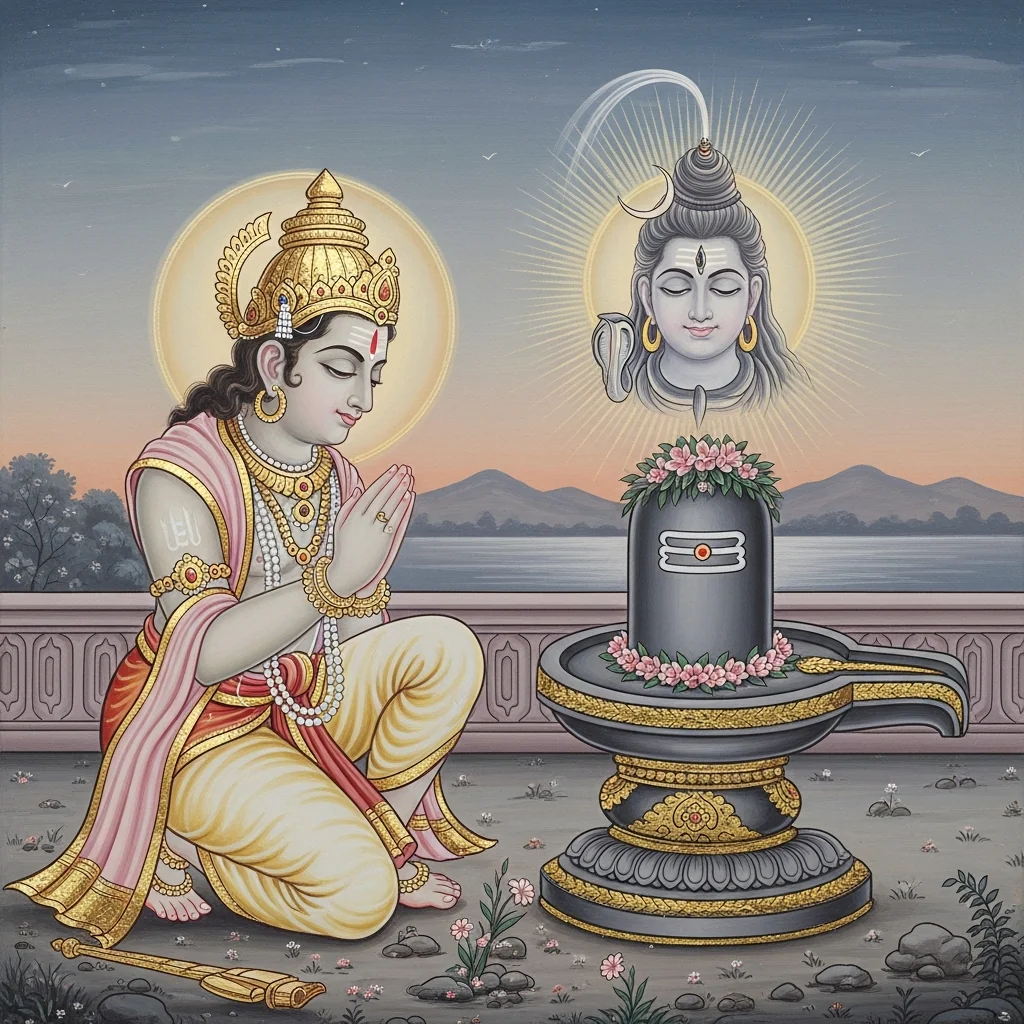
Īśvara describes a renowned siddha-liṅga called Dhanadeśvara, located in a specified sector—“to the south-west of Brahmā”—with an internal coordinate given as the sixteenth in the measure of “bows.” It is said to stand near another shrine, Rahuliṅga, and to have been established by Dhanada (Kubera), who undertook intense tapas, installed the liṅga by proper rite, and worshipped it for a long time. By Śiva’s grace Dhanada attains exalted rank and the lordship of Alakā. Remembering former conditions and recognizing the potency of Śivarātri and the sacred Prabhāsa field, he returns, perceives the site’s extraordinary power, and further confirms Śaṅkara’s manifested presence through austerity and devotion. The chapter ends with practical devotional counsel: worship with pañcopacāra and fragrant offerings is said to secure lasting prosperity in one’s lineage, grant invincibility and the humbling of enemies’ pride, and prevent the rise of poverty for those who carefully hear and honor this account.
Shlokas
Verse 1
ईश्वर उवाच । अथ ते पंचमं वच्मि सिद्धलिगं महाप्रभम् । ब्रह्मणो नैरृते भागे धनुषां षोडशे स्थितम्
Īśvara said: Now I shall tell you of the fifth—Siddhaliṅga, the greatly radiant—situated in Brahmā’s south‑western quarter, at a distance of sixteen bow‑lengths.
Verse 2
राहुलिंगस्य चाभ्याशे लिंगं धनदनिर्मितम् । धनदत्वं च संप्राप्तो यत्र तप्त्वा महत्तपः
Near Rāhuliṅga is a Liṅga fashioned by Dhanada (Kubera). Having performed great austerity there, he attained the status of “Dhanada,” the Lord of Wealth.
Verse 3
संस्थाप्य विधिवत्पूज्य लिंगं वर्षसहस्रकम् । अलकाधिपतिर्जातस्तत्र शंभोः प्रसादतः
Having duly installed the Liṅga and worshipped it according to rule for a thousand years, he became the lord of Alakā—by the grace of Śambhu.
Verse 4
जातिं स्मृत्वा पूर्विकां तु ज्ञात्वा दीपदशाफलम् । शिवरात्रे प्रभावं तु प्रभासं पुनरागतः
Recalling his former condition, and understanding the fruit of offering lamps in the prescribed manner, and the power of Śivarātri, he returned again to Prabhāsa.
Verse 5
प्रभावातिशयं ज्ञात्वा स्थापयामास शंकरम् । तत्र प्रत्यक्षतां नीतस्तपसा येन शंकरः
Knowing the extraordinary greatness of that place, he established Śaṅkara there; and by his austerity Śaṅkara was brought to visible manifestation in that very spot.
Verse 6
महाभक्त्या महादेवि तस्मिंल्लिंगेऽवतारितः । तं दृष्ट्वा मानवो भक्त्या पूजयित्वा यथाविधि
O great Goddess, through great devotion he caused Śiva to descend into that Liṅga. Seeing this, a person should, with devotion, worship it according to the proper rite.
Verse 7
पञ्चोपचारैः सद्भक्त्या गन्धधूपानुलेपनैः । तस्यान्वये दरिद्रश्च कदापि न भविष्यति
With sincere devotion, worshipping with the five offerings—such as fragrance, incense, and unguents—poverty will never arise in that devotee’s lineage.
Verse 8
ये चैतत्पूजयिष्यंति लिंगं भक्तियुता नराः । अजेयास्ते भविष्यंति शत्रूणां दर्पनाशनाः
Those men who, endowed with devotion, worship this Liṅga will become unconquerable, and they will shatter the pride of their enemies.
Verse 9
इति ते कथितं सर्वं धनदेशमहोदयम् । श्रुत्वानुमोद्य यत्नेन दरिद्रो नैव जायते
Thus, all the great glory of Dhanadeśa has been told to you. One who hears it and reverently assents to it with care does not become poor.
Verse 56
इति श्रीस्कांदे महापुराण एकाशीतिसाहस्र्यां संहितायां सप्तमे प्रभासखण्डे प्रथमे प्रभासक्षेत्रमाहात्म्ये धनदेश्वरमाहात्म्यवर्णनंनाम षट्पञ्चाशोऽध्यायः
Thus ends the fifty-sixth chapter, called “The Description of the Glory of Dhanadeśvara,” in the first part, the Prabhāsakṣetra-māhātmya, within the seventh division, the Prabhāsakhaṇḍa, of the Śrī Skanda Mahāpurāṇa, in the Ekāśīti-sāhasrī Saṃhitā.