Adhyaya 54
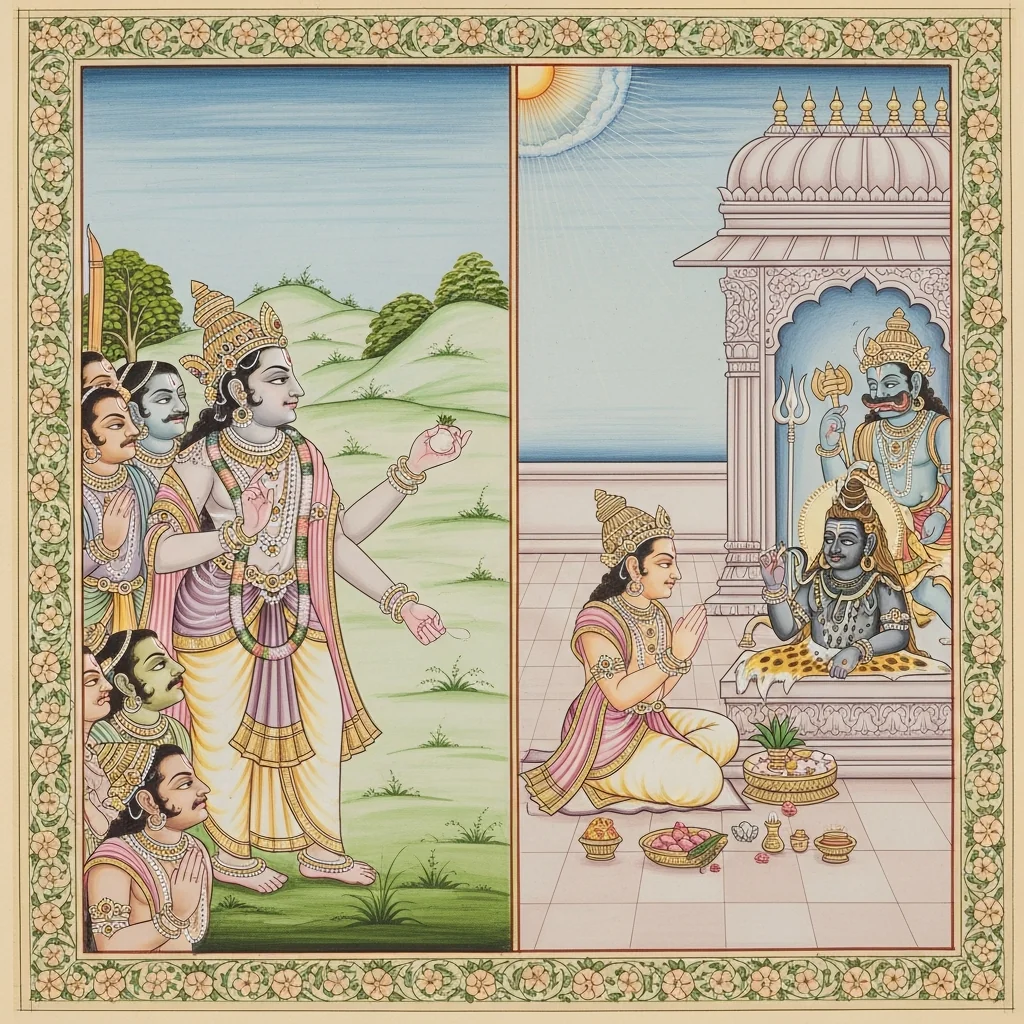
Īśvara recounts to Devī the sacred account of a local shrine in Prabhāsa-kṣetra, directing pilgrims to the “excellent Gandharveśvara” situated north of the abode of Daṇḍapāṇi. The legend concerns the Gandharva king Ghanavāha and his daughter Gandharvasenā: through pride in her beauty she is cursed by Śikhaṇḍin and his gaṇa, but later Gośṛṅga Ṛṣi grants her favor and relief through a Monday vow (somavāra-vrata) and devoted worship of Soma/Śiva. After severe tapas in the kṣetra, Ghanavāha establishes a liṅga, and his daughter also establishes a liṅga there. The worshipful form is named Ghanavāheśvara, and careful adoration near Daṇḍapāṇi is said to lead the pure, disciplined devotee to Gandharva-loka. A phalaśruti follows: the place is praised as a “third” power that destroys sin and increases merit; bathing at Agni-tīrtha and worshiping the Gandharva-venerated liṅga are extolled, and nirvāṇa is especially linked with the coming of uttarāyaṇa. Hearing and honoring this māhātmya is declared to free one from great fear.
Shlokas
Verse 1
ईश्वर उवाच । ततो गच्छेन्महादेवि गंधर्वेश्वरमुत्तमम् । दण्डपाणेस्तु भवनादुत्तरे निकटे स्थितम्
Īśvara said: “Then, O great goddess, one should go to the excellent Gandharveśvara. It is situated close by, to the north of Daṇḍapāṇi’s abode.”
Verse 2
यत्र गंधर्वराजो वै घनवाहेति विश्रुतः । तस्य गंधर्वसेनेति ख्याता पुत्री महाप्रभा
There indeed dwelt the king of the Gandharvas, famed as Ghanavāha. His daughter, radiant with great splendor, was renowned by the name Gandharvasenā.
Verse 3
शिखंडिना गणेनैव सा शप्ता रूपगर्विता । ततो गोशृंगऋषिणा दत्तस्तस्या अनुग्रहः
Proud of her beauty, she was cursed by the gaṇa named Śikhaṇḍin. Thereafter, the sage Gośṛṅga bestowed his gracious favor upon her.
Verse 4
सोमवारव्रतेनैव सोमेशाराधनं प्रति । ततः क्षेत्रं समागत्य तपः कृत्वा सुदुश्चरम्
Undertaking the Monday vow (Somavāra-vrata) with the intent of worshipping Lord Someśa, he then came to this sacred kṣetra and performed exceedingly arduous austerities.
Verse 5
लिंगं प्रतिष्ठयामास तत्र गंधर्वराट् स्वयम् । तथैव पुत्र्या तस्यैव तत्र लिंगं प्रतिष्ठितम्
There the king of the Gandharvas himself established a liṅga; and likewise, his daughter too established a liṅga there.
Verse 6
अथ तत्रैव देवेशि दंडपाणेः समीपतः । घनवाहेश्वरं नाम यो लिंगं यत्नतोऽर्चयेत्
Now, O goddess of the Lord, right there—near Daṇḍapāṇi—whoever carefully worships the liṅga named Ghanavāheśvara...
Verse 7
गंधर्वलोकमाप्नोति दृष्ट्वा स प्रयतः शुचिः । इति ते कथितं देवि गांधर्वं लिंगमुत्तमम्
Having beheld it, the restrained and pure devotee attains the world of the Gandharvas. Thus, O Devī, the excellent Gandharva-liṅga has been described to you.
Verse 8
तृतीयं सर्वपापानां नाशनं पुण्यवर्द्धनम् । अग्नितीर्थे नरः स्नात्वा पूज्य गंधर्वपूजितम्
The third (shrine) destroys all sins and increases merit. Having bathed at Agnitīrtha, a man should worship the One worshipped by the Gandharvas.
Verse 9
अयने चोत्तरे प्राप्ते निर्वाणमधिगच्छति । श्रुत्वा ऽभिनंद्य माहात्म्यं मुच्यते महतो भयात्
When the northern solstice arrives, he attains liberation. By hearing and reverently approving this māhātmya, one is freed from great fear.
Verse 54
इति श्रीस्कांदे महापुराण एकाशीतिसाहस्र्यां संहितायां सप्तमे प्रभासखण्डे प्रथमे प्रभासक्षेत्र माहात्म्ये गन्धर्वेश्वरमाहात्म्यवर्णनंनाम चतुःपंचाशोऽध्यायः
Thus ends the fifty-fourth chapter, called “The Description of the Greatness of Gandharveśvara,” in the Prabhāsa Khaṇḍa of the glorious Skanda Mahāpurāṇa, within the Ekāśīti-sāhasrī Saṃhitā, in the first division titled Prabhāsakṣetra Māhātmya.