Adhyaya 52
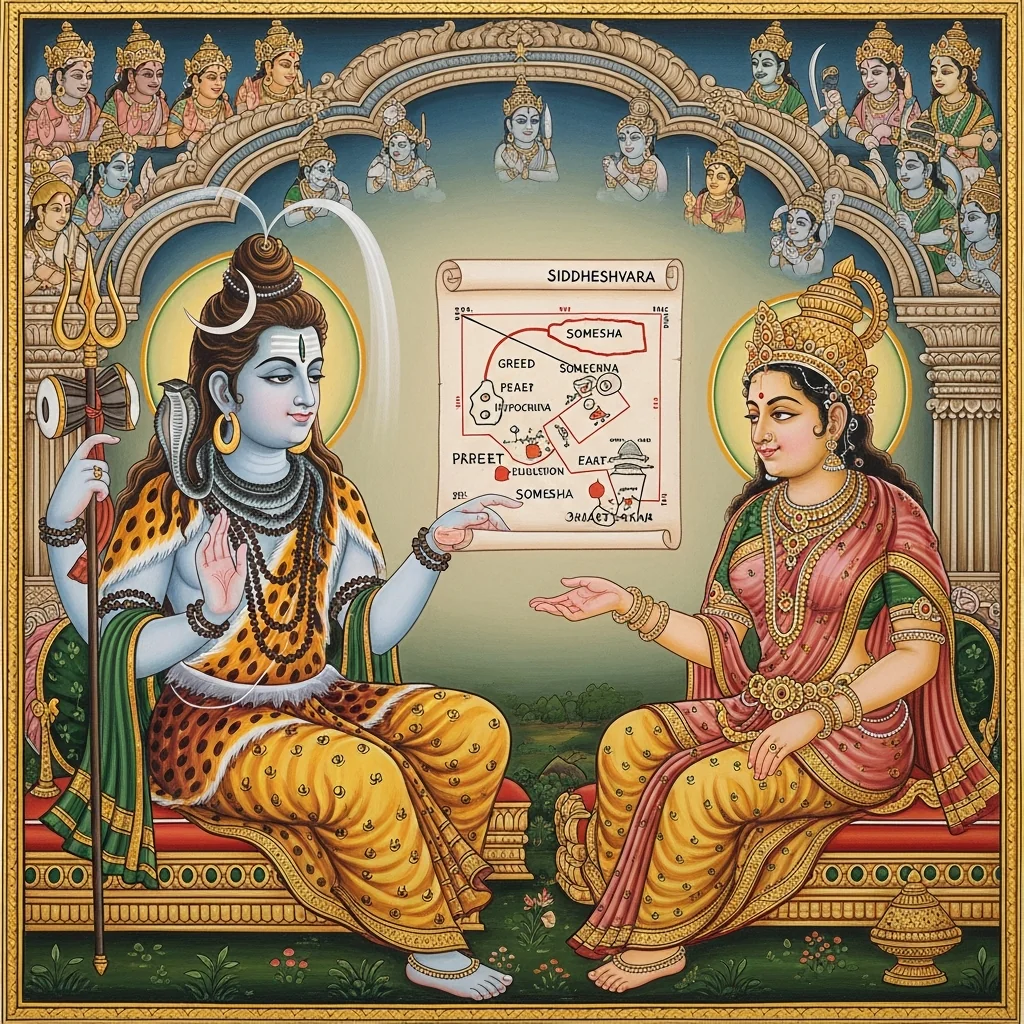
Īśvara instructs Devī about a set of “five Siddha-liṅgas,” declaring that their darśana guarantees the successful completion of human pilgrimage (yātrā-siddhi). The chapter then identifies Siddheśvara’s location by direction—near Somēśa in a specified quarter—placing Siddheśvara in the eastern sector relative to a named landmark. Reverent approach (abhigamana) and worship (arcana) are praised as efficacious, granting aṇimā and other siddhis; the devotee is freed from sins and attains Siddha-loka. A key teaching lists inner “vighnas” (obstacles)—desire, anger, fear, greed, attachment, envy, hypocrisy, sloth, sleep, delusion, and egoism—as impediments to siddhi; worship of Siddheśvara is said to dissolve them for residents and visitors of the kṣetra, inspiring disciplined pilgrimage and steady arcana. The chapter concludes by affirming this account as a pāpa-nāśana text for hearing and as a bestower of rightful aims through devotion.
Shlokas
Verse 1
ईश्वर उवाच । पंचाथ सिद्धलिंगानि कथयामि यशस्विनि । येषां दर्शनतो देवि सिद्धा यात्रा भवेन्नृणाम्
Īśvara said: “O illustrious lady, I shall now speak of the five Siddha-liṅgas. By merely beholding them, O Goddess, the pilgrimage of people is fulfilled.”
Verse 2
सोमेशादीशदिग्भागे वरारोहेति या स्मृता । तस्याश्च पूर्वदिग्भागे देवं सिद्धेश्वरं परम् । अभिगम्य नरो भक्त्या अणिमादिकमाप्नुयात्
In the northeastern quarter of Someśa lies the place remembered as Varārohā. In its eastern part is the supreme deity Siddheśvara. Approaching him with devotion, a person may attain aṇimā and the other yogic perfections.
Verse 3
सिद्धैः प्रतिष्ठितं लिंगं दृष्ट्वा भक्त्या तु मानवः । मुच्यते पातकैः सर्वैः सिद्धलोकं स गच्छति
Having beheld with devotion the liṅga established by the Siddhas, a person is freed from all sins and goes to the realm of the Siddhas.
Verse 4
विघ्नानि नाशमायांति तत्र क्षेत्रनिवासिनाम् । कामः क्रोधो भय लोभो रागो मत्सर एव च
For those dwelling in that sacred region, obstacles come to destruction there—desire, anger, fear, greed, attachment, and jealousy as well.
Verse 5
ईर्ष्या दंभस्तथाऽलस्यं निद्रा मोहस्त्वहंकृतिः । एतानि विघ्नरूपाणि सिद्धेर्विघ्नकराणि तु
Envy, hypocrisy, sloth, drowsiness, delusion, and egoism—these are forms of obstacles, indeed makers of obstacles to spiritual attainment.
Verse 6
तानि नाशं समायांति तत्र सिद्धे श्वरार्चनात् । एवं ज्ञात्वा तु यत्नेन तत्र यात्रां समाचरेत्
Those obstacles are destroyed there through the worship of Siddheśvara. Knowing this, one should diligently undertake pilgrimage to that place.
Verse 7
इत्येवं कथितं देवि सिद्धेश्वरमहोदयम् । सर्वकामप्रदं नृणां श्रुतं पातकनाशनम्
Thus, O Goddess, has the great glory of Siddheśvara been described—granting all desired aims to people; even hearing it destroys sins.
Verse 52
इति श्रीस्कांदे महापुराण एकाशीतिसाहस्र्यां संहितायां सप्तमे प्रभासखंडे प्रथमे प्रभासक्षेत्रमाहात्म्ये सिद्धेश्वरमाहात्म्यवर्णनंनाम द्विपञ्चाशत्तमोऽध्यायः
Thus, in the holy Skanda Mahāpurāṇa, in the Saṃhitā of eighty-one thousand verses, within the seventh book—the Prabhāsa Khaṇḍa—within its first division, the Māhātmya of Prabhāsa Kṣetra, ends the fifty-second chapter called “The Description of the Greatness of Siddheśvara.”