Adhyaya 51
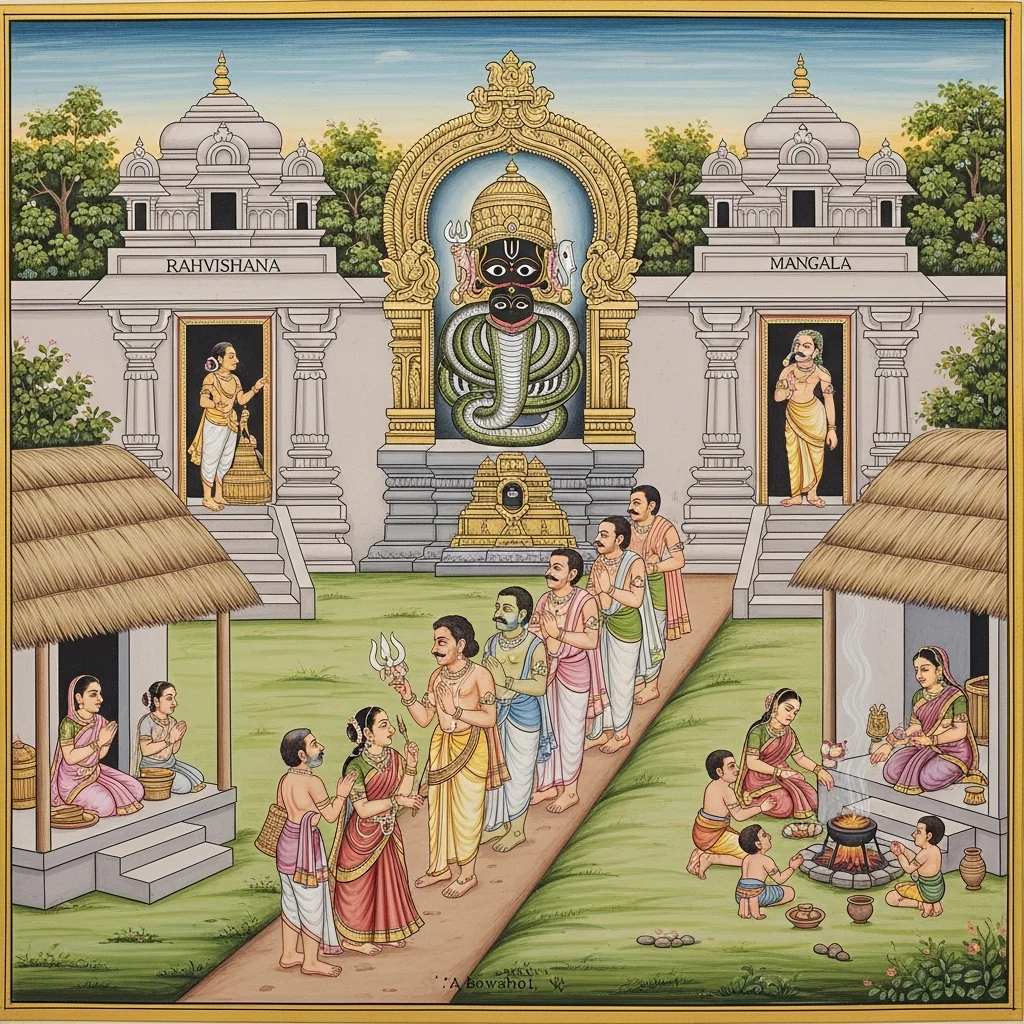
This adhyāya gives Īśvara’s topographic and ritual account of Ketuliṅga (Ketvīśvara) in the sacred region of Prabhāsa. The shrine is located by relational geography—north of Rāhvīśāna and south of Maṅgalā—with the added measure of “a bowshot” to guide pilgrims. Ketu is then portrayed as a formidable graha with vivid iconographic traits, and his austerities for a hundred divine years are narrated, ending in Śiva’s grace and the grant of lordship over many grahas. The chapter prescribes devout worship of Ketuliṅga—especially during Ketu’s ominous rise and in severe planetary afflictions—offering flowers, fragrances, incense, and varied naivedya according to proper procedure. Its stated fruit is the pacification of planetary distress and the destruction of sins. Finally, Ketuliṅga is set within a wider framework of nine graha-liṅgas and fourteen āyatanas in all, affirming that regular darśana removes fear of affliction and supports the well-being of the household.
Shlokas
Verse 1
ईश्वर उवाच । ततो गच्छेन्महादेवि केतुलिंगं महाप्रभम् । राह्वीशानादुत्तरे च मंगलायाश्च दक्षिणे
Īśvara said: Then, O Mahādevī, one should go to the greatly radiant Ketuliṅga—situated to the north of Rāhvīśvara and to the south of Maṅgalā (Maṅgaleśa).
Verse 2
धनुषोंतरमानेन नातिदूरे व्यवस्थितम् । लिंगं महाप्रभावं हि सर्वपातकनाशनम्
Measured at a distance of a bow-shot, it stands not far away—a Liṅga of great power indeed, the destroyer of all sins.
Verse 3
केतुर्नाम ग्रहोत्युग्रः शिवसद्भावभावितः । वर्तुलोऽतीव विस्तीर्णो लोचनाभ्यां सुभीषणः
Ketu is a graha of surpassing fierceness, yet suffused with auspicious devotion to Śiva—round in form, exceedingly vast, and terrifying with his two eyes.
Verse 4
पलालधूमसंकाशो ग्रहपीडापहारकः । तत्राकरोत्तपश्चोग्रं दिव्याब्दानां शतं प्रिये
Resembling the smoke of chaff, he removes the afflictions born of planetary forces. There, O beloved, he performed fierce austerity for a hundred divine years.
Verse 5
तस्य तुष्टो महादेवो ग्रह त्वं प्रददौ प्रिये । एकादशशतानां च ग्रहाणामाधिपत्यताम्
Pleased with him, Mahādeva granted you, O beloved, the status of a graha, and also lordship over eleven hundred planetary forces.
Verse 6
तत्रस्थं पूजयेद्भक्त्या केतुलिंगं महाप्रभम् । केतूदये महाघोरे तस्मिन्दृष्टे विशेषतः
With devotion one should worship the mighty, radiant Ketu-liṅga established there—especially at the fearsome rising of Ketu, and most particularly upon beholding that liṅga.
Verse 7
ग्रहपीडासु चोग्रासु पूजयेत्तं विधानतः । पुष्पैर्गंधैस्तथा धूपैर्नैवेद्यैर्विविधैः शुभैः
When fierce planetary afflictions arise, one should worship Him according to the prescribed rites—with flowers, fragrances, incense, and many auspicious offerings of food.
Verse 8
तोषयेद्विधिवद्देवं केतुं कल्मषनाशनम्
According to the proper rite, one should propitiate the divine Ketu, the destroyer of moral and ritual impurity.
Verse 9
इति संक्षेपतः प्रोक्तं केतुलिंगं महोदयम् । ग्रहपीडोपशमनं सर्वपातकनाशनम्
Thus, in brief, the greatly auspicious Ketu-liṅga has been described—one that pacifies planetary afflictions and destroys all sins.
Verse 10
एतानि नव लिंगानि ग्रहाणां कथितानि ते । यः पश्यति नरो नित्यं तस्य पीडाभयं कुतः
These nine liṅgas of the grahas have been told to you. For the person who beholds them daily, how could there remain any fear of affliction?
Verse 11
न दौर्भाग्यं कुले तस्य न रोगी नैव दुःखितः । जायते पुत्रवद्देवि तं रक्षंति महाग्रहाः
In his family there is no misfortune; none is sick or sorrowful. Like a son, O Devī, the great grahas themselves protect him.
Verse 12
इति ते कथितं सम्यक्चतुर्दशायतनं प्रिये । विघ्नेश्वरं समारभ्य यावत्केतुप्रतिष्ठितम्
Thus, O beloved, the set of fourteen sanctuaries has been properly explained to you—from Vighneśvara onward, up to the shrine where Ketu is established.
Verse 13
नवग्रहेश्वराणां तु माहात्म्यं पापनाशनम् । तथैव पंचलिंगानां श्रुत्वा पापैः प्रमुच्यते
Indeed, the māhātmya of the Lords of the nine Grahas destroys sin; likewise, by hearing of the five liṅgas, one is freed from sins.
Verse 14
कपर्द्दिनं समारभ्य चंडनाथांतकानि च । पंचैव मुद्रालिंगानि नापुण्यो वेद मानवः
Beginning with Kaparddin and including Caṇḍanāthāntaka, there are five Mudrā-liṅgas—known only to those among men who are truly meritorious.
Verse 15
सूर्येश्वरं समारभ्य केतुलिंगांतकानि वै । नवग्रहाणां लिंगानि नान्यो जानाति कश्चन
Beginning with Sūryeśvara and extending up to Ketuliṅga, these are the liṅgas of the Nine Grahas; none other truly knows their full import.
Verse 16
चतुर्दशविधा त्वेवं प्रोक्ताऽयतनसंगतिः । यश्चैनां वेद भावेन स क्षेत्रफलमश्नुते
Thus the arrangement of the sacred abodes has been taught as fourteenfold. Whoever understands it with true devotional intent attains the fruit of the holy region.
Verse 51
इति श्रीस्कांदे महापुराण एकाशीतिसाहस्र्यां संहितायां सप्तमे प्रभासखण्डे प्रथमे प्रभासक्षेत्रमाहात्म्ये केत्वीश्वरमाहात्म्यवर्णननामैकपंचाशोऽध्यायः
Thus ends the Fifty-first chapter, called “The Description of the Greatness of Ketvīśvara,” in the Prabhāsa-khaṇḍa—within the Prabhāsakṣetra-māhātmya—of the venerable Skanda Mahāpurāṇa, in the Saṃhitā of eighty-one thousand verses.