Adhyaya 50
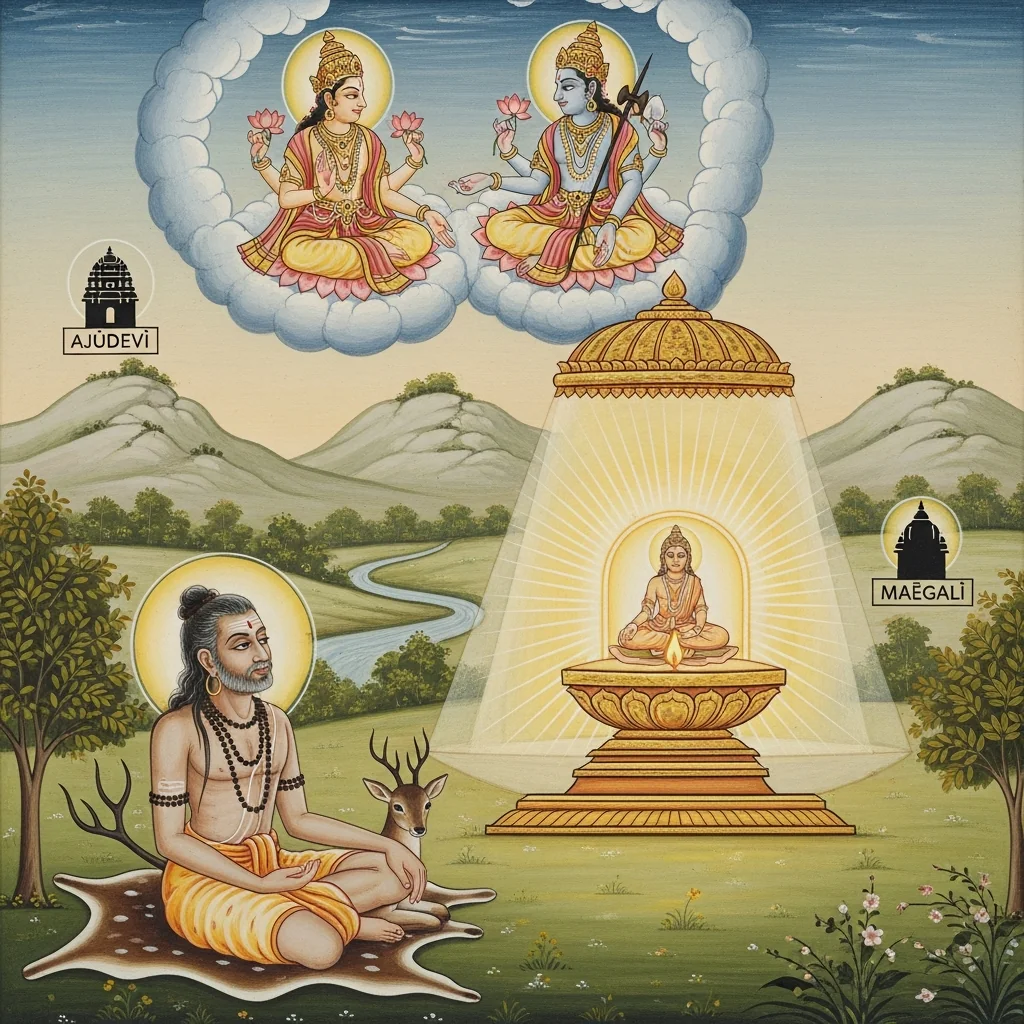
Chapter 50 records a site-centered theological dialogue in which Īśvara tells Devī of a supremely potent liṅga established by Rāhu (Svabhānu/Saiṃhikeya). The shrine is located in the vayavya (northwest) direction—near Maṅgalā, north of Ajādevī, and close to seven “dhanus” (bow) markers. Its origin is then given: the formidable asura Svabhānu performs intense tapas for a thousand years to propitiate Mahādeva, who finally manifests and is installed as a liṅga, the “lamp of the world” (jagaddīpa). The phalaśruti declares that faithful worship and proper darśana dissolve even grievous sins, including brahmahatyā-type wrongdoing, and bestow auspicious embodied results—freedom from blindness, deafness, muteness, disease, and poverty—followed by prosperity, beauty, fulfillment of aims, and deva-like enjoyment. The closing verse places the chapter within the Skanda Purāṇa’s Prabhāsa Khaṇḍa, in the Prabhāsa Kṣetra Māhātmya.
Shlokas
Verse 1
ईश्वर उवाच । ततो गच्छेन्महादेवि लिंगं राहुप्रतिष्ठितम् । शनैश्चरेश्वराद्देवि वायव्ये संप्रतिष्ठितम्
Īśvara said: Then, O great Goddess, one should go to the liṅga established by Rāhu, situated to the northwest, near Śanaiścareśvara.
Verse 2
अजादेव्याश्चोत्तरतो धनुषां सप्तके स्थितम् । मंगलायाः समीपस्थं नातिदूरे व्यवस्थितम्
It is situated to the north of Ajādevī, at a distance of seven bow-lengths; it stands close to Maṅgalā, not far away.
Verse 3
लिंगं महाप्रभावं तु सैंहिकेयप्रतिष्ठितम् । तत्र वर्षसहस्रं तु वैप्रचित्तिस्तपोऽकरोत्
That liṅga is of great power, established by the son of Siṃhikā (Rāhu). There Vaipracitti performed austerities for a thousand years.
Verse 4
स्वर्भानुः स महावीर्यो वक्त्रयोधी महासुराः । समाराध्य महादेवं दिव्येन तपसा प्रभुम्
Svarbhānu—the mighty, heroic great Asura, famed for combat—propitiated the Lord Mahādeva, the supreme Master, by means of divine austerities.
Verse 5
लिंगेऽवतारयामास जगद्दीपं महेश्वरम् । यश्चैनं पूजयेद्भक्त्या नरः सम्यक्च पश्यति । तस्य पापं क्षयं याति अपि ब्रह्मवधोद्भवम्
He caused Maheśvara—the lamp of the world—to manifest in the Liṅga. And the man who worships Him with devotion and beholds Him rightly—his sins come to destruction, even those arising from brahma-hatyā (the slaying of a brāhmaṇa).
Verse 6
नांधो न बधिरो मूको न रोगी न च निर्द्धनः । कदाचिज्जायते मर्त्यस्तेन दृष्टेन भूतले
On this earth, a mortal who has beheld that (Liṅga) is never born blind, nor deaf, nor mute, nor diseased, nor poor.
Verse 7
सुखसौभाग्यसंपन्नस्तदा भवति रूपवान् । सर्वकामसमृद्धात्मा मोदते दिवि देववत्
Then he becomes endowed with happiness and good fortune, possessed of beauty; fulfilled in all desires, he rejoices in heaven like a god.
Verse 8
इति ते कथितं देवि माहात्म्यं राहुदैवतम् । श्रुत्वा तु मोहनिर्यातो नरो निष्कल्मषो भवेत्
Thus, O Devī, the greatness of the deity Rāhu has been told to you. Hearing it, a man is freed from delusion and becomes spotless, free of sin.
Verse 50
इति श्रीस्कांदे महापुराण एकाशीतिसाहस्र्यां संहितायां सप्तमे प्रभासखण्डे प्रथमे प्रभासक्षेत्रमाहात्म्ये राह्वीश्वरमाहात्म्यवर्णनंनाम पंचाशोऽध्यायः
Thus ends the fiftieth chapter, called “The Description of the Glory of Rāhvīśvara,” in the first division, Prabhāsakṣetra Māhātmya, of the seventh Prabhāsa Khaṇḍa, within the Skanda Mahāpurāṇa of eighty-one thousand verses.