Adhyaya 49
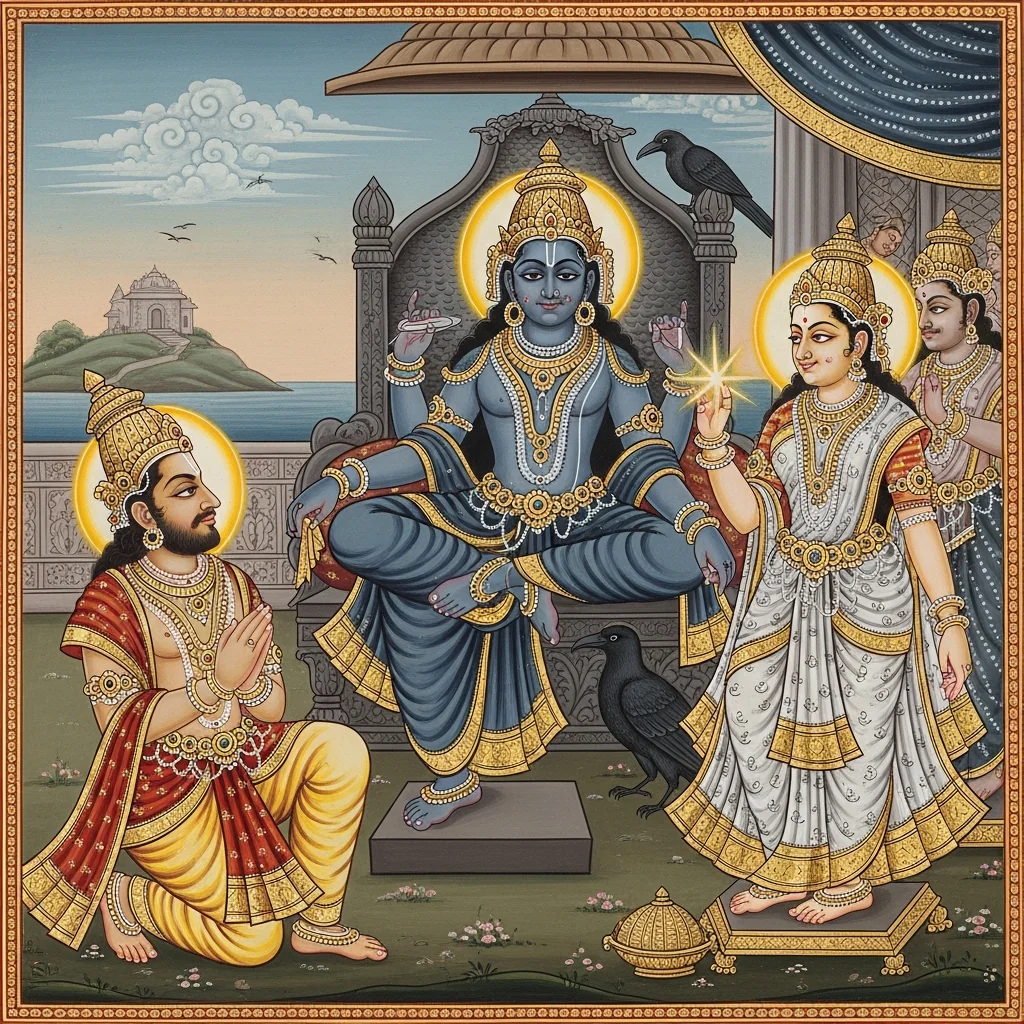
This chapter, framed as an Īśvara–Devī Śaiva discourse, first situates the great liṅga-shrine called Śanaiścaraiśvara/Saurīśvara within the sacred landscape of Prabhāsa. The liṅga is praised as a “mahāprabhā” power-center that pacifies grave wrongdoing and fear, and Śani’s exalted standing is explicitly linked to his devotion to Śambhu. It then prescribes a regulated Saturday observance: worship with śamī leaves and food-offerings (tila, māṣa, guḍa, odana), and a dāna injunction to gift a black bull to a worthy recipient. The narrative core recounts King Daśaratha’s response to an astrologically foretold crisis—Śani’s approach to Rohiṇī and the dreaded “śakaṭa-bheda” omen threatening drought and famine. Told the configuration is otherwise unresolvable, the king boldly intervenes, journeys to the stellar sphere, confronts Śani in a weapon-like stance, and wins boons through valor and austerity. Daśaratha asks that Śani not harm Rohiṇī, not break the “śakaṭa” omen, and not cause a twelve-year famine; Śani grants these requests. The chapter preserves Daśaratha’s Śani-stotra, an extended praise of Śani’s formidable form and his power to bestow or remove sovereignty, followed by Śani’s conditional assurance: those who recite the hymn with worship and folded hands are protected from Śani’s affliction and even other planetary troubles at key astrological junctures (birth-star, lagna, daśā/antardaśā). A concluding phalāśruti declares that Saturday-morning recitation and devotional remembrance relieve graha-born distress and fulfill one’s aims.
Shlokas
Verse 1
ईश्वर उवाच । तस्माच्छुक्रेश्वराद्गच्छेद्देवि लिंगं महाप्रभम् । शनैश्चरैश्वरंनाम महापातकनाशनम्
Īśvara said: Therefore, O Devī, from Śukreśvara one should go to the greatly radiant liṅga called Śanaiścaraiśvara, which destroys even great sins.
Verse 2
बुधेश्वरात्पश्चिमतो ह्यजादेव्यग्निगोचरे । तस्या धनुः पंचकेन नातिदूरे व्यवस्थितम्
To the west of Budheśvara, in the vicinity of Ajādevī’s sacred fire, it is situated not far away—at a distance of five dhanu measures.
Verse 3
कल्पलिंगं महादेवि पूजितं देवदानवैः । छायापुत्रेण संतप्तं तपः परमदुष्करम्
O great Devī, this is the Kalpa-liṅga, worshipped by gods and dānavas. Here the son of Chāyā, scorched by hardship, performed an exceedingly difficult austerity.
Verse 4
अनादि निधनो देवो येन लिंगेऽवतारितः । प्राप्तवान्यो ग्रहेशत्वं भक्त्या शंभोः प्रसादतः
He who installed within that liṅga the God without beginning and without death attained lordship over the planets, through devotion and by Śambhu’s grace.
Verse 5
यस्य दृष्ट्या बिभेति स्म देवासुरगणो महान् । न स कोऽप्यस्ति वै प्राणी ब्रह्मांडे सचराचरे
Before his very glance the mighty hosts of gods and asuras tremble; in the entire universe, moving and unmoving, there is no living being who is not subject to him.
Verse 6
देवो वा दानवो वापि सौरिणा पीडितो न यः । शनिवारेण संपूज्य भक्त्या सौरीश्वरं शिवम्
Whether god or dānava, whoever is afflicted by Sauri (Śani) becomes free of that torment after devoutly worshipping Śiva as Saurīśvara on a Saturday.
Verse 7
शमीपत्रैर्महादेवि तिलमाषगुडौदनैः । संतर्प्य तु विधानेन दद्यात्कृष्णं वृषं द्विजे
O Great Goddess, having duly offered satisfaction with śamī leaves, sesame, black-gram, jaggery, and cooked rice, one should—according to proper rule—gift a black bull to a brāhmaṇa.
Verse 8
स्तुत्वा स्तोत्रैश्च विविधैः पुराणश्रुतिसंभवैः । अथ वैकेन देवेशः स्तोत्रेण परितोषितः
Having praised Him with many hymns drawn from the Purāṇas and sacred tradition, the Lord of the gods was then especially delighted by one particular hymn.
Verse 9
राज्ञा दशरथेनैव कृतेन तु बलीयसा । स्तुत्यः सौरीश्वरो देवः सर्वपीडोपशांतये
That mighty hymn composed by King Daśaratha should indeed be recited in praise of Lord Saurīśvara, for the pacification of every affliction.
Verse 10
देव्यु वाच । कथं दशरथो राजा चक्रे शानैश्चरीं स्तुतिम् । कथं संतुष्टिमगमत्तस्य देवः शनैश्चरः
Devī said: How did King Daśaratha compose a hymn to Śanaiścara? And how did that god Śanaiścara become satisfied with him?
Verse 11
ईश्वर उवाच । रघुवंशेऽति विख्यातो राजा दशरथो बली । चक्रवर्ती स विज्ञेयः सप्तद्वीपाधिपः पुरा
Īśvara said: In the Raghu lineage there was a mighty king, Daśaratha, exceedingly renowned. Know him as a universal sovereign, who formerly ruled the seven continents.
Verse 12
कृत्तिकांते शनिं कृत्वा दैवज्ञैर्ज्ञापितो हि सः । रोहिणीं भेद यित्वा तु शनिर्यास्यति सांप्रतम्
He was informed by the astrologers that Śani, having reached the end of Kṛttikā, would now in his present course pass through (pierce) Rohiṇī.
Verse 13
उक्तं शकटभेदं तु सुरासुरभयंकरम् । द्वादशाब्दं तु दुर्भिक्षं भविष्यति सुदारुणम्
It was proclaimed that the “Śakaṭabheda” would come to pass—terrifying to gods and asuras alike—and that a most dreadful famine would endure for twelve years.
Verse 14
एतच्छ्रुत्वा मुनेर्वाक्यं मंत्रिभिः सहितो नृपः । आकुलं तु जगद्दृष्ट्वा पौरजानपदादिकम्
Hearing the sage’s words, the king—together with his ministers—beheld the world in turmoil: townsfolk, country people, and all the rest.
Verse 15
वदंति सततं लोका नियमेन समागताः । देशाश्च नगर ग्रामा भयाक्रांताः समंततः । मुनीन्वसिष्ठप्रमुखान्पप्रच्छ च स्वयं नृपः
People, assembled in disciplined observance, kept speaking of the crisis; regions, cities, and villages everywhere were seized by fear. Then the king himself approached the sages—foremost among them Vasiṣṭha—and inquired.
Verse 16
दशरथ उवाच । समाधानं किमत्रास्ते ब्रूहि मे द्विज सत्तम
Daśaratha said: “What remedy is there in this matter? Tell me, O best among the twice-born.”
Verse 17
वसिष्ठ उवाच । प्राजापत्ये च नक्षत्रे तस्मिन्भिन्ने कुतः प्रजाः । अयं योगो ह्यसाध्यस्तु ब्रह्मादींद्रादिभिः सुरैः
Vasiṣṭha said: “When that constellation connected with Prajāpati has been disrupted, how can beings prosper? This astrological conjunction is truly impossible to set right—even for the gods, beginning with Brahmā and Indra.”
Verse 18
तदा संचिंत्य मनसा साहसं परमं महत् । समादाय धनुर्दिव्यं दिव्यैरस्त्रैः समन्वितम्
Then, having pondered within his mind, he resolved upon a most extraordinary and daring deed, and took up a divine bow furnished with celestial weapons.
Verse 19
रथमारुह्य वेगेन गतो नक्षत्रमंडलम् । रथं तु कांचनं दिव्यं मणिरत्नविभूषितम्
Mounting his chariot, he sped to the circle of the constellations. That chariot was divine and golden, adorned with jewels and precious gems.
Verse 20
ध्वजैश्च चामरैश्छत्रैः किंकिणैरथ शोभितम् । हंसवर्णहयैर्युक्तं महाकेतुसमन्वितम्
It was splendid with banners, yak-tail fans, parasols, and tinkling bells; yoked with horses white as swans, and crowned with a great standard.
Verse 21
दीप्यमानो महारत्नैः किरीटमुकुटोज्ज्वलः । बभ्राज स तदाकाशे द्वितीय इव भास्करः
Blazing with great jewels, his crown and diadem shining, he gleamed in the sky like a second sun.
Verse 22
आकर्णं चापमापूर्य संहारास्त्रं नियोज्य च । कृत्तिकांते शनिं ज्ञात्वा प्रविश्य किल रोहिणीम्
Drawing the bow back to the ear and fitting the annihilating weapon, he recognized Śani at the end of Kṛttikā and then, indeed, entered Rohiṇī.
Verse 23
दृष्ट्वा दशरथोऽस्याग्रे तस्थौ सभ्रुकुटीमुखः । संहारास्त्रं शनिर्दृष्ट्वा सुरासुरविमर्द्दनम्
Seeing him standing before him, Daśaratha remained there, his face knit in a frown. And Śani, beholding the weapon of annihilation—one that crushes gods and demons alike—
Verse 24
हसित्वा तद्रयात्सौरिरिदं वचनमब्रवीत् । पौरुषं तव राजेंद्र परं रिपुभयंकरम्
Then Sauri, the son of the Sun (Śani), laughed and spoke: “O lord of kings, your valor is supreme—truly terrifying to enemies.”
Verse 25
देवासुरमनुष्याश्च सिद्धविद्याधरोरगाः । मया विलोकिताः सर्वे भयं चाशु व्रजंति ते
Gods, demons, human beings, Siddhas, Vidyādharas, and serpents—whomever I merely cast my gaze upon, all of them swiftly fall into fear.
Verse 26
तुष्टोहं तव राजेंद्र तपसा पौरुषेण च । वरं ब्रूहि प्रदास्यामि मनसा यदभीप्सितम्
O king of rulers, I am pleased with you—by your austerity and your manly valor. Speak a boon; I shall grant whatever your mind desires.
Verse 27
दशरथ उवाच । रोहिणीं भेदयित्वा तु न गंतव्यं त्वया शने । सरितः सागरा यावद्यावच्चद्रार्कमेदिनी
Daśaratha said: “O Śani, after piercing Rohiṇī, you must not proceed further—so long as rivers flow to the ocean, and so long as the moon, the sun, and the earth endure.”
Verse 28
याचितं ते मया सौरे नान्य मिच्छामि ते वरम् । एवमुक्तः शनिः प्रादाद्वरं तस्मै तु शाश्वतम्
O Sauri, this is what I have asked of you; I desire no other boon from you. Thus addressed, Śani granted him that boon—enduring and everlasting.
Verse 29
प्राप्यैवं तु वरं राजा कृतकृत्योऽभवत्तदा । पुनरेवाब्रवीत्सौरिर्वरं वरय सुव्रत
Having thus obtained the boon, the king felt his purpose fulfilled. Yet Sauri spoke again: “Choose another boon, O you of noble vow.”
Verse 30
प्रार्थयामास हृष्टात्मा वरमेवं शनेस्तदा । न भेत्तव्यं च शकटं त्वया भास्करनंदन
Then, with a joyful heart, he requested this boon from Śani: “O son of Bhāskara, you must never break the Śakaṭa (waggon).”
Verse 31
द्वादशाब्दं तु दुर्भिक्षं न कर्तव्यं कदाचन । कीर्तिरेषा मदीया च त्रैलोक्ये विचरिष्यति
“A famine lasting twelve years must never be brought about—at any time. And this very fame of mine shall roam throughout the three worlds.”
Verse 32
ईश्वर उवाच । वरद्वयं ततः प्राप्य हृष्टरोमा स पार्थिवः । रथोपरि धनुर्मुक्त्वा भूत्वा चैव कृतांजलिः
Īśvara said: Having obtained the two boons, that king’s hairs stood on end with joy. Setting down his bow upon the chariot, he stood with palms joined in reverence.
Verse 33
ध्यात्वा सरस्वतीं देवीं गणनाथं विनायकम् । राजा दशरथः स्तोत्रं सौरेरिदमथाकरोत्
Meditating upon Goddess Sarasvatī and Gaṇanātha Vināyaka, King Daśaratha then composed this hymn to Sauri (Śani).
Verse 34
राजोवाच । नमो नीलमयूखाय नीलोत्पलनिभाय च । नमो निर्मांसदेहाय दीर्घश्मश्रुजटाय च
The king said: Homage to him whose rays are dark-blue, and who resembles a blue lotus. Homage to him whose body is lean and fleshless, and who bears long beard and matted locks.
Verse 35
नमो विशालनेत्राय शुष्कोदरभयान क । नमः परुषगात्राय स्थूलरोमाय वै नमः
Salutations to the wide-eyed one, terrifying with a withered belly. Salutations again to the rough-limbed one, to him of thick hair.
Verse 36
नमो नित्यं क्षुधार्त्ताय नित्यतप्ताय वै नमः । नमः कालाग्निरूपाय कृतांतक नमोस्तु ते
Salutations to the one ever afflicted by hunger, to the one ever scorched. Salutations to him whose form is the fire of Time; O Kṛtāntaka, to you be salutations.
Verse 37
नमो दीर्घाय शुष्काय कालदृष्टे नमोऽस्तु ते । नमस्ते कोटराक्षाय दुर्निरीक्ष्याय वै नमः
Salutations to the tall and withered one; O you whose gaze is Time itself, salutations to you. Salutations to you of hollowed eyes—hard to behold—salutations indeed.
Verse 38
नमो घोराय रौद्राय भीषणाय करा लिने । नमस्ते सर्वभक्षाय वलीमुख नमोऽस्तु ते
Salutations to the terrible, the fierce, the dreadful—O bearer of the sword in hand. Salutations to you, devourer of all; O Valīmukha, salutations to you.
Verse 39
सूर्यपुत्र नमस्तेऽस्तु भास्करे भयदायक । अधोदृष्टे नमस्तुभ्यं वपुःश्याम नमोऽस्तु ते
O Son of the Sun, salutations to you—O Bhāskara, giver of fear to the unrighteous. O downward-gazing one, salutations to you; O dark-bodied one, salutations to you.
Verse 40
नमो मन्दगते तुभ्यं निस्त्रिंशाय नमोनमः । नमस्त उग्ररूपाय चण्डतेजाय ते नमः
Salutations to you of slow movement; salutations again and again to you who bear a sword. Salutations to you of terrifying form; to you of fierce radiance, salutations.
Verse 41
तपसा दग्धदेहाय नित्यं योगरताय च । नमस्ते ज्ञाननेत्राय कश्यपात्मजसूनवे
Salutations to him whose body is scorched by austerity, and who is ever devoted to yoga. Salutations to you whose eye is wisdom, O son of Kaśyapa’s lineage.
Verse 42
तुष्टो ददासि वै राज्यं रुष्टो हरसि तत्क्षणात् । देवासुरमनुष्याश्च पशुपक्षिसरीसृपाः
When pleased, you grant sovereignty; when angered, you snatch it away in an instant. Gods, demons, and humans—beasts, birds, and reptiles—all fall under your sway.
Verse 43
त्वया विलोकिताः सौरे दैन्यमाशु व्रजंति च । ब्रह्मा शक्रो यमश्चैव ऋषयः सप्ततारकाः
O Saura (Śani, Saturn), those upon whom you cast your gaze swiftly fall into wretchedness. Even Brahmā, Śakra (Indra), and Yama, and the seers—the Seven Stars—are not beyond your influence.
Verse 44
राज्यभ्रष्टाश्च ते सर्वे तव दृष्ट्या विलोकिताः । देशाश्च नगरग्रामा द्वीपाश्चैवाद्रयस्तथा
All those upon whom your gaze falls are cast down from kingship. Lands, cities and villages, islands, and likewise mountains—all are subject to your influence.
Verse 45
रौद्रदृष्ट्या तु ये दृष्टाः क्षयं गच्छंति तत्क्षणात्
Those upon whom the fierce, wrathful glance falls are destroyed in that very instant.
Verse 46
प्रसादं कुरु मे सौरे वरार्थेऽहं तवाश्रितः । सौरे क्षमस्वापराधं सर्वभूतहिताय च
O Saura, son of Sūrya, show me your grace. Seeking a boon, I have taken refuge in you. O Saura, forgive my offence as well—for the welfare of all beings.
Verse 47
ईश्वर उवाच । एवं स्तुतस्तदा सौरी राज्ञा दशरथेन च । महराजः शनिर्वाक्यं हृष्टरो माऽब्रवीदिदम्
Īśvara said: Thus praised at that time by King Daśaratha, Saura (Śani) the great king—delighted—spoke these words.
Verse 48
शनिरुवाच । तुष्टोऽहं तव राजेन्द्र स्तवेनानेन सुव्रत । वरं ब्रूहि प्रदास्यामि स्वेच्छया रघुनंदन
Śani said: O lord of kings, O man of noble vow, I am pleased with you by this hymn. Speak a boon—I shall grant it of my own will, O joy of the Raghu line.
Verse 49
दशरथ उवाच । अद्यप्रभृति पिंगाक्ष पीडा कार्या न कस्यचित् । देवासुरमनुष्याणां पशुपक्षिसरीसृपाम्
Daśaratha said: From this day onward, O tawny-eyed one, let no affliction be inflicted upon anyone—whether gods, asuras, humans, beasts, birds, or creeping creatures.
Verse 50
शनिरुवाच । ग्रहाणां दुर्ग्रहो ज्ञेयो ग्रहपीडां करोम्यहम् । अदेयं प्रार्थितं राजन्किंचिद्युक्तं ददाम्यहम्
Śani said: Know me to be the most difficult to restrain among the planets; I indeed cause planetary affliction. What is improper to give, when requested, cannot be granted; yet, O king, I shall give something that is fitting.
Verse 51
त्वया प्रोक्तं मम स्तोत्रं ये पठि ष्यंति मानवाः । पुरुषाश्च स्त्रियो वापि मद्भयेनोपपीडिताः
The hymn to me that you have composed—those people who shall recite it, whether men or women, when oppressed by fear of me,
Verse 52
देवासुरमनुष्यास्तु सिद्धविद्याधरोरगाः । मृत्युस्थाने स्थितो वापि जन्मप्रांतगतस्तथा
—whether they be gods, asuras, humans, Siddhas, Vidyādharas, or Nāgas; even if stationed at the place of death, or having reached the boundary of life,
Verse 53
एककालं द्विकालं वा तेषां श्रेयो ददाम्यहम् । पूजयित्वा जपेत्स्तोत्रं भूत्वा चैव कृतांजलिः
Whether once a day or twice a day, I bestow their welfare and well-being. Having worshipped, one should recite the hymn as japa, standing with hands joined in reverence.
Verse 54
तस्य पीडां न चैवाहमिह कुर्यां कदाचन । जन्मस्थाने स्थितो वापि मृत्युस्थाने स्थितोऽपि च
And here I shall never cause that person any affliction—whether he stands at the place of birth or even at the place of death.
Verse 55
जन्मऋक्षे च लग्ने च दशास्वंतर्दशासु च । रक्षामि सततं तस्य पीडां चान्यग्रहस्य च
At the time of one’s birth-star and ascendant (lagna), and during the major periods and sub-periods (dasha and antardasha), I continually protect that devotee from affliction—whether arising from me or from any other graha (planetary power).
Verse 56
अनेनैव प्रकारेण र्पाडामुक्तस्त्वसौ भवेत् । एतत्प्रोक्तं मया दत्तं वरं च रघुनंदन
By this very method, he indeed becomes freed from affliction. This is what I have declared, and this boon too I have granted, O delight of the Raghu line.
Verse 57
ईश्वर उवाच । वरद्वयं च संप्राप्य राजा दशरथः पुरा । मेने कृतार्थमात्मानं नमस्कृत्य शनैश्चरम्
Īśvara said: Having obtained the two boons, King Daśaratha of old considered himself fulfilled; and, bowing in reverence, he paid homage to Śanaiścara.
Verse 58
शनिं स्तुत्वाऽभ्यनुज्ञातो रथमारुह्य वीर्यवान् । स्वस्थानं गतवान्राजा पूज्यमानो दिवौकसैः
Having praised Śani and received leave to depart, the valorous king mounted his chariot and returned to his own abode, honored by the dwellers of heaven.
Verse 59
य इदं प्रातरुत्थाय सौरिवारे पठेन्नरः । सर्वग्रहोद्भवा पीडा न भवेद्भुवि तस्य तु
Whoever rises early and recites this on the day of Sauri (Saturday), for him, while living on earth, affliction arising from any planet does not occur.
Verse 60
शनैश्चरं स्मरेद्देवं नित्यं भक्तिसमन्वितः । पूजयित्वा पठेत्स्तोत्रं तस्य तुष्यति भास्करिः
Let one daily remember the god Śanaiścara with devotion; having worshiped, let one recite the hymn—then Bhāskarī, the Solar power, becomes pleased with him.
Verse 61
इति ते कथितं देवि माहात्म्यं शनिदैवतम् । सर्वपापोपशमनं सर्वकामफलप्रदम्
Thus, O Goddess, I have told you the greatness of the deity Śani—one that pacifies all sins and grants the fruits of every rightful desire.