Adhyaya 41
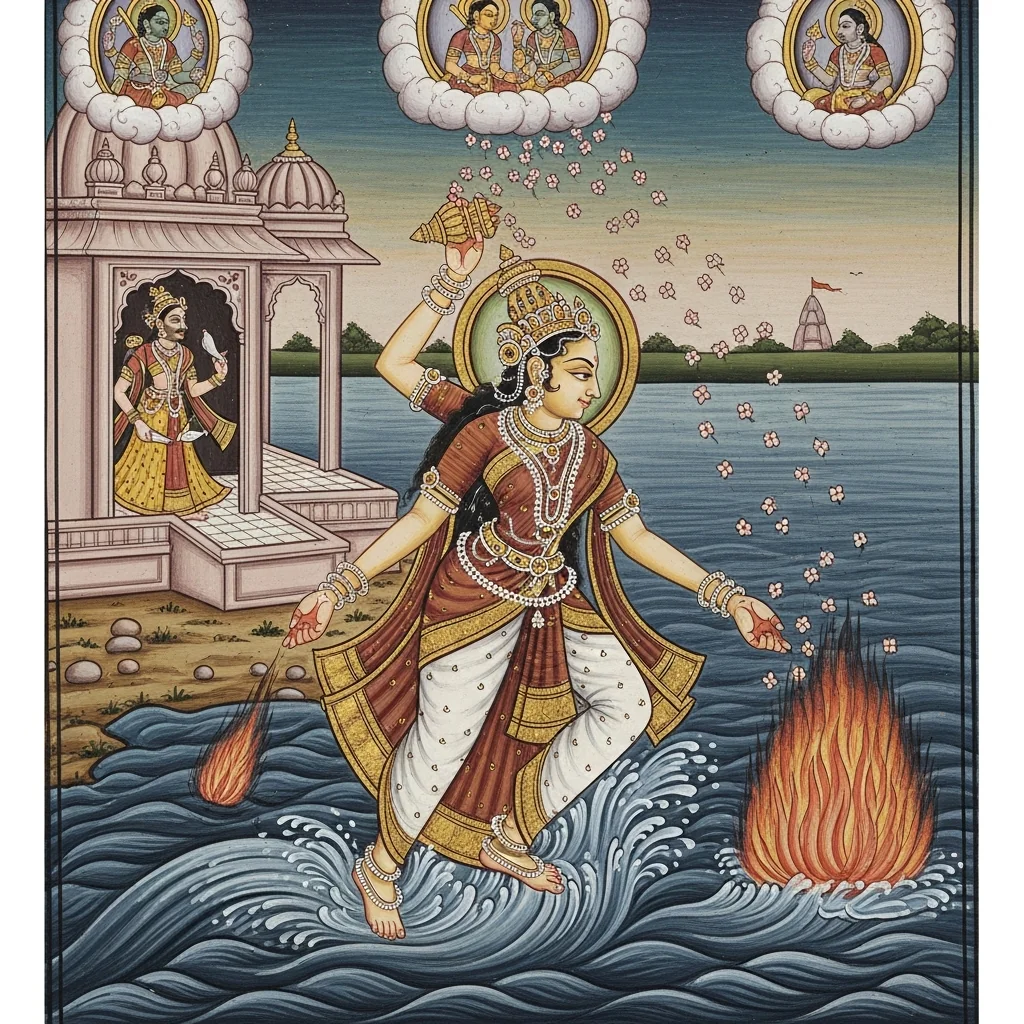
Chapter 41 recounts Īśvara’s description of a highly potent liṅga established in the eastern quarter, connected with Sarasvatī and located near the ocean. A calamity arises from the destructive vaḍavānala (submarine fire), and the Goddess intervenes: she brings the liṅga to the seashore, worships it according to proper rite, takes up the vaḍavānala, and casts it into the ocean for the welfare of the gods. The devas celebrate in ritual fashion—conch and drum resound, flowers rain down—and they bestow on the Goddess the honorific “Devamātā,” acknowledging a deed difficult even for gods and asuras. Īśvara then explains the basis of the shrine’s renown: because the Goddess established this auspicious liṅga and because Sarasvatī is praised as the foremost river and destroyer of sins, the liṅga becomes famed as “Bhairava,” that is, Bhairaveśvara. The chapter ends with prescriptions: worship of Sarasvatī and Bhairaveśvara, especially on Mahānavamī with proper bathing, removes faults of speech (vāg-doṣa). Worship of the liṅga with milk ablution and the Aghora mantra grants the full fruit of pilgrimage (yātrā-phala).
Shlokas
Verse 1
ईश्वर उवाच । तस्यैव पूर्वदिग्भागे सरस्वत्या प्रतिष्ठितम् । लिंगं महाप्रभावं तु सोमेशादग्निगोचरे
Īśvara said: In that very region, to the eastern side, there is a greatly powerful liṅga established by Sarasvatī—at a place known as Agnigocara, near Someśa.
Verse 2
भैरवेश्वररूपस्तु वाडवः कुम्भसंस्थितः । यत्र देव्या समानीतः सागरस्य समीपतः
There, the Vāḍava (submarine fire) was brought by the Goddess and contained within a pot, taking the form of Bhairaveśvara—near the ocean.
Verse 3
विश्रामार्थं क्षणं मुक्त्वा देव्या लिंगं प्रतिष्ठितम् । समभ्यर्च्य विधानेन गृहीत्वा वडवानलम् । समुद्रमध्ये चिक्षेप देवानां हितकाम्यया
Seeking a moment’s rest, the Goddess established a liṅga; having duly worshipped it according to rite, she took up the Vaḍavānala and cast it into the midst of the ocean—desiring the welfare of the gods.
Verse 4
ततो हृष्टतरा देवाः शंखदुन्दुभिनिःस्वनैः । पूरयन्तोंऽबरं देवीमीडिरे पुष्पवृष्टिभिः
Then the gods, even more delighted, filled the sky with the sounds of conches and drums, praising the Goddess and showering her with flowers.
Verse 5
देवमातेति ते नाम कृत्वोचुस्तां तदा सुराः । कृत्वा तु भैरवं कार्यमसाध्यं देवदानवैः
Then the gods gave her the name “Devamātā” and proclaimed it; for she had accomplished a Bhairava-like deed—one impossible even for gods and demons.
Verse 6
प्रतिष्ठितवती चात्र यस्माल्लिंगं महोदयम् । त्वं सर्वसरितां श्रेष्ठा सर्वपातकनाशिनी । तस्माद्भैरवनामेति लिंगं ख्यातिं गमिष्यति
Because you established here this greatly auspicious Liṅga, you are the foremost of all rivers and the destroyer of every sin. Therefore this Liṅga will become renowned by the name “Bhairava.”
Verse 7
इत्युक्ता तु तदा देवी भैरवेश्वरनैरृते । सागरस्य स्थिता रम्ये तत्र मूर्त्तिमती सती
Thus addressed, the Goddess—at the south-west of Bhairaveśvara—remained there by the beautiful sea, becoming manifest in embodied form.
Verse 8
पूजयेत्तां विधानेन तं तथा भैरवेश्वरम् । महानवम्यां यत्नेन कृत्वा स्नानं विधानतः । सरस्वतीं पूजयित्वा वाग्दोषान्मुच्यतेऽखिलात्
One should worship Her according to rule, and likewise Bhairaveśvara. On Mahānavamī, after carefully performing the prescribed bath, and having worshipped Sarasvatī, one is completely freed from faults of speech.
Verse 9
तस्या लिंगं तु संपूज्य संस्नाप्य पयसा पृथक् । अघोरेणैव विधिवत्सम्यग्यात्राफलं लभेत्
Having duly worshipped that Liṅga, bathing it separately with milk, and performing the rite properly with the Aghora mantra, one attains the full fruit of pilgrimage.
Verse 41
इति श्रीस्कांदे महापुराण एकाशीतिसाहस्र्यां संहितायां सप्तमे प्रभासखण्डे प्रथमे प्रभासक्षेत्रमाहात्म्ये भैरवेश्वरमाहात्म्यवर्णनंनामैकचत्वारिंशोऽध्यायः
Thus ends the forty-first chapter, called “The Description of the Greatness of Bhairaveśvara,” in the Prabhāsa Khaṇḍa, within the Prabhāsakṣetra Māhātmya, of the venerable Skanda Mahāpurāṇa in the Saṃhitā of eighty-one thousand verses.