Adhyaya 40
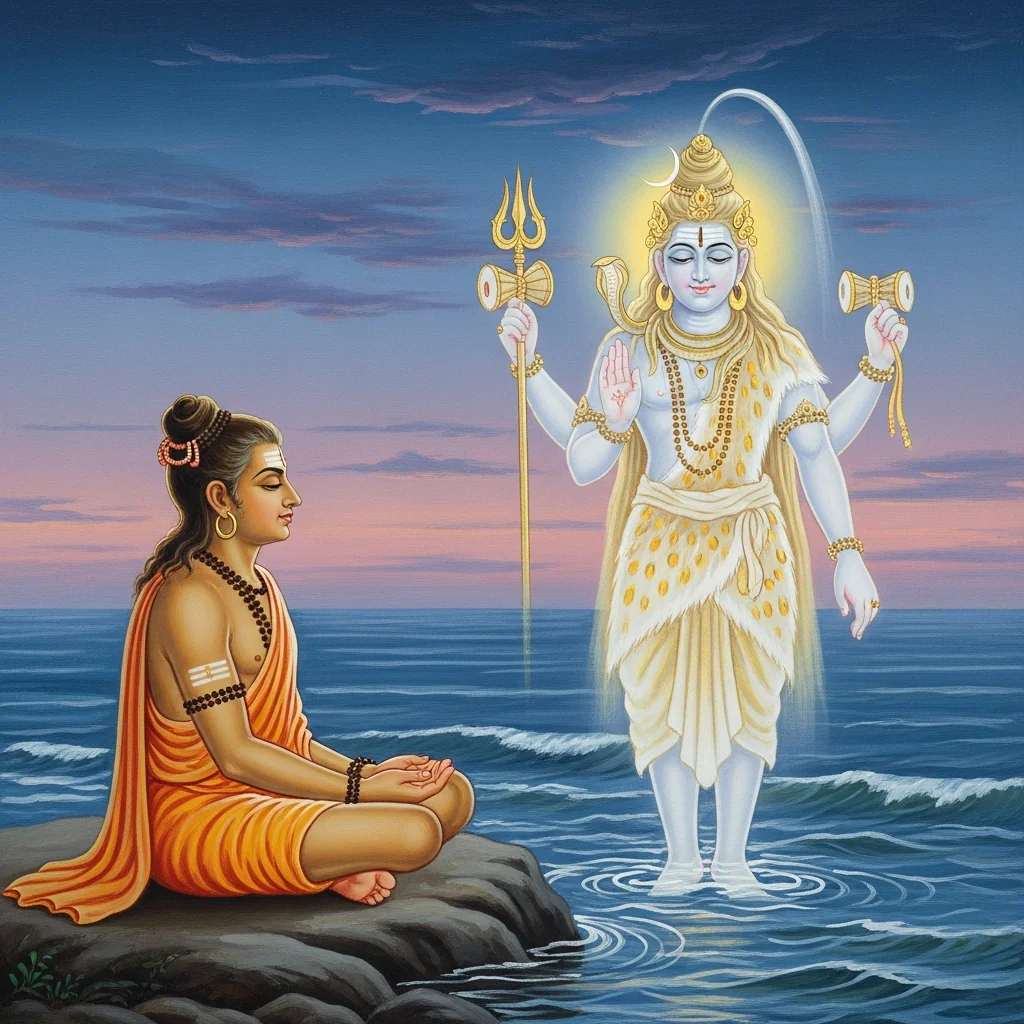
Chapter 40 unfolds as a sacred dialogue between Śiva and Devī, explaining the origin, naming, and spiritual merit of a powerful liṅga connected first with Śvetaketu and later with Bhīmasena. Īśvara directs Devī to a highly efficacious shrine founded by Śvetaketu and once worshiped by Bhīma, near Kedāreśvara; pilgrims are to worship in proper sequence—such as bathing the liṅga with milk and related rites—to gain the fruits of pilgrimage and a favorable afterlife. Devī asks how Śvetaketu’s liṅga became known and why it bears the name Bhīmeśvara. Īśvara recounts that in Tretā-yuga the royal sage Śvetaketu performed severe austerities for many years on the auspicious seashore at Prabhāsa, enduring strict disciplines through the seasons, until Śiva granted boons. Śvetaketu prays for unwavering devotion and requests Śiva’s abiding presence there; Śiva agrees, and the liṅga is known as Śvetaketvīśvara. In Kali-yuga, Bhīmasena arrives with his brothers on a tīrtha-journey and worships that liṅga, so it is newly praised as Bhīmeśa/Bhīmeśvara. The chapter concludes with a promise of purification: mere sight of the liṅga and a single act of reverence is said to destroy many sins, even those accumulated across births.
Shlokas
Verse 1
ईश्वर उवाच । ततो गच्छेन्महादेवि श्वेतकेतुप्रतिष्ठितम् । लिंगं महाप्रभावं तु भीमेनाराधितं पुरा
Īśvara said: “Then, O Great Goddess, one should go to the Liṅga of mighty power, established by Śvetaketu, worshipped in ancient times by Bhīma.”
Verse 2
केदारेश्वरसांनिध्ये नातिदूरे व्यवस्थितम् । पूजयते त्तद्विधानेन क्षीरस्नानादिभिः क्रमात् । यात्राफलमभिप्रेप्सुः प्रेत्य स्वर्गफलाय वै
It stands not far away, near Kedāreśvara. One should worship it by the proper rite, in due sequence—beginning with bathing it in milk and the like. Seeking the fruit of pilgrimage, one attains, after death, the reward of heaven.
Verse 3
देव्युवाच । श्वेतकेतोस्तु यद्देव लिंगं प्रोक्तं त्वया मम । तस्य जातं कथं देव नाम भीमेश्वरेति च
The Goddess said: “O Lord, you have spoken to me of Śvetaketu’s liṅga. How did it come to be, O God—and how did it also gain the name ‘Bhīmeśvara’?”
Verse 4
कथं विनिर्मितं पूर्वं तस्मिन्दृष्टे तु किं फलम्
“How was it fashioned in ancient times? And what fruit is gained merely by beholding it there?”
Verse 5
ईश्वर उवाच । आसीत्त्रेतायुगे पूर्वं राजा स्वायंभुवेंतरे । श्वेतकेतुरिति ख्यातो राजर्षिः सुमहातपाः
Īśvara said: “Formerly, in the Tretā Yuga—during the Svāyambhuva Manvantara—there lived a king renowned as Śvetaketu, a royal seer of exceedingly great austerity.”
Verse 6
स प्रभासं समागत्य प्रतिष्ठाप्य महे श्वरम् । तपस्तेपे सुविपुलं सागरस्य तटे शुभे
Having come to Prabhāsa and having established Maheśvara there, he performed vast austerities on the auspicious shore of the ocean.
Verse 7
पंचाग्निसाधको ग्रीष्मे वर्षास्वाकाशगस्तथा । हेमंते जलमध्यस्थो नव वर्षाणि पंच च
In summer he undertook the vow of the five fires; in the rainy season he remained exposed in the open sky; and in winter he stood immersed in water—thus for fourteen years in all.
Verse 8
ततश्चतुर्द्दशे देवि तपसा नियमेन च । तुष्टेनोक्तो मया देवि वरं वरय सुव्रत
Then, O Devī, in the fourteenth year—pleased by his austerity and self-restraint—I said to him: “O you of excellent vow, choose a boon.”
Verse 9
श्वेतकेतुरथोवाच भक्तिं देहि सुनिश्चलाम् । स्थानेऽस्मिन्स्थीयतां देव यदि तुष्टोऽसि मे प्रभो
Śvetaketu then said: “Grant me unwavering devotion; and, O God—if you are pleased with me, O Lord—abide in this very place.”
Verse 10
एवमस्त्वित्यथोक्त्वाऽहं तस्यांतर्द्धानमागतः । ततः कालांतरेऽतीते श्वेतकेतुर्महाप्रभः
Saying, “So be it,” I disappeared from his sight. Then, as time passed, that illustrious Śvetaketu…
Verse 11
समाराध्य त्विदं लिंगं प्राप्तः स्थानं महोदयम् । ततो जातं नाम तस्य श्वेतकेत्वीश्वरं श्रुतम्
Having duly propitiated this liṅga, he attained an exalted state; therefore its name became renowned as “Śvetaketvīśvara”.
Verse 12
अग्नितीर्थे महापुण्ये सर्वपातकनाशने । ततः कलियुगे प्राप्ते भ्रातृभिश्च समन्वितः
At Agnitīrtha—supremely meritorious and the destroyer of all sins—then, when the Kali Yuga arrived, he (appeared/acted) together with his brothers…
Verse 13
तीर्थयात्राप्रसंगेन यदा प्रभासमागतः । भीमसेनो महाबाहुर्वायुपुत्रो ममांशजः
When, on the occasion of a pilgrimage to the sacred tīrthas, mighty-armed Bhīmasena—son of Vāyu and an emanation of my own power—arrived at Prabhāsa…
Verse 14
तल्लिंगं पूजयामास कृत्वा जागेश्वरं निजम् । मत्वा तीर्थं महापुण्यं सागरस्य समीपतः
He worshipped that liṅga, establishing it as his own “Jāgeśvara”, regarding that coastal tīrtha near the ocean as supremely meritorious.
Verse 15
तदा प्रभृति भीमेशं पुनर्नामाऽभवच्छुभम् । दृष्टमात्रेण तेनैव सकृल्लिंगेन भामिनि
From that time onward, its auspicious name became “Bhīmeśa”; for, O radiant lady, merely by beholding that liṅga even once…
Verse 16
अन्यजन्मकृतान्येव पापानि सुबहून्यपि । नाशमायांति सर्वाणि तथैवामुष्मिकाणि तु
All sins—however many—committed in other births are destroyed; and likewise, even those pertaining to the other world (the afterlife) are dispelled.
Verse 40
इति श्रीस्कांदे महापुराण एकाशीतिसाहस्र्यां संहितायां सप्तमे प्रभासखण्डे प्रथमे प्रभासक्षेत्रमाहात्म्ये भीमेश्वरमाहात्म्यवर्णनंनाम चत्वारिंशोऽध्यायः
Thus ends the fortieth chapter, entitled “The Description of the Greatness of Bhīmeśvara,” in the first Prabhāsa-kṣetra Māhātmya of the seventh book, the Prabhāsa Khaṇḍa, within the Śrī Skanda Mahāpurāṇa of the eighty-one-thousand-verse compilation.