Adhyaya 38
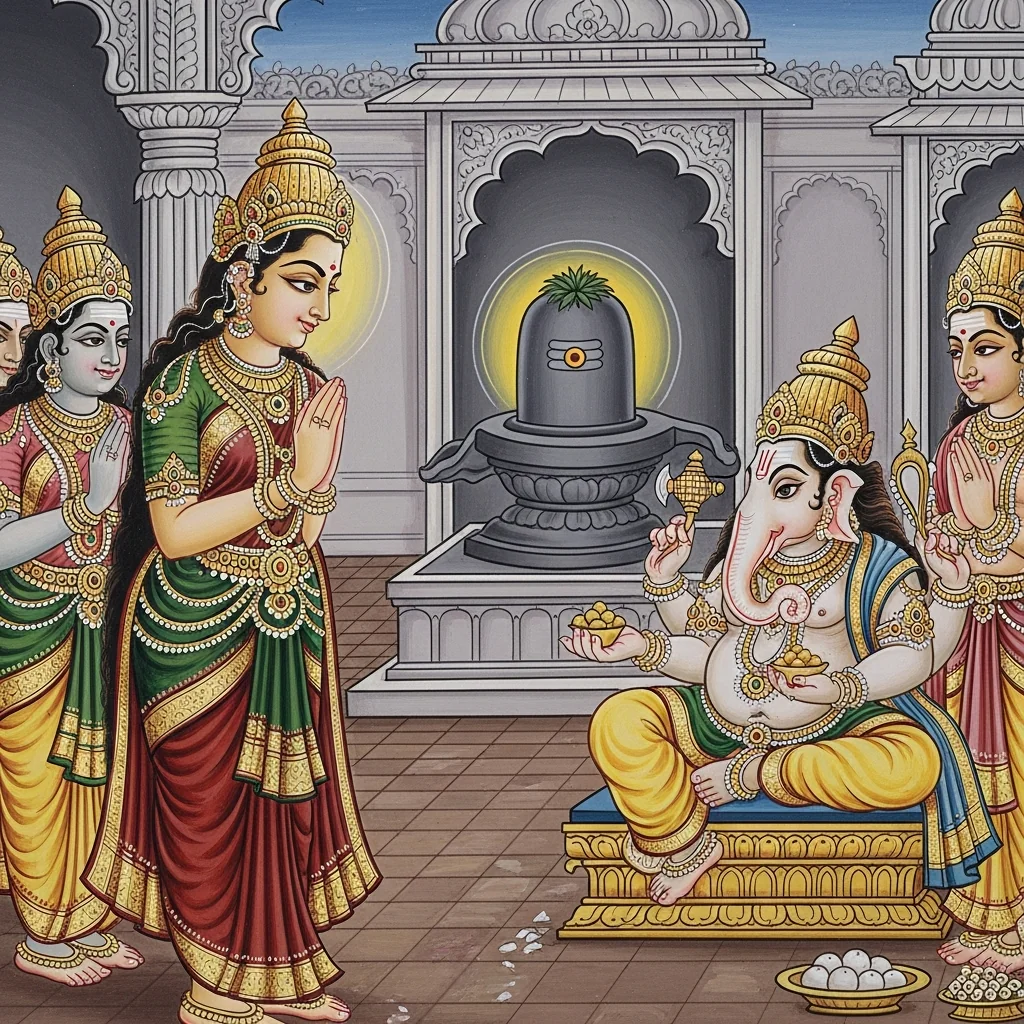
Chapter 38 is framed as a Devī–Īśvara dialogue explaining why Kaparddī (a form of Vināyaka/Gaṇeśa) must be worshiped before approaching Somēśvara in Prabhāsa-kṣetra. Īśvara declares Somēśvara to be the liṅga-form of Sadāśiva established in the Prabhāsa region, and affirms Kaparddī’s precedence as Vighneśvara, the regulator of obstacles. An avatāra scheme across the yugas is given: Heramba in Kṛta, Vighnamardana in Tretā, Lambodara in Dvāpara, and Kaparddī in Kali. A crisis then arises: the devas feel displaced because humans attain heavenly states through mere darśana of Somēśvara even without customary rites, unsettling ritual order. The devas appeal to Devī; from the “mala” produced when she compresses her body, a four-armed, elephant-faced Vināyaka manifests, commissioned to create obstacles for those who approach Somēśvara in delusion, thereby safeguarding right intention and ethical readiness. Devī appoints him protector of Prabhāsa-kṣetra and instructs him to hinder would-be pilgrims by stirring attachment to family/wealth or by illness, so that only the resolute proceed. The chapter also transmits the Vighnamardana stotra to Kaparddī, describes worship with red offerings and caturthī observance, and concludes with phala: mastery over obstacles, success within a stated timeframe, and eventual Somēśvara-darśana through Kaparddī’s grace. The name Kaparddī is further linked etymologically to his “kaparda-like” form.
Shlokas
Verse 1
देव्युवाच । यदेतद्भवता प्रोक्तं पश्येत्पूर्वं कपर्द्दिनम् । भगवन्संशयं ह्येनं यथावद्वक्तुमर्हसि
The Goddess said: “Regarding what you have stated—that one should first behold Kaparddī—O Blessed Lord, this doubt has arisen in me. Please explain it properly.”
Verse 2
स भृत्यः किल देवेश तव शम्भो महाप्रभः । प्रभोरनन्तरं भृत्य एष धर्मः सनातनः
“Indeed he is your attendant, O Lord of gods—O Śambhu, O greatly radiant One. After the master comes the attendant: this is the eternal order of dharma.”
Verse 3
ईश्वर उवाच । शृणु देवि प्रवक्ष्यामि यथा पूज्यतमो हि सः । कपर्द्दी सर्वदेवानामाद्यो विघ्नेश्वरः प्रभुः
Īśvara said: “Listen, O Goddess; I shall explain why he is truly the most worthy of worship. Kaparddī is the primordial Lord Vighneśvara among all the gods.”
Verse 4
योऽसावतींद्रियग्राह्यः प्रभासक्षेत्रसंस्थितः । सोमेश्वरो महादेवि लिंगरूपी सदाशिवः
“That very One who is beyond the grasp of the senses, yet abides in Prabhāsa-kṣetra—O great Goddess—is Someśvara, Sadāśiva in the form of the Liṅga.”
Verse 5
तस्य वामे स्थितो विष्णुर्वराह इति यः स्मृतः । तस्य दक्षिणभागे तु स्थितो ब्रह्मा प्रजापतिः । कपर्द्दिरूपमास्थाय सावित्र्याः कोपकारणात्
“On His left stands Viṣṇu, remembered there as Varāha; and on His right side stands Brahmā, the Lord of creatures. And there he assumed the form called Kaparddī, due to Savitrī’s cause for anger.”
Verse 6
कृते हेरंबनामा तु त्रेतायां विघ्नमर्द्दनः । लंबोदरो द्वापरे तु कपर्द्दी तु कलौ स्मृतः
“In the Kṛta age he is named Heramba; in Tretā he is Vighnamardana; in Dvāpara he is Lambodara; and in Kali he is remembered as Kaparddī.”
Verse 7
एवं युगेयुगे तस्य अवतारः पृथक्पृथक् । यथाकार्यानुरूपेण जायते च पुनःपुनः
“Thus, in each and every age, his manifestation is distinct; and again and again he is born according to the needs of the work to be accomplished.”
Verse 8
अष्टाविंशतिमे तत्र देवि प्राप्ते चतुर्युगे । कारणात्मा यथोत्पन्नः कपर्द्दी तत्र मे शृणु
O Goddess, when the twenty-eighth cycle of the four yugas had arrived there, hear from me how Kaparddī—whose very essence is the primal Cause—then came into manifestation.
Verse 9
पुरा द्वापरसंधौ तु संप्राप्ते च कलौ युगे । स्त्रियो म्लेच्छाश्च शूद्राश्च ये चान्ये पापकारिणः । प्रयांति स्वर्गमेवाशु दृष्ट्वा सोमेश्वरं प्रभुम्
Formerly, at the juncture of Dvāpara when the age of Kali had arrived, women, mlecchas, śūdras, and other doers of sin would swiftly go to heaven merely by beholding Lord Someśvara.
Verse 10
न यज्ञा न तपो दानं न स्वाध्पायो व्रतं न च । कुर्वतोपि नरा देवि सर्वे यांति शिवालयम्
O Goddess, even without performing sacrifice, austerity, charity, Vedic study, or vows, all people still attain Śiva’s abode through the power of this holy place.
Verse 11
तं प्रभावं विदित्वैवं सोमेश्वरसमुद्भवम् । अग्निष्टोमादिकाः सर्वाः क्रिया नष्टाः सुरेश्वरि
O Queen of the gods, knowing thus this extraordinary power that arises from Someśvara, all ritual acts such as the Agniṣṭoma and the like fell into decline, being deemed unnecessary beside it.
Verse 12
ततो बालाश्च वृद्धाश्च ऋषयो वेदपारगाः । शूद्राः स्त्रियोऽपि तं दृष्ट्वा प्रयांति परमां गतिम्
Therefore, children and the aged, sages learned in the Vedas, and even śūdras and women—merely by beholding Him, that sacred presence—attain the supreme state.
Verse 13
नष्टयज्ञोत्सवे काले शून्ये च वसुधातले । ऊर्द्ध्वबाहुभिराक्रांतं परिपूर्णं त्रिविष्टपम्
When the sacrificial festivals had vanished and the earth lay empty, Triviṣṭapa, the heaven-world, became crowded and full, occupied by multitudes who raised their arms aloft in exultation.
Verse 14
ततो देवा महेंद्राद्या दुःखेनैव समन्विताः । परिभूता मनुष्यैस्ते शंकरं शरणं गताः
Then the gods—beginning with great Indra—were filled with sorrow; humbled by human beings, they sought refuge in Śaṅkara.
Verse 15
ऊचुः प्रांजलयः सर्व इन्द्राद्याः सुरसत्तमाः । व्याप्तोयं मानुषैः स्वर्गः प्रसादात्तव शंकर
With folded hands, all those best of gods—headed by Indra—said: “O Śaṅkara, by your grace this heaven has become filled with human beings.”
Verse 16
निवासाय प्रभोऽस्माकं स्थानं किंचित्समादिश । अहं श्रेष्ठो ह्यहं श्रेष्ठ इत्येवं ते परस्परम् । जल्पंतः सर्वतो देव पर्यटंति यथेच्छया
“O Lord, assign us some place to dwell.” Thus they argued among themselves—“I am superior, indeed I am superior!”—and, O God, talking so, they wandered everywhere as they pleased.
Verse 17
धर्मराजः सुधर्मात्मा तेषां कर्म शुभाशुभम् । स्वयं लिखितमालोक्य तूष्णीमास्ते सुविस्मितः
Dharmarāja, whose very nature is righteousness, looked upon their deeds—good and bad—recorded by his own hand, and sat in silence, utterly astonished.
Verse 18
येषामथ कृतं सज्जं कुम्भीपाकं सुदारुणम् । रौरवः शाल्मलिर्देव दृष्ट्वा तान्दिवि संस्थितान् । वैलक्ष्यं परमं गत्वा व्यापारं त्यक्तवानसौ
For those for whom the dreadful hells—Kumbhīpāka, Raurava, and Śālmalī—had been made ready, Dharmarāja (O Lord) saw them instead established in heaven; reaching the utmost shame, he abandoned even his own office.
Verse 19
श्रीभगवानुवाच । प्रतिज्ञातं मया सर्वं भक्त्या तुष्टेन वै सुराः । सोमाय मम सांनिध्यमस्मिन्क्षेत्रे भविष्यति
The Blessed Lord said: “O gods, all that I promised I have fulfilled, being truly pleased by devotion. For Soma, my abiding presence shall be in this sacred field (kṣetra).”
Verse 20
न शक्यमन्यथाकर्तुमात्मनो यदुदीरितम् । एवं यास्यंति ते स्वर्गं ये मां द्रक्ष्यंति तत्र वै
What has been proclaimed by Me cannot be made otherwise. Thus, those who behold Me there shall indeed attain heaven.
Verse 21
भयोद्विग्नास्ततो देवाः पार्वतीं प्रेक्ष्य विश्वतः । ऊचुः प्रांजलयः सर्वे त्वमस्माकं गतिर्भव
Then the gods, shaken with fear, looking all around to Pārvatī, spoke with folded hands: “Be our refuge and final resort.”
Verse 22
एवमुक्त्वाऽस्तुवन्देवाः स्तोत्रेणानेन सत्तम । जानुभ्यां धरणीं गत्वा शिरस्याधाय चांजलिम्
Having spoken thus, the gods praised (her) with this hymn, O best of the virtuous; going down upon their knees to the earth, they placed their joined palms upon their heads.
Verse 23
देवा ऊचुः । नमस्ते देवदेवेशि नमस्ते विश्वधात्रिके । नमस्ते पद्मपत्राक्षि नमस्ते कांचनद्युते
The gods said: “Homage to You, O Sovereign of the gods; homage to You, O Sustainer of the universe. Homage to You, O Lotus-petaled-eyed One; homage to You, O One of golden splendor.”
Verse 24
नमस्ते संहर्त्रि कर्त्रि नमस्ते शंकरप्रिये । कालरात्रि नमस्तुभ्यं नमस्ते गिरिपुत्रिके
“Homage to You, O Dissolver and Creator; homage to You, Beloved of Śaṅkara. O Kālarātri, homage to You; homage to You, O Daughter of the Mountain.”
Verse 25
आर्ये भद्रे विशालाक्षि नमस्ते लोकसुन्दरि । त्वं रतिस्त्वं धृतिस्त्वं श्रीस्त्वं स्वाहा त्वं सुधा सती
“O Noble One, O Auspicious One, O Wide-eyed Lady—homage to You, O Beauty of the worlds. You are Rati (delight); You are Dhṛti (steadfastness); You are Śrī (prosperity); You are Svāhā; You are Sudhā (ambrosia)—O Satī.”
Verse 26
त्वं दुर्गा त्वं मनिर्मेधा त्वं सर्वं त्वं वसुन्धरा । त्वया सर्वमिदं व्याप्तं त्रैलोक्यं सचराचरम्
“You are Durgā; You are Maṇi (the jewel of excellence); You are Medhā (intelligence). You are everything; You are Vasundharā, the Earth itself. By You all this is pervaded—the three worlds with all that moves and does not move.”
Verse 27
नदीषु पर्वताग्रेषु सागरेषु गुहासु च । अरण्येषु च चैत्येषु संग्रामेष्वाश्रमेषु च
“In rivers, on mountain peaks, in oceans and in caves; in forests and in sacred shrines; in battlefields and in hermitages—You are present.”
Verse 28
त्रैलोक्ये तत्र पश्यामो यत्र त्वं देवि न स्थिता । एतज्ज्ञात्वा विशालाक्षि त्राहि नो महतो भयात्
In the three worlds we see no place where You, O Goddess, are not established. Knowing this, O Wide-eyed One, save us from this great fear.
Verse 29
ईश्वर उवाच । एवमुक्ता तु सा देवी देवैरिंद्रपुरोगमैः । कारुण्यान्निजदेहं त्वं तदा मर्द्दितवत्यसि
Īśvara said: Thus addressed by the gods led by Indra, that Goddess—out of compassion—then pressed down and subdued her own form.
Verse 30
मर्दयंत्यास्तव तदा संजातं च महन्मलम् । तत्र जज्ञे गजेंद्रास्यश्चतुर्बाहुर्मनोहरः
As you were then rubbing and pressing, a great mass of impurity came into being; from that was born a charming four-armed being with the face of the Lord of elephants.
Verse 31
ततोब्रवीत्सुरान्सर्वान्भवती करुणात्मिका । एष एव मया सृष्टो युष्माकं हितकाम्यया
Then the compassionate Goddess spoke to all the gods: “This very one has been created by me, desiring your welfare.”
Verse 32
एष विघ्नानि सर्वाणि प्राणिनां संविधास्यति
He will bring about all obstacles for living beings.
Verse 33
मोहेन महताऽविष्टाः कामोपहतबुद्धयः । सोमनाथमपश्यंतो यास्यंति नरकं नराः
Overwhelmed by great delusion, their understanding struck down by desire, men who fail to behold Somanātha will go to hell.
Verse 34
एवं ते वचनं श्रुत्वा सर्वे ते हृष्टमानसाः । स्वस्थानं भेजिरे देवास्त्यक्त्वा मानुषजं भयम्
Hearing her words thus, all those gods, delighted at heart, returned to their own abodes, having cast off the fear arising from humans.
Verse 35
अथे भवदनः प्राह त्वां देवि विनयान्वितः । किं करोमि विशालाक्षि आदेशो दीयतां मम
Then Bhavadana, filled with humility, said to you, O Goddess: “What shall I do, O large-eyed one? Grant me your command.”
Verse 36
श्रीभगवत्युवाच । गच्छ प्राभासिकं क्षेत्रं यत्र संनिहितो हरः । तद्रक्ष मानुषाणां च यथा नायाति गोचरम्
The Blessed Goddess said: “Go to the Prābhāsika sacred region, where Hara (Śiva) is present. Guard it from humans, so that it does not come within their reach.”
Verse 37
लिंगं तु देवदेवस्य स्थापितं शशिना स्वयम् । भवत्याऽदेशितो नित्यं नृणां विघ्नं करोति यः
The liṅga of the God of gods was established by the Moon himself. He who, being continually commanded by you, causes obstacles for men acts accordingly.
Verse 38
प्रस्थितं पुरुषं दृष्ट्वा सोमनाथं प्रति प्रभुम् । स करोति महाविघ्नं कपर्दी लोकपूजितः
Seeing a man setting out toward Somanātha, the Lord, Kapardī—worshipped by the world—creates a great obstacle.
Verse 39
पुत्रदारगृहक्षेत्र धनधान्यसमुद्भवम् । जनयेत्स महामोहं ततः पश्यति नो हरम्
He generates great delusion arising from children, wife, house, fields, wealth, and grain; then the man does not behold Hara (Śiva).
Verse 40
अथवा गडुगंडादि व्याधिं चैव समुत्सृजेत् । तैर्ग्रस्तः पुरुषो मोहान्न पश्यति ततो हरम्
Or else he may unleash ailments such as goitre and swelling; and when a man is afflicted by them, through delusion he no longer beholds Hara (Śiva) there.
Verse 41
तस्मात्सर्वप्रयत्नेन सोमेश्वरपरीप्सया । स नित्यं पूजनीयस्तु स्मर्तव्यस्तु दिवानिशम्
Therefore, with every effort—seeking the grace of Someśvara—he should always be worshipped and remembered day and night.
Verse 42
स्तोत्रेणानेन देवेशि सर्वविघ्नांतकेन वै । समाराध्य गणाध्यक्षः प्रभासक्षेत्ररक्षकः
O Lady of the Gods, by propitiating him with this hymn—truly the destroyer of all obstacles—the Lord of the Gaṇas (Gaṇādhyakṣa) becomes the protector of Prabhāsakṣetra.
Verse 43
तत्तेऽहं संप्रवक्ष्यामि स्तोत्रं तद्विघ्रमर्दनम् । कपर्दिनो महादेवि सावधानावधारय
Now I shall declare to you that hymn—the one that crushes obstacles—the hymn of Kapardin. O Great Goddess, listen with full attention and hold it firmly in memory.
Verse 44
ॐ नमो विघ्नराजाय नमस्तेऽस्तु कपर्दिने । नमो महोग्रदंष्ट्राय प्रभासक्षेत्रवासिने
Oṃ—obeisance to Vighnarāja; salutations to you, O Kapardin. Obeisance to the greatly fierce-tusked One, the dweller in Prabhāsakṣetra.
Verse 45
कपर्दिनं नमस्कृत्य यात्रानिर्विघ्रहेतवे । स्तोष्येऽहं विघ्नराजानं सिद्धिबुद्धिप्रियं शुभम्
Having bowed to Kapardin so that the pilgrimage may be free of obstacles, I shall praise Vighnarāja—auspicious, and beloved of Siddhi and Buddhi.
Verse 46
महागणपतिं शूरमजितं जयवर्द्धनम् । एकदंतं च द्विदंतं चतुर्दंतं चतुर्भुजम्
The great Gaṇapati, Lord of the Gaṇas—heroic, unconquered, increaser of victory—one-tusked, two-tusked, four-tusked, and four-armed.
Verse 47
त्र्यक्षं च शूलहस्तं च रक्त नेत्रं वरप्रदम् । अजेयं शंकुकर्णं च प्रचण्डं दंडनायकम् । आयस्कदंडिनं चैव हुतवक्त्रं हुतप्रियम्
Three-eyed, holding the trident in hand, red-eyed, bestower of boons; unconquerable, with conch-like ears, exceedingly fierce, commander of punishment; wielding an iron staff, fire-faced, and dear to offerings cast into the sacred fire.
Verse 48
अनर्चितो विघ्नकरः सर्वकार्येषु यो नृणाम् । तं नमामि गणाध्यक्षं भीममुग्रमुमासुतम्
He who, when not worshiped, becomes the maker of obstacles in all the undertakings of men—to him I bow: the Lord of the Gaṇas, the terrible and fierce son of Umā.
Verse 49
मदवतं विरूपाक्षमिभवक्त्रसमप्रभम् । ध्रुवं च निश्चलं शांतं तं नमामि विनायकम्
The mighty one, like an elephant in rut; the strange-eyed one, radiant as an elephant’s face; steadfast, unmoving, and tranquil—him I bow to, Vināyaka.
Verse 50
त्वया पूर्वेण वपुषा देवानां कार्यसिद्धये । गजरूपं समास्थाय त्रासिताः सर्वदानवाः
Formerly, for the successful accomplishment of the gods’ purpose, you assumed an elephant-form; and by that form all the Dānavas were put to flight in fear.
Verse 51
ऋषीणां देवतानां च नायकत्वं प्रकाशितम्
Thus has your leadership been made manifest—over the Ṛṣis and over the gods as well.
Verse 52
इति स्तुतः सुरैरग्रे पूज्यसे त्वं भवात्मज । त्वामाराध्य गणाध्यक्षमिभवक्त्रसमप्रभम्
Thus, praised in the presence of the gods, you are worshiped—O son of Bhava (Śiva). Having propitiated you, the Lord of the Gaṇas, whose splendor matches that of the Elephant-Faced One, devotees attain their aim.
Verse 53
ध्रुवं च निश्चलं शांतं परीतं वि जयश्रिया । कार्यार्थं रक्तकुसुमै रक्तचंदनवारिभिः
Then, steadfast, unmoving, and tranquil—encircled by the glory of victory—one should worship Him for the fulfillment of one’s purpose with red flowers and with water fragrant with red sandalwood.
Verse 54
रक्तांबरधरो भूत्वा चतुर्थ्यामर्चयेत्तु यः । एककालं द्विकालं वा नियतो नियताशनः
Whoever, wearing red garments, worships (Vināyaka) on the Caturthī—disciplined in diet, taking food once a day or twice a day—becomes fit to gain the promised results.
Verse 55
राजानं राजपुत्रं वा राजमंत्रिणमेव च । राज्यं वा सर्वविघ्नेशो वशीकुर्यात्सराष्ट्रकम्
Vināyaka, the Lord of all obstacles, can bring under one’s influence a king, a prince, a royal minister—or even a kingdom together with its realm.
Verse 56
यत्फलं सर्वतीर्थेषु सर्वयज्ञेषु यत्फलम् । स तत्फलमवाप्नोति स्मृत्वा देवं विनायकम्
Whatever merit is gained in all sacred bathing-places, whatever merit is gained in all sacrifices—one attains that very merit simply by remembering the god Vināyaka.
Verse 57
विषमं न भवेत्तस्य न स गच्छेत्पराभवम् । न च विघ्नं भवेत्तस्य जनो जातिस्मरो भवेत्
For him there will be no adversity; he will not fall into defeat. No obstacle will arise for him, and the person becomes one who remembers former births.
Verse 58
य इदं पठति स्तोत्रं षड्भिर्मासैर्वरं लभेत् । संवत्सरेण सिद्धिं च लभते नात्र संशयः
Whoever recites this hymn gains a boon within six months; and within a year he attains success and accomplishment—of this there is no doubt.
Verse 59
प्रसादाद्दर्शनं याति तस्य सोमेश्वरः प्रभुः । कपर्दाकारमुदरं यतोऽस्य समुदाहृतम् । ततोऽस्य नाम जानीहि कपर्द्दीति महात्मनः
By that grace, Lord Someśvara grants him His vision (darśana). And because His belly is described as shaped like a kaparda (cowrie shell), know that the great one is therefore named “Kapardī”.