Adhyaya 364
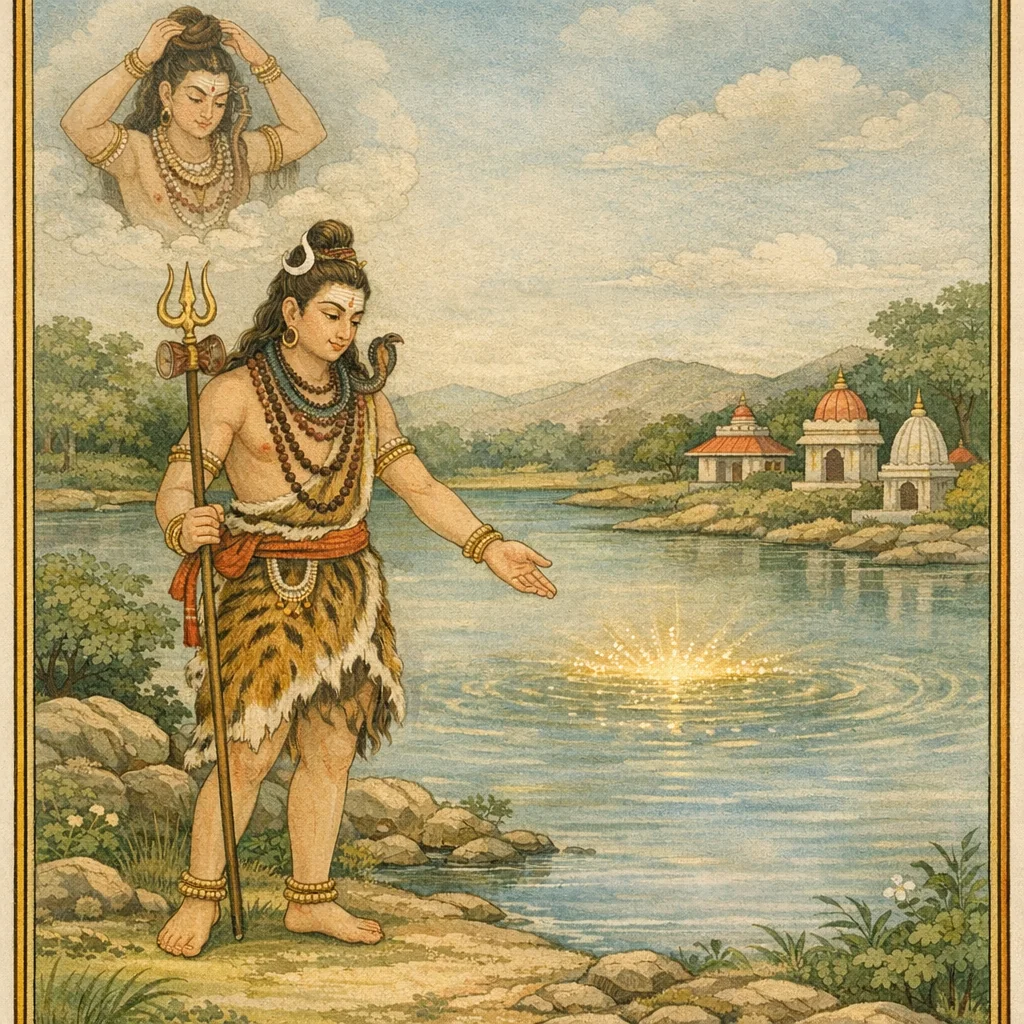
Īśvara (Śiva) speaks to Mahādevī and sets forth an itinerary to a spot on Hiraṇya-taṭa, where the place called Tuṇḍapura lies, connected with the sacred water-body known as Gharghara-hrada. He then declares that the presiding deity of this locale is Kandeśvara. Śiva authorizes the sanctity of the site through a mythic remembrance: it is here, he says, that his jaṭā were bound, thereby establishing the tīrtha’s sacred standing. The implied observance is to approach the place, bathe (snāna) at the tīrtha, and perform proper worship (pūjā) of Kandeśvara. The promised fruit is ethical and salvific: release from dreadful grave sins (ghora-pātaka) and attainment of an auspicious “śāsana”—understood as divine ordinance and protection, or a sanctioned blessing in Purāṇic idiom.
Shlokas
Verse 1
ईश्वर उवाच । ततो गच्छेन्महादेवि हिरण्यातटसंस्थितम् । स्थानं तुण्डपुरंनाम यत्रासौ घर्घरो ह्रदः
Īśvara said: “Then, O great goddess, one should go to the place called Tuṇḍapura, situated on the bank of the Hiraṇyā, where lies the lake named Gharghara.”
Verse 2
तत्र कन्देश्वरो देवो यत्र बद्धा जटा मया । तत्र स्नात्वा नरः सम्यक्त्ं देवं यः प्रपूजयेत् । स मुक्तः पातकैर्घोरैः प्राप्नुयाच्छासनं शुभम्
There is the deity Kandeśvara, where I bound up my matted locks. Whoever bathes there in due manner and reverently worships that god is freed from dreadful sins and attains the auspicious śāsana—divine favor and sacred ordinance.
Verse 363
इति श्रीस्कान्दे महापुराण एकाशीतिसाहस्र्यां संहितायां सप्तमे प्रभासखंडे प्रथमे प्रभासक्षेत्रमाहात्म्ये हिरण्यातुण्डपुर घर्घरह्रदकन्देश्वर माहात्म्यवर्णनंनाम त्रिषष्ट्युत्तरत्रिशतत मोऽध्यायः
Thus, in the Śrī Skanda Mahāpurāṇa—within the Saṃhitā of eighty-one thousand verses—this concludes the 363rd chapter of the seventh, Prabhāsa Khaṇḍa, in the first part, the Prabhāsakṣetra Māhātmya, entitled “The Description of the Greatness of Hiraṇyā, Tuṇḍapura, Gharghara-hrada, and Kandeśvara.”