Adhyaya 360
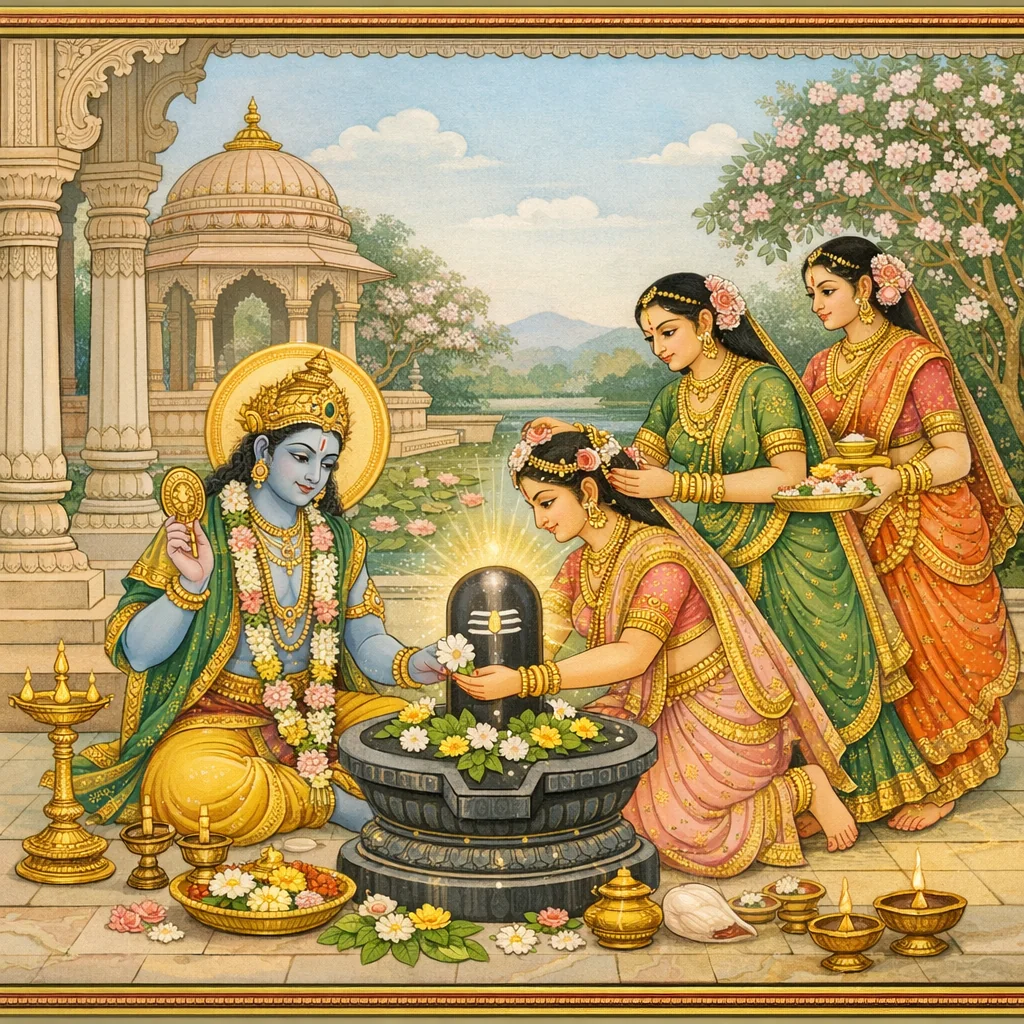
In this chapter, Īśvara speaks to Mahādevī and points to the sacred place called Śṛṅgasara. There abides a resident deity-liṅga known as Śṛṅgāreśvara, and the holiness of the site is traced to an earlier divine episode: Hari, accompanied by the gopīs, is said to have performed śṛṅgāra there, thus giving the shrine its name and epithet. The teaching then turns to practical devotion: worship of Bhava (Śiva) at this very spot, performed according to the prescribed vidhāna, is praised as destroying the amassed multitude of sins (pāpaugha-nāśana). The concluding phalaśruti declares that a devotee afflicted by poverty and sorrow will not meet such conditions again, establishing Śṛṅgasara as an authorized locus for remedial worship and faithful ethical-ritual observance.
Shlokas
Verse 1
ईश्वर उवाच । ततो गच्छेन्महादेवि स्थानं शृंगसरोऽभिधम्
Īśvara said: “Then, O Great Goddess, one should go to the sacred place called Śṛṅga-saras (Śṛṅga Lake).”
Verse 2
शृंगारेश्वरनामा च तत्र देवः प्रतिष्ठितः । शृङ्गारं विधिवच्चक्रे यत्र गोपीयुतो हरिः
There, a deity is enshrined bearing the name Śṛṅgāreśvara. It is the very place where Hari, accompanied by the gopīs, performed sacred adornment and loving worship according to proper rite.
Verse 3
शृङ्गारेश्वरनामा च तेन पापौघनाशनः । पूजयेद्यो विधानेन तत्र स्थाने स्थितं भवम् । दारिद्र्यदुःखसंयुक्तो न स भूयाद्भवे क्वचित्
Therefore he is called Śṛṅgāreśvara—the destroyer of multitudes of sins. Whoever, following due procedure, worships Bhava (Śiva) abiding in that sacred place will never again, in worldly existence, be burdened by poverty and suffering.
Verse 359
इति श्रीस्कांदे महापुराण एकाशीति साहस्र्यां संहितायां सप्तमे प्रभासखण्डे प्रथमे प्रभासक्षेत्रमाहात्म्ये शृंगारेश्वरमाहात्म्यवर्णनंनामैकोनषष्ट्युत्तरत्रिशततमोऽध्यायः
Thus, in the holy Skanda Mahāpurāṇa, in the Saṃhitā of eighty-one thousand verses, in the seventh Prabhāsa Khaṇḍa, within the first section—the Prabhāsakṣetra Māhātmya—concludes Chapter 360, entitled “The Description of the Greatness of Śṛṅgāreśvara.”