Adhyaya 36
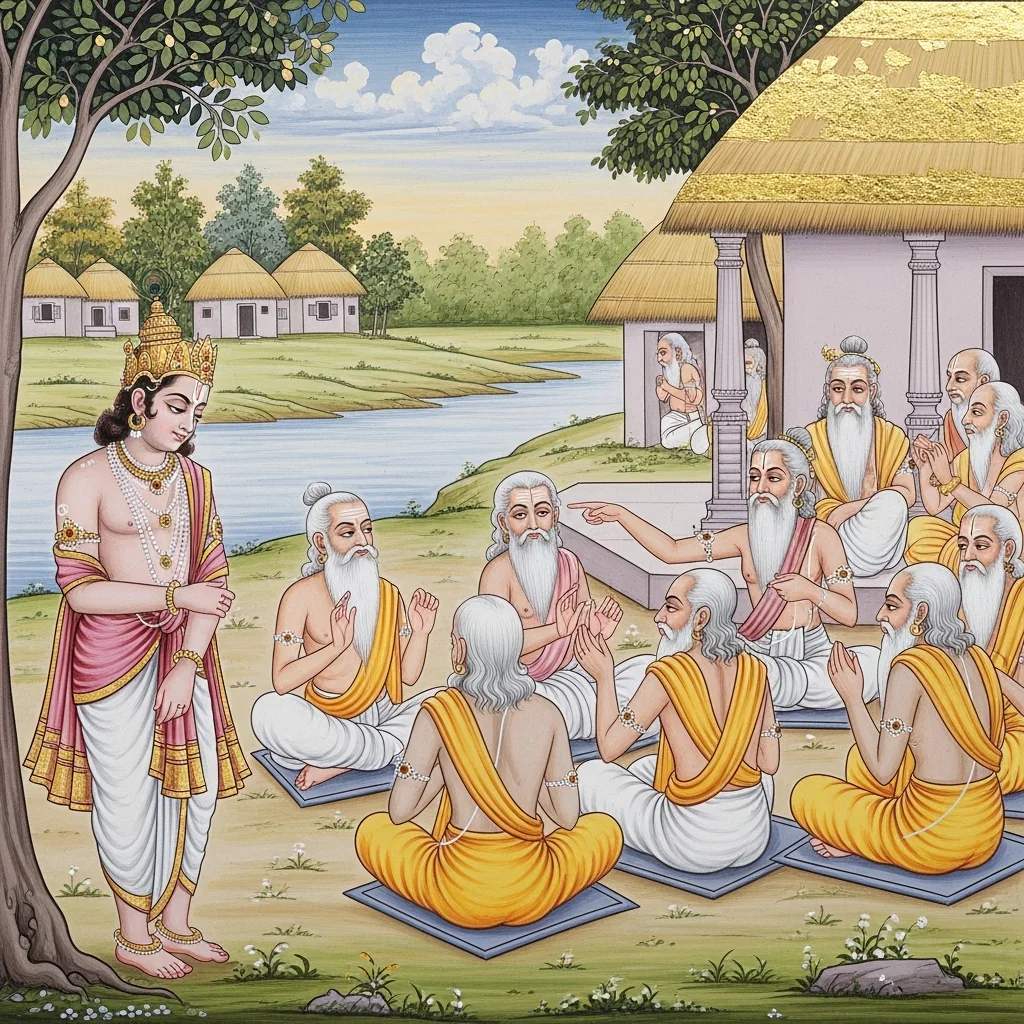
This chapter unfolds as a dialogue in which Devī asks why the Prācī Sarasvatī is so rare and so supremely purifying at Prabhāsa, even when compared with Kurukṣetra and Puṣkara. Īśvara (Śiva) affirms Prabhāsa’s heightened sanctity and praises the river as a remover of faults: one may drink and bathe without strict time restrictions, and even animals that partake are said to be uplifted. Through Sūta’s narration the teaching turns to an exemplum: after the Bhārata war, Arjuna (Kirīṭin, linked with Nara-Nārāyaṇa) is socially and morally shunned under the burden of kin-slaying. Kṛṣṇa directs him not to Gayā, the Gaṅgā, or Puṣkara, but to the Prācī Sarasvatī tīrtha. Arjuna performs a three-night fast (trirātra-upavāsa) and bathes three times daily, thereby gaining release from accumulated sin; reconciliation follows as Yudhiṣṭhira and others receive him again. The chapter then expands into ritual and ethical guidance: death near the northern bank is portrayed as “non-return,” austerities are extolled, and dāna and śrāddha at this sacred ford yield multiplied fruits for donors and ancestors, even promising uplift across many generations. It closes by reiterating Sarasvatī’s preeminence among rivers as a source of relief in this world and well-being after death.
Shlokas
Verse 1
देव्युवाच । यदेतद्भवता प्रोक्तं प्राची सर्वत्र दुर्ल्लभा । विशेषेण कुरुक्षेत्रे प्रभासे पुष्करे तथा
The Goddess said: “What you have stated—that the river Prācī is difficult to find everywhere—is true, especially at Kurukṣetra, at Prabhāsa, and likewise at Puṣkara.”
Verse 2
कथं प्रभासमासाद्य संस्थिता पापनाशिनी । माहात्म्यमखिलं तस्याः प्राच्याः पातकनाशनम् । कथयस्व महेशान यद्यहं ते प्रिया विभो
“How did Prācī, the destroyer of sins, come to Prabhāsa and become established here? Tell me the complete greatness of that Prācī which destroys sins. O Maheśāna, if I am dear to you, O Lord, please narrate it.”
Verse 3
ईश्वर उवाच । साधु प्रोक्तं त्वया भद्रे प्राची सर्वत्र दुर्लभा । कुरुक्षेत्रे पुष्करे च तस्मात्प्राभासिकेऽधिका
Īśvara said: “Well spoken, O auspicious one—Prācī is indeed rare everywhere, even at Kurukṣetra and at Puṣkara; therefore, in Prabhāsa it is all the more eminent.”
Verse 4
प्रभासे तु महादेवी प्राचीं पापप्रणाशिनीम् । नापुण्यो वेद देवेशि कर्मनिर्मूलनक्षमाम्
“But at Prabhāsa, O Mahādevī, there is Prācī, the destroyer of sins. O Lady of the Gods, one who lacks merit does not truly know her—she who is capable of uprooting the fruits of karma.”
Verse 5
ये पिबंति नराः पुण्यां प्राचीं देवीं सरस्वतीम् । न ते मनुष्या विज्ञेयाः सत्यंसत्यं वरानने
Those who drink the holy Prācī—Goddess Sarasvatī—are not to be regarded as mere humans. This is truth, truth, O fair-faced one.
Verse 6
धन्यास्ते मुनयस्ते च पुण्यास्ते च तपस्विनः । ये च सारस्वतं तोयं पिबंत्यहरहः सदा
Blessed are those sages—blessed and meritorious are those ascetics—who continually, day after day, drink the waters of Sarasvatī.
Verse 7
देवास्ते न मनुष्यास्ते नदीस्तिस्र पिबंति ये । चंद्रभागां च गंगां च तथा देवीं सस्स्वतीम्
They are truly gods, not mere humans, who drink of these three rivers—Candrabhāgā, Gaṅgā, and the goddess Sarasvatī.
Verse 8
भुक्त्वा वा यदि वाऽभुक्त्वा दिवा वा यदि वा निशि । न कालनियमस्तत्र यत्र प्राची सरस्वती
Whether one has eaten or not, whether by day or by night—there is no restriction of time in that place where Prācī Sarasvatī is present.
Verse 9
प्राचीं सरस्वतीं ये तु पिबंति सततं मृगाः । तेऽपि स्वर्गं गमिष्यंति यज्ञैर्द्विजवरा यथा
Even the deer who continually drink from Prācī Sarasvatī will go to heaven—just as the best of the twice-born attain it through sacrifices.
Verse 10
सर्वकामप्रपूर्त्यर्थं नृणां तत्क्षेत्रमुत्तमम् । चिंतामणिसमा देवी यत्र प्राची सरस्वती
For the complete fulfillment of all human aims, that sacred region is supreme; for there the goddess Prācī Sarasvatī is like the wish-fulfilling jewel, Cintāmaṇi.
Verse 11
यथा कामदुघा गावः सर्वकामफलप्रदाः । तथा स्वर्गापवर्गाभ्यां प्राची देवी सरस्वती
Just as wish-yielding cows grant the fruits of every desire, so too does the goddess Prācī Sarasvatī bestow both heaven and liberation.
Verse 12
अष्टाशीतिसहस्राणि मुनीनामूर्ध्वरेतसाम् । यत्र स्थितानि संन्यासं तस्मात्किमधिकं स्मृतम्
Where eighty-eight thousand sages of restrained seed abide in renunciation—what greater sanctity than that is remembered?
Verse 13
यत्र मंकणकः सिद्धः प्राचीने नियतात्मवान् । ब्रह्महत्याव्रतं चीर्णं मया यत्र वरानने
There, in the Prācī region, the siddha Maṅkaṇaka, self-controlled, dwelt; and there too, O fair-faced one, I performed the expiatory observance (prāyaścitta) for the sin of brahma-hatyā.
Verse 14
वृषतीर्थे महापुण्ये प्राचीकूलसमाश्रिते । निवृत्ते भारते युद्धे तस्मिंस्तीर्थे किरीटिना । प्रायश्चित्तं पुरा चीर्णं विष्णुना प्रेरितात्मना
At Vṛṣa-tīrtha, supremely holy and situated on the bank of Prācī—after the Bhārata war had ended—Kirīṭin (Arjuna), urged inwardly by Viṣṇu, formerly performed expiation at that very tīrtha.
Verse 15
त्रैलोक्ये सर्वतीर्थानां तत्तीर्थं प्रवरं स्मृतम् । पापघ्नं पुण्यजननं प्राणिनां पुण्यकीर्त्तिद
Among all tīrthas in the three worlds, that tīrtha is remembered as the foremost—destroyer of sin, begetter of merit, and bestower of holy renown upon beings.
Verse 16
सूत उवाच । आहैवमुक्ते सा देवी शंकरं लोक शंकरम् । प्रायश्चित्तं कथं प्राप्तः पार्थः परपुरंजयः । ज्ञातिक्षयोद्भवं पापं कथं नाशमगात्प्रभो
Sūta said: When this was spoken, the Goddess addressed Śaṅkara, benefactor of the worlds: “How did Pārtha, conqueror of enemy cities, obtain expiation (prāyaścitta)? O Lord, how was the sin born of the destruction of kinsmen brought to an end?”
Verse 17
एवमुक्तः पुनः प्राह विश्वेशो नीललोहितः । प्रायश्चित्तस्य संप्राप्तः कारणं तद्यथा स्थितम्
Thus addressed, Viśveśa—Nīlalohita—spoke again, setting forth as it truly was the reason why the need for atonement (prāyaścitta) had arisen.
Verse 18
ईश्वर उवाच । शृणुष्वावहिता भद्रे कथां पातकनाशिनीम् । यां श्रुत्वा मानवो भक्त्या पवित्रात्मा प्रजायते
Īśvara said: “Listen with full attention, O blessed one, to this sin-destroying tale; hearing it with devotion, a person becomes pure in spirit.”
Verse 19
योऽसौ देवि समाख्यातः किरीटी श्वेतवाहनः । स जित्वा कौरवान्सर्वान्संहृत्य हयकुञ्जरान्
“That famed one, O Goddess—crowned and riding a white chariot—having conquered all the Kauravas, destroyed their horses and elephants.”
Verse 20
पश्चात्सुयोधनं हत्वा भीमेन प्रययौ गृहान् । नारायणेन सहितो नरोऽसौ प्रस्थितो रणात्
After Bhīma had slain Suyodhana, that Nara—accompanied by Nārāyaṇa—departed from the battlefield and went home.
Verse 21
द्रष्टुं धर्मसुतं दृष्टः प्रणतः प्रांजलिः स्थितः । स विज्ञाय तदाऽयान्तौ नरनारायणावुभौ
Wishing to see Dharmasuta (Yudhiṣṭhira), he was seen standing there—bowed down, hands folded. Then the king, recognizing that the two were Nara and Nārāyaṇa, understood their arrival.
Verse 22
राजा युधिष्ठिरः प्राह द्वारस्थान्द्वारपालकान् । भवद्भिरेतावायांतौ निषेध्यौ द्वारसंस्थितौ
King Yudhiṣṭhira said to the doorkeepers posted at the gate: “You must restrain these two who have arrived and are standing at the entrance.”
Verse 23
नर नारायणौ क्रूरौ पापपंकानुलेपिनौ । एवमेतदिति प्रोक्तौ तौ तदा द्वारमागतौ
“Nara and Nārāyaṇa are cruel, smeared with the mire of sin”—thus they were spoken of; and then those two came to the gate.
Verse 24
भवन्तौ नेच्छति द्रष्टुं राजा दुर्नयकारिणौ । तत्रस्थः पृष्टवान्भूयः प्रतीहारं नरः स्वयम्
“The king does not wish to see you two, as you are doers of misconduct.” Standing there, Nara himself again questioned the chamberlain.
Verse 25
आवां किं कारणं राजा नेक्षते वशवर्तिनौ । प्रोवाच प्रणतो राजा ततो द्वाःस्थं पुरःस्थितम्
“For what reason does the king not look upon us two, who are obedient and under restraint?” Then the king, bowed in reverence, spoke to the doorkeeper standing before him.
Verse 26
नारायणेन सहितं नरं नरकनिर्भयम् । दुर्योधनेन सहिता बांधवास्ते यतो हताः । पितृतुल्याश्च राजानस्तेन वै पापभाजनम्
“Nara—accompanied by Nārāyaṇa and fearless even of hell—is blamed because your kinsmen allied with Duryodhana were slain, and kings who were like fathers were also killed; therefore he is indeed considered a vessel of sin.”
Verse 27
एवमुक्ते तु तेनाथ मुखमालोकितं हरेः । तेन प्रोक्तमिदं तथ्यं यत्ते राज्ञा प्रभाषितम्
When he had spoken thus, the Lord (Nārāyaṇa) looked upon Hari’s face. Then he declared this truth, just as the king had spoken to you.
Verse 28
एवमुक्ते नरः प्राह पुनरेव जनार्द्दनम् । कथयस्व कथं पापात्कृष्ण शुद्ध्यामहे वयम्
When this was said, Nara again addressed Janārdana: “Tell us, O Kṛṣṇa—how may we be purified from sin?”
Verse 29
तीर्थस्नानेन मे शुद्धिर्यथा स्यात्तद्वद स्फुटम् । तच्च गंगादिकं कृष्ण यथाऽस्याघस्य नाशनम्
“Explain clearly how I may attain purity by bathing at a sacred ford (tīrtha); and tell me, O Kṛṣṇa, how the Gaṅgā and other tīrthas bring about the destruction of this sin.”
Verse 30
कृष्ण उवाच । मा गयां गच्छ कौंतेय मा गंगां मा च पुष्करम् । तत्र गच्छ कुरुश्रेष्ठ यत्र प्राची सरस्वती
Kṛṣṇa said: “Do not go to Gayā, O son of Kuntī; do not go to the Gaṅgā, nor to Puṣkara. Go there, O best of the Kurus—where the Prācī Sarasvatī flows.”
Verse 31
ब्रह्मघ्नाश्च सुरा पाश्च ये चान्ये पापकारिणः । तत्र स्नात्वा विमुच्यंते यत्र प्राची सरस्वती
Even slayers of a brāhmaṇa, drinkers of intoxicants, and other sinners are released after bathing there, where the Prācī Sarasvatī is.
Verse 32
नारायणेन प्रोक्तोऽसौ नरस्तद्वचनाद्द्रुतम् । सहितस्तेन संप्राप्तः प्राचीनं तीर्थमुत्तमम्
Thus instructed by Nārāyaṇa, that man swiftly—following his words—went along with him and reached the excellent ancient tīrtha.
Verse 33
त्रिरात्रोपोषितः स्नातस्त्रिकालं नियतात्मवान् । तेन तस्माद्विनिर्मुक्तः पातकात्पूर्वसंचितात्
Having fasted for three nights and bathed—self-controlled, performing the rite at the three times of day—he was thereby freed from the sin accumulated from the past.
Verse 34
विज्ञाय शुद्धमेनं तु राजा धर्मसुतो द्रुतम् । भ्रातृभिः सहितः प्राप्तस्तं द्रष्टुं नरपुंगवम्
Knowing him to be purified, King Dharmasuta quickly came—together with his brothers—to see that bull among men.
Verse 35
ततस्तं प्रणतं दृष्ट्वा धर्मपुत्रः पुरःस्थितम् । आलिलिंग प्रहृष्टात्मा पृष्टवांश्चाप्यनामयम्
Then, seeing him bowed down and standing before him, Dharmaputra—his heart filled with joy—embraced him and also asked after his well-being.
Verse 36
भीमादिभिर्भ्रातृभिश्च तदा गुरुगणैर्वृतः । आलिंगितः प्रहृष्टैस्तु नरो गुणगणैर्वृतः
Then, surrounded by brothers such as Bhīma and by companies of elders, that man—rich in virtues—was embraced by them in gladness.
Verse 37
एतद्धि तन्महातीर्थं प्राचीनेति च शब्दितम् । स्नानक्रमेण मर्त्त्यानामन्येषामपि पावकम्
This indeed is that great sacred ford, renowned by the name “Prācīna.” By the due observance of bathing rites here, it becomes a purifier for human beings—and for others as well.
Verse 38
त्रिरात्रोपोषितः स्नातस्तीर्थेऽस्मिन्ब्रह्महाऽपि यः । विमुक्तः पातकात्तस्मान्मोदते दिवि रुद्रवत्
Even one guilty of brahmahatyā—if, after fasting for three nights, he bathes at this tīrtha—becomes freed from that sin, and then rejoices in heaven like Rudra.
Verse 39
प्राचीने देव्यहं नित्यं वसामि सहितस्त्वया । प्रभासे तु महाक्षेत्रे विशेषात्तत्र भामिनि
O Goddess, I ever dwell in Prācīna together with you; and in the great holy field of Prabhāsa I abide there in a special manner, O radiant one.
Verse 40
सरस्वत्युत्तरे तीरे यस्त्यजेदात्मनस्तनुम् । प्राचीने तु वरारोहे न चेहागच्छते पुनः
Whoever relinquishes the body on the northern bank of the Sarasvatī—at Prācīna, O fair-hipped one—does not return again to this world.
Verse 41
आप्लुतो वाजिमेधस्य फलं प्राप्स्यति पुष्कलम् । नियमैश्चोपवासैश्च शोषयेद्देहमात्मनः
By bathing here one obtains abundant fruit equal to that of the Aśvamedha. And by restraints and fasts one should discipline—indeed dry up—one’s own body through austerity.
Verse 42
जलाहारा वायुभक्षाः पर्णाहाराश्च तापसाः । यथा स्थंडिलगा नित्यं ये चान्यनियमाः पृथक्
Ascetics subsist on water, as though feeding on air, or living on leaves; likewise those who constantly lie upon the bare ground—and those who keep other distinct disciplines.
Verse 43
एवं मंक्याश्रमे येषां वसतां मृत्युरागतः । न ते मनुष्या देवास्ते सत्यमेतद्ब्रवीमि ते
Thus, for those dwelling in Maṅkyāśrama when death arrives: they are not mere humans—they are gods. This truth I declare to you.
Verse 44
अस्मिंस्तीर्थे तु यो दद्यात्त्रुटिमात्रं तु कांचनम् । श्रद्धया द्विजमुख्याय मेरुतुल्यं फलं लभेत्
At this tīrtha, whoever gives—even a mere speck of gold—with faith to an excellent brāhmaṇa, obtains a reward equal to Mount Meru.
Verse 45
अस्मिंस्तीर्थे तु ये श्राद्धं करिष्यंति च मानवाः । एकविंशत्कुलोपेताः स्वर्गं यास्यंति ते ध्रुवम्
Those who perform śrāddha at this tīrtha will surely go to heaven, together with twenty-one generations of their lineage.
Verse 46
पितॄणां वल्लभे तीर्थे पिण्डेनैकेन तर्प्पिताः । ब्रह्मलोकं गमिष्यंति गयाश्राद्धकृतो यथा
At this tīrtha beloved of the Ancestors, if they are satisfied even by a single piṇḍa offering, they will attain Brahmaloka—just as through śrāddha performed at Gayā.
Verse 47
कृष्णपक्षे चतुर्द्दश्यां स्नानं च विहितं सदा । पिण्याकैंगुदकेनापि पिंडं तत्र ददाति यः । पितॄणामक्षया तृप्तिः पितृलोकं स गच्छति
On the fourteenth day (caturdaśī) of the dark fortnight, bathing there is always enjoined. Whoever offers a piṇḍa there—even with simple gifts such as oil-cake and water—wins inexhaustible satisfaction for the Ancestors, and he attains the world of the Pitṛs (Pitṛloka).
Verse 48
भूयश्चान्नं प्रयच्छंति मोक्षमार्गं व्रजंति ते
Moreover, those who give food in charity proceed upon the path to liberation (mokṣa).
Verse 49
दधि दद्याद्योऽपि तत्र ब्राह्मणाय मनोरमम् । सोऽग्निलोकं समासाद्य भुंक्ते भोगान्सुशोभनान्
Whoever there gives pleasing curd (dadhi) to a brāhmaṇa reaches the world of Agni (Agniloka) and enjoys splendid delights.
Verse 50
ऊर्णां प्रावरणं योऽपि भक्त्या दद्याद्द्विजोत्तमे । सोऽपि याति परां सिद्धिं मर्त्यैरन्यैः सुदुर्ल्लभाम्
Whoever, with devoted faith, gives a woolen covering to an excellent brāhmaṇa—he too attains the supreme siddhi, hard for other mortals to obtain.
Verse 51
ये चात्र मलनाशाय विशेयुर्मानवा जलम् । गोप्रदानसमं तेषां सुखेन फलमादिशेत्
And those who enter the water here to wash away impurity—one should declare that they easily gain a fruit equal to the gift of a cow.
Verse 52
भावेन यो नरस्तत्र कश्चित्स्नानं समाचरेत् । सर्वपापविनिर्मुक्तो ब्रह्मलोके महीयते
Any person who bathes there with heartfelt devotion is freed from all sins and is honored in the world of Brahmā.
Verse 53
तर्पणात्पिंडदानाच्च नरकेष्वपि संस्थिताः । स्वर्गं प्रयांति पितरः सुपुत्रेण हि तारिताः
By tarpaṇa and by the offering of piṇḍa, the ancestors—even if dwelling in hellish states—go to heaven, for they are truly delivered by a virtuous son.
Verse 54
प्राचीं सरस्वतीं प्राप्य याति तीर्थं हिमालयम् । स करस्थं समुत्सृज्य कूर्परेण समालिहेत्
Having reached the eastward-flowing Sarasvatī, it proceeds to the Himalayan sacred ford. Let him release what is in his hand, and then wipe it with his elbow.
Verse 55
यंयं काममभिध्याय तस्मिन्प्राणान्परित्यजेत् । तंतं सकलमाप्नोति तीर्थमाहात्म्ययोगतः
Whatever desire one contemplates and then relinquishes one’s life there—by the power of the tīrtha’s greatness, one attains that very desire in full.
Verse 56
अन्यद्देवि पुरा गीतं गांगेयेन युधिष्ठिरे । सत्यमेव हि गंगायां वयं जाता युधिष्ठिर
O Goddess, another saying was formerly sung by Gāṅgeya to Yudhiṣṭhira: “Indeed, it is true—we were born in the Gaṅgā, O Yudhiṣṭhira.”
Verse 58
सरस्वती सर्वनदीषु पुण्या सरस्वती लोकसुखावहा सदा । सरस्वतीं प्राप्य सुदुःखिता नराः सदा न शोचन्ति परत्र चेह च
Among all rivers, Sarasvatī is supremely holy; Sarasvatī ever bestows the happiness of the worlds. Even people burdened with great sorrow—having reached Sarasvatī—no longer grieve, neither here in this life nor in the hereafter.
Verse 97
याः काश्चित्सरितो लोके तासां पुण्या सरस्वती
Whatever rivers there are in the world—among them, Sarasvatī is the holy one, pre-eminent in merit.