Adhyaya 349
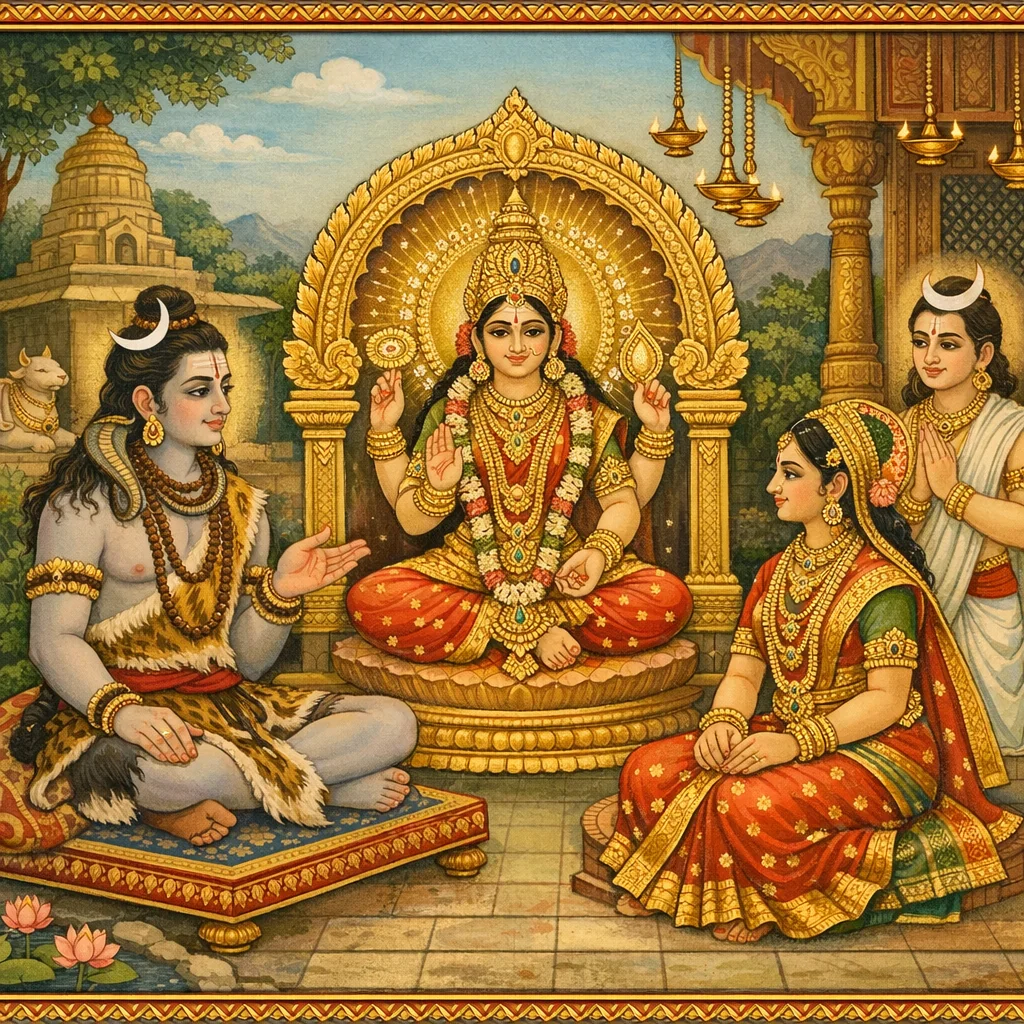
This adhyāya is cast as Īśvara’s instruction to Devī, directing her attention to a particular goddess-form, “Devī Mantravibhūṣaṇā,” enshrined near Bhīmeśvara and said to have been worshipped in former times by Soma, the lunar deity. In this way, the chapter links the sacred geography of the site with an inherited lineage of devotion. Its main thrust is prescriptive and calendrical: it declares that any woman who worships this Devī in the month of Śrāvaṇa, according to proper rite, especially on the third lunar day (tṛtīyā) of the bright fortnight (śukla-pakṣa), is freed from all sorrows. Thus the chapter compactly unites shrine-location, Soma’s prior worship, and vrata-timing into a fruit-oriented (phala) theological instruction.
Shlokas
Verse 1
ईश्वर उवाच । ततो गच्छेन्महादेवि देवीं मंत्रविभूषणाम् । भीमेश्वरस्य सान्निध्ये सोमेनाराधितां पुरा
Īśvara said: “Then, O great Goddess, one should go to the Goddess Mantravibhūṣaṇā. Near Bhīmeśvara she abides—she who in ancient times was worshiped by Soma, the Moon.”},{
Verse 2
श्रावणे मासि विधिना या नारी तां प्रपूजयेत् । तृतीयायां शुक्लपक्षे सा दुःखैर्मुच्यतेऽखिलैः
In the month of Śrāvaṇa, any woman who duly worships her on the bright-fortnight Tṛtīyā is freed from all sorrows.
Verse 348
इति श्रीस्कांदे महापुराण एकाशीतिसाहस्र्यां संहितायां सप्तमे प्रभासखण्डे प्रथमे प्रभासक्षेत्रमाहात्म्ये मन्त्रविभूषणागौरी माहात्म्यवर्णनंनामाष्टाचत्वारिंशदुत्तरत्रिशततमोऽध्यायः
Thus ends the three-hundred-and-forty-ninth chapter, entitled “The Account of the Greatness of Mantravibhūṣaṇā Gaurī,” in the Prabhāsa Khaṇḍa of the Śrī Skanda Mahāpurāṇa, within the Prabhāsa-kṣetra Māhātmya.