Adhyaya 344
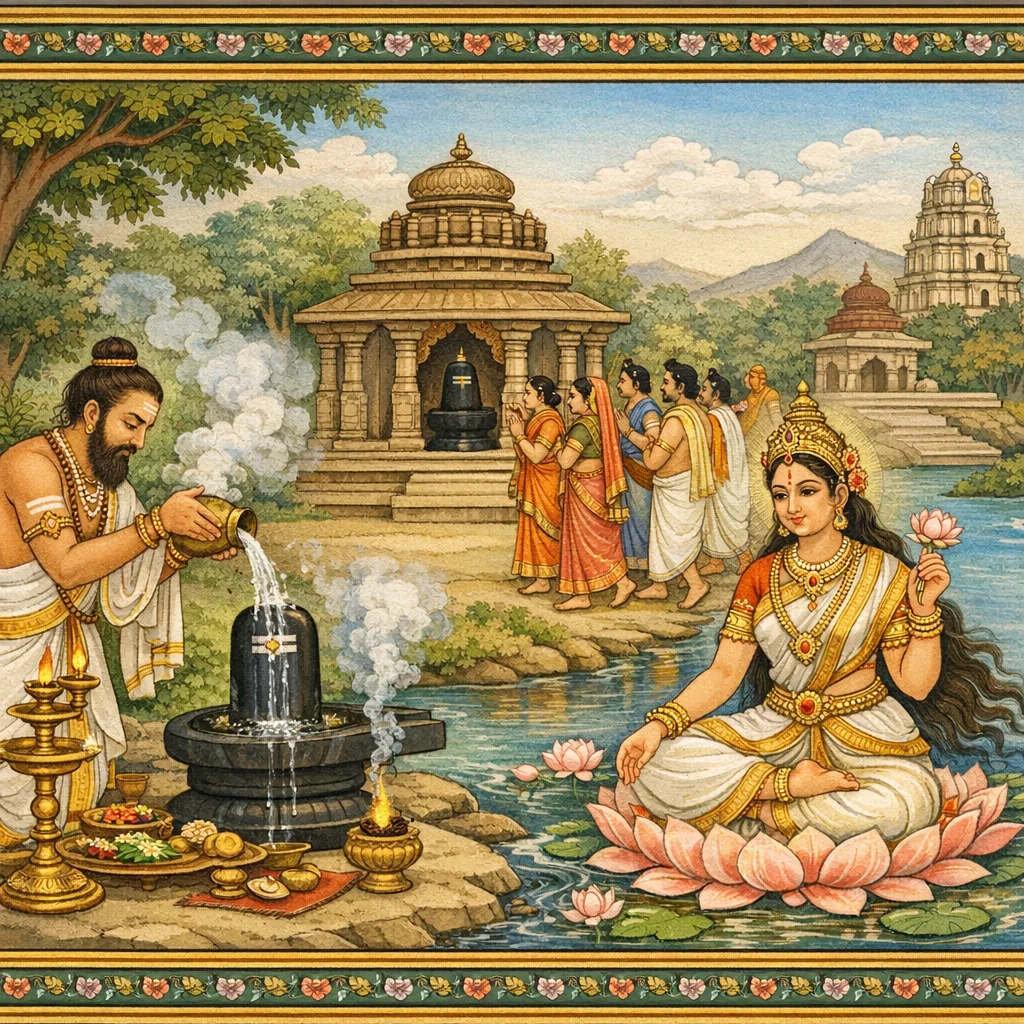
The chapter records Īśvara’s guidance to Devī regarding a sacred spot within Prabhāsa-kṣetra. Pilgrims are directed to a sin-destroying liṅga called Jaradgaveśvara, said to have been established by Jaradgava and located in a specified directional relation to Kapileśvara. Worship there is declared to remove grave sins, including brahmahatyā and allied transgressions. At the same place is the river-goddess Aṃśumatī; one should bathe according to proper rite and then perform piṇḍa-dāna (ancestral offering). The stated fruit is long-lasting satisfaction of the ancestors, and the text recommends gifting a bull (vṛṣabha) to a Veda-learned Brāhmaṇa. Devotional observance is detailed through offerings of gandha and puṣpa, pañcāmṛta ablution, and guggulu incense, along with continual praise, prostration, and circumambulation. Feeding Brāhmaṇas with varied foods is upheld as social-ritual duty, with a claim of manifold merit. The tīrtha is also remembered by yuga-names: Siddhodaka in Kṛta-yuga and Jaradgaveśvara-tīrtha in Kali-yuga.
Shlokas
Verse 1
ईश्वर उवाच । ततो गच्छेन्महादेवि लिंगं पापप्रणाशनम् । कपिलेश्वरस्यैशान्यामुत्तरेण व्यवस्थितम्
Īśvara said: Then, O Mahādevī, one should go to the sin-destroying Liṅga, situated to the north in the north-eastern quarter of Kapileśvara.
Verse 2
जरद्गवेश्वरंनाम जरद्गवप्रतिष्ठितम् । ब्रह्महत्यादि पापानां नाशनं नात्र संशयः
It is called Jaradgaveśvara, established by Jaradgava. It destroys sins beginning with brahmahatyā—of this there is no doubt.
Verse 3
तत्रैव संस्थिता देवि देवी अंशुमती नदी । तत्र स्नात्वा विधानेन पिडदानं तु दापयेत्
There itself, O Devī, is the divine river Aṃśumatī. Having bathed there according to rule, one should have piṇḍa-offerings made for the ancestors.
Verse 4
वर्षकोटिशतं साग्रं पितॄणां तृप्तिमावहेत् । वृषभस्तत्र दातव्यो ब्राह्मणे वेदपारगे
It brings satisfaction to the ancestors for a full hundred crores of years. There, a bull should be given in charity to a brāhmaṇa who has mastered the Veda.
Verse 5
ततस्तु पूजयेद्देवं गन्धपुष्पैर्जरद्गवम् । पञ्चामृतरसेनैव तथा गुग्गु लुधूपनैः
Then one should worship Lord Jaradgava with fragrances and flowers, with the liquid of pañcāmṛta, and also with incense such as guggulu.
Verse 6
स्तुतिदण्डनमस्कारैः प्रदक्षिणैरहर्निशम् । ब्राह्मणान्भोजयेत्तत्र भक्ष्यभोज्यैः पृथग्विधैः । एकेन भोजितेनैव कोटिर्भवति भोजिता
With hymns of praise, prostrations, salutations, and circumambulations—day and night—one should feed brāhmaṇas there with various kinds of foods and dishes. By feeding even one, it is as though a crore have been fed.
Verse 7
कृते सिद्धोदकंनाम तत्तीर्थं परिकीर्त्तितम् । जरद्गवेश्वरं तीर्थं कलौ तु परिकीर्त्यते
In the Kṛta Yuga that sacred ford was celebrated by the name Siddhodaka; but in the Kali Yuga it is renowned as the holy tīrtha of Jaradgaveśvara.
Verse 344
इति श्रीस्कांदे महापुराण एकाशीति साहस्र्यां संहितायां सप्तमे प्रभासखण्डे प्रथमे प्रभासक्षेत्रमाहात्म्येंऽशुमतीमाहात्म्ये जरद्गवेश्वरमाहात्म्यवर्णनंनाम चतुश्चत्वारिंशदुत्तरत्रिशततमोऽध्यायः
Thus ends, in the revered Skanda Mahāpurāṇa—within the Saṃhitā of eighty-one thousand verses—the three hundred and forty-fourth chapter, entitled “The Description of the Greatness of Jaradgaveśvara,” in the seventh division, the Prabhāsa Khaṇḍa, in the first subdivision, the Prabhāsa-kṣetra-māhātmya, within the Aṃśumatī-māhātmya.