Adhyaya 339
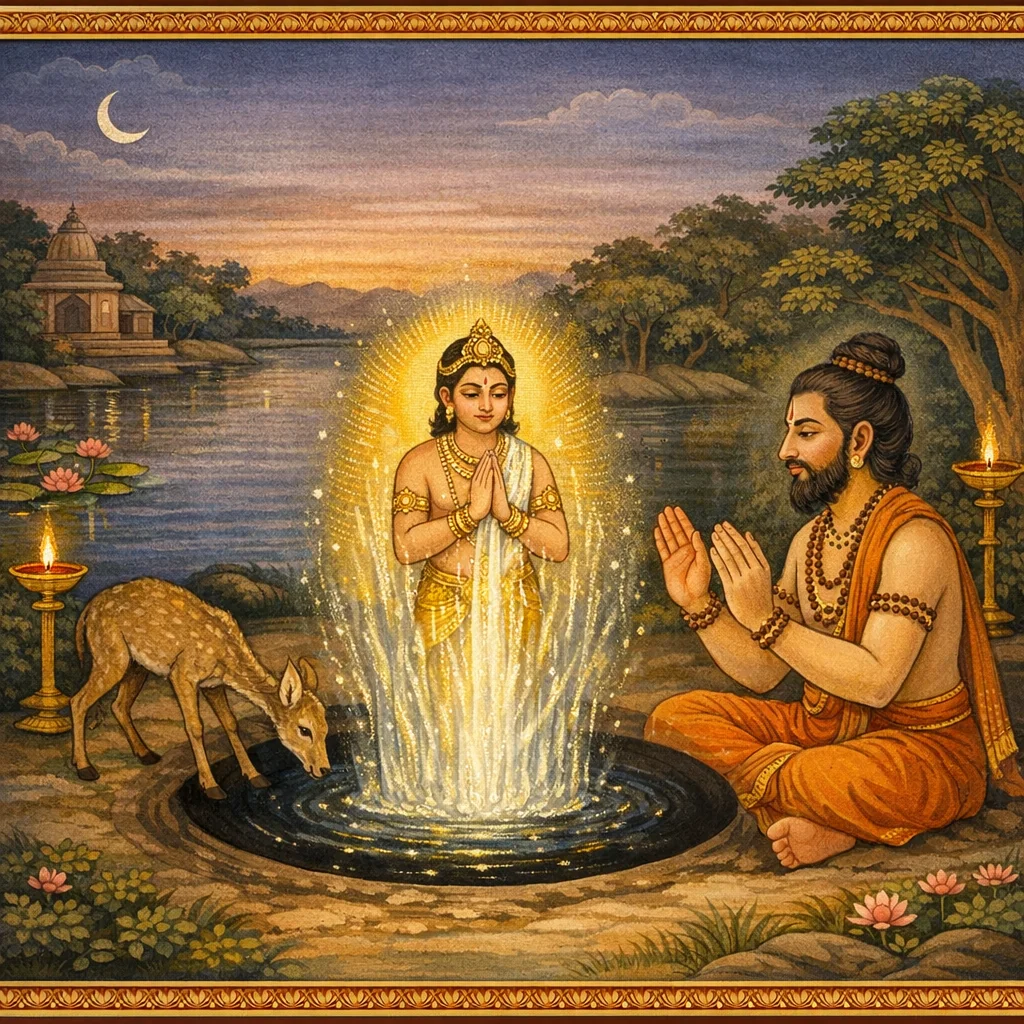
Īśvara tells Mahādevī of a celebrated well on the lovely bank of the Devikā River, famed as “triloka-viśruta” (renowned in the three worlds). There the sage Taṇḍī, dwelling by Devikā, performs tapas with unwavering Śiva-bhakti. A blind, aged deer falls into a deep, waterless pit. Moved by compassion yet keeping ascetic restraint, the muni repeatedly utters the sacred huṁkāra; by the power of that sound the pit fills with water, and the deer escapes with difficulty. The deer then assumes human form and questions the sage in wonder at the karmic fruit revealed. The transformed being explains that its fall into deerhood and return to human state occurred here through the potency of this tīrtha. Taṇḍī again pronounces the huṁkāra and the well fills as before; he performs snāna and pitṛ-tarpaṇa, recognizes the place as a supreme tīrtha, and attains a higher state (parā gati). The phalaśruti declares that even now, when huṁkāra is made there, a stream of water arises. A devotee who visits—though formerly sinful—does not gain another human birth on earth. One who bathes, becomes pure, and performs śrāddha is freed from all sins, honored in pitṛloka, and said to uplift seven lineages, past and future.
Shlokas
Verse 1
ईश्वर उवाच । ततो गच्छेन्महादेवि कूपं त्रैलोक्यविश्रुतम् । देविकायास्तटे रम्ये हुंकारेणैव पूर्यते
Īśvara said: Then, O Great Goddess, one should go to a well renowned in the three worlds. On the lovely bank of the Devikā river, it becomes filled merely by the sound “huṃ”.
Verse 2
ततोऽधस्तात्पुनर्याति सलिलं तत्र भामिनि । तण्डीनाम पुरा प्रोक्तो देविकातटमास्थितः
Then the water there again moves downward, O radiant lady. Long ago, one named Taṇḍī was spoken of as dwelling on the bank of the Devikā.
Verse 3
तपस्तेपे महादेवि शिवभक्तिपरायणः । तस्यैवं तप्यमानस्य तस्मिन्देशे वरानने
O Mahādevī, he performed austerities, wholly devoted to Śiva-bhakti. And as he thus pursued his penance in that region, O fair-faced one—
Verse 4
आजगाम मृगो वृद्धस्तं देशमन्ध दृक्प्रिये । स पपात महागर्ते अगाधे जलवर्जिते
O beloved one of dimmed sight, an aged deer came to that place. It fell into a great pit—deep and without water.
Verse 5
तं दृष्ट्वा कृपयाविष्टः स मुनिर्मौनमास्थितः । हुंकारं कुरुते तत्र भूयोभूयश्च भामिनि
Seeing it, the sage—overcome with compassion—remained silent. Yet there he repeatedly uttered the “huṃ” sound, O radiant lady.
Verse 6
अथ हुंकारशब्देन तस्य गर्तः प्रपूरितः । ततो मृगो विनिष्क्रांतः कृच्छ्रेण सलिलात्प्रिये
Then, by the sound of “huṃ”, that pit was completely filled. Thereupon the deer, with difficulty, came out of the water, O beloved.
Verse 7
मानुषं रूपमाश्रित्य तमृषिं पर्यपृच्छत । विस्मयं परमं गत्वा काम्यदं कर्मणः फलम्
Assuming a human form, it questioned that sage. Having reached the height of wonder, it spoke of the desired-giving fruit of the deed.
Verse 8
मृगत्वे पतितश्चात्र नरो भूत्वा विनिर्गतः । सोऽब्रवीत्तस्य माहात्म्यं सलिलस्य द्विजोत्तमः
Here a man, fallen into the state of a deer, emerged once more as a man. Then the foremost of the twice-born, the sage, proclaimed the greatness of that water.
Verse 9
अतोऽहं नरतां प्राप्तो नान्यदस्तीह कारणम् । ततस्तत्सलिलं भूयः प्रविष्टं धरणीतले
“Therefore I have attained the human state—there is no other cause here.” Thereafter that water once again entered into the earth.
Verse 10
ततो हुंकृतवान्भूयः स ऋषिः कौतुकान्वितः । आपूरितः पुनः कूपः सलिलेन पुरा यथा
Then, filled with wonder, that sage again uttered the sacred “huṃ.” At once the well was filled again with water, just as it had been in former times.
Verse 11
ततः स कृतवान्स्नानं तथा च पितृतर्पणम् । मत्वा तीर्थवरं तत्र ततः प्राप्तः परां गतिम्
Then he bathed there and also performed tarpaṇa, the offering of water to the ancestors. Knowing that place to be an excellent tīrtha, he thereafter attained the supreme state.
Verse 12
अद्यापि हुंकृते तस्मिन्सलिलौघः प्रवर्तते । तत्र गत्वा नरो भक्त्या अपि पापरतोऽपि यः
Even today, when that “huṃ” is uttered there, a rush of water begins to flow. Whoever goes there with devotion—even if devoted to sin—is transformed by the power of that tīrtha.
Verse 13
न मानुष्यं पुनर्जन्म प्राप्नोति जगतीतले । तत्र स्नात्वा शुचिर्भूत्वा यः श्राद्धं कुरुते नरः
He does not obtain another human birth upon the earth. The man who bathes there, becomes pure, and performs śrāddha (the ancestral rite)…
Verse 14
मुच्यते सर्वपापेभ्यः पितृलोके महीयते । कुलानि तारयेत्सप्त अतीताऽनागतानि च
He is freed from all sins and is honored in the world of the ancestors. He delivers seven lineages—those of the past and those yet to come as well.