Adhyaya 331
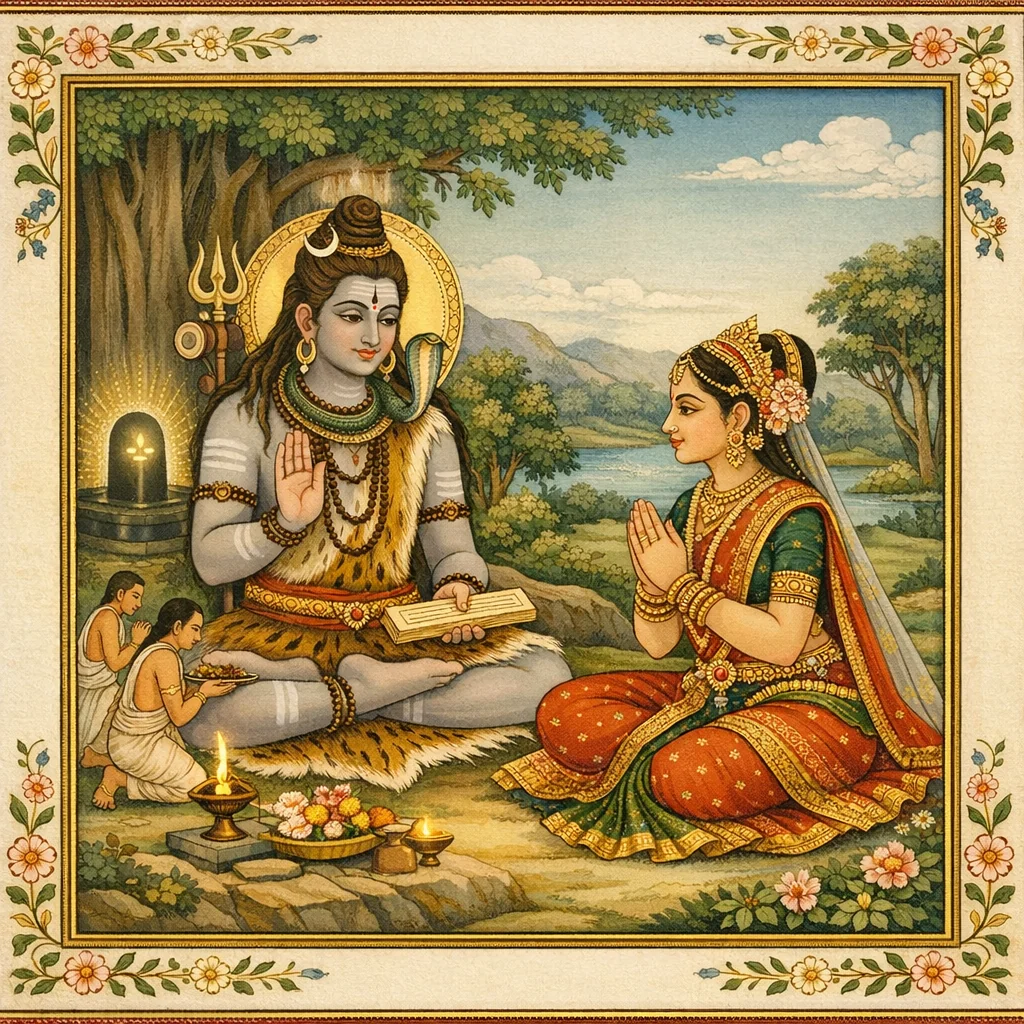
This chapter is cast as Īśvara’s instruction to Mahādevī concerning the revered sacred place called Kāla-Megha. The devotee is directed to go to Kāla-Megha, and it is stated that in the eastern quarter there is a kṣetrapa (guardian/presiding power) manifested in liṅga form. Worship is then prescribed by the lunar calendar: people should honor that liṅga with bali offerings, especially on the eighth (aṣṭamī) or the fourteenth (caturdaśī) lunar day. The promised fruit is stated succinctly—this deity grants desired aims (vāñchitārtha-prada) and is praised as a “wish-fulfilling tree” for the Kali age, showing that spiritual benefit remains accessible in later times through regulated devotion. The colophon notes that this is the 331st chapter of the first Prabhāsa-kṣetra-māhātmya within the Prabhāsa Khaṇḍa of the Skanda Mahāpurāṇa.
Shlokas
Verse 1
ईश्वर उवाच । ततो गच्छेन्महादेवि कालमेघेति विश्रुतम् । तस्मात्तं पूर्वदिग्भागे क्षेत्रपं लिंगरूपिणम्
Īśvara said: Then, O Great Goddess, one should go to the place renowned as Kālamegha; there, in the eastern quarter, is the guardian of the sacred field, present in the form of a liṅga.
Verse 2
अष्टम्यां वा चतुर्द्दश्यां पूज्योऽसौ बलिभिर्नरैः । वांछितार्थप्रदः सम्यक्स कलौ कल्पपादपः
On the eighth or the fourteenth lunar day, people should worship him with offerings (bali); he truly grants the desired aims, like a wish-fulfilling tree in the age of Kali.
Verse 331
इति श्रीस्कांदे महापुराण एकाशीतिसाहस्र्यां संहितायां सप्तमे प्रभासखंडे प्रथमे प्रभासक्षेत्रमाहात्म्ये कालमेघमाहात्म्यवर्णनंनामैकत्रिंशदुत्तरत्रिशततमोऽध्यायः
Thus ends, in the holy Skanda Mahāpurāṇa, in the Saṃhitā of eighty-one thousand verses, in the seventh book—Prabhāsa-khaṇḍa—within the first Prabhāsakṣetra-māhātmya, the chapter entitled “The Description of the Greatness of Kālamegha,” being Chapter 331.