Adhyaya 327
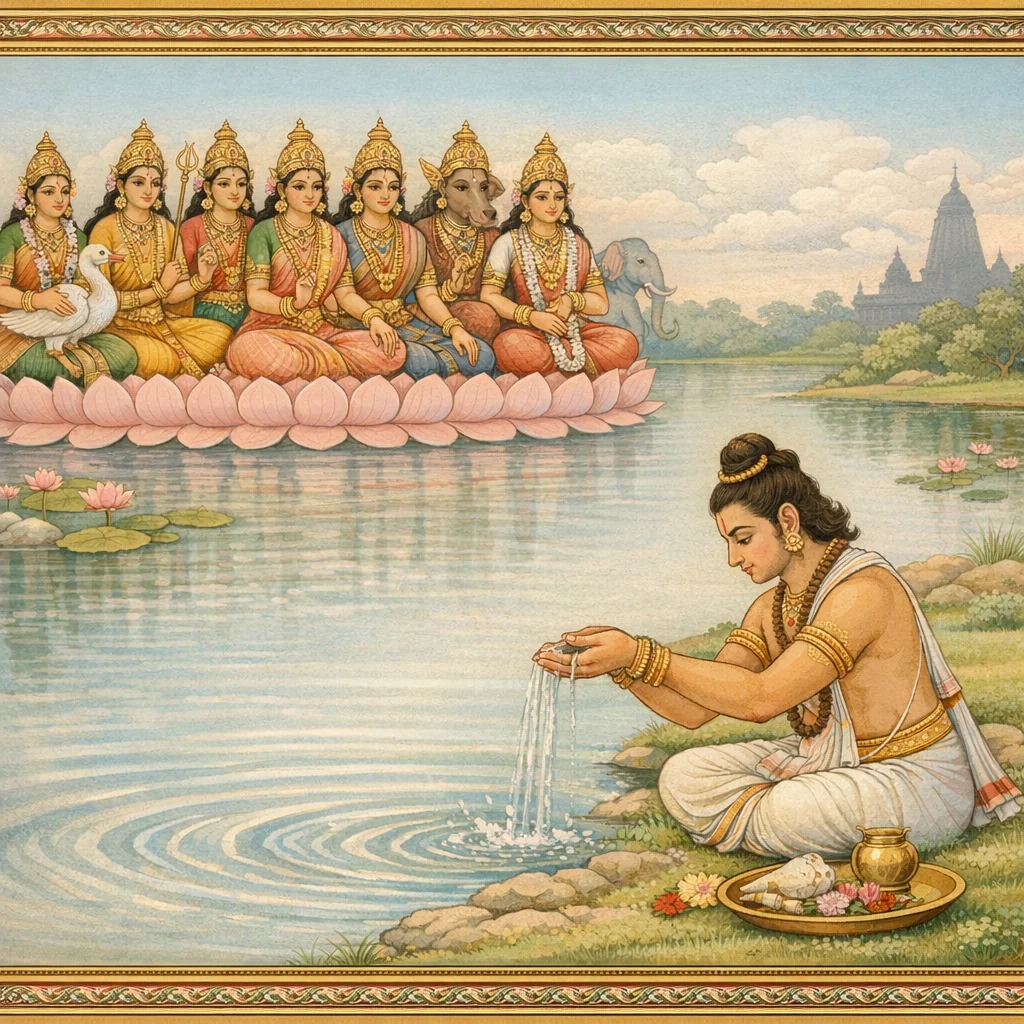
This adhyāya records Īśvara’s instruction concerning Mahodaya, a tīrtha located in the Īśāna (northeastern) direction. The pilgrim is enjoined to go there, bathe according to proper procedure (vidhi), and perform tarpaṇa offerings to the pitṛs and the deities. Mahodaya is praised for a distinctive power: it remedies faults incurred through ethically sensitive dealings, especially the “defects arising from accepting gifts” (pratigraha-kṛta doṣa), and it is said that fear does not arise for the practitioner. It is a source of great joy for the twice-born (dvija), yet its liberation-oriented promise extends even to those attached to sense-objects and to those entangled in gift-acceptance. North of Mahākāla, the Mātṛs are stationed to protect the sacred site; after bathing, one should worship these Mātṛs. The chapter concludes by extolling Mahodaya as sin-destroying and liberation-giving through abhiṣeka, noting its approximate extent as a half-krośa perimeter, with the center lauded as an ever-cherished abode of sages.
Shlokas
Verse 1
ईश्वर उवाच । ततो महोदयं गच्छेत्तस्मादीशानसंस्थितम्
Īśvara said: Thereafter one should go to Mahodaya, which lies to the northeast of that place.
Verse 2
विधिना तत्र यः स्नाति तर्पयेत्पितृदेवताः । प्रतिग्रहकृताद्दोषान्न भयं तस्य विद्यते
Whoever bathes there according to proper rule should offer rites of satisfaction (tarpaṇa) to the Pitṛs and the gods; for him there is no fear arising from faults incurred through improperly accepting gifts.
Verse 3
महोदयं महानन्ददायकं च द्विजन्मनाम् । प्रतिग्रहप्रसक्तानां विषयासक्तचेतसाम् । तेषामपि ददेन्मुक्तिं तेन ख्यातं महोदयम्
Mahodaya bestows great joy upon the twice-born. Even those entangled in accepting gifts, whose minds cling to sense-objects, are granted liberation there; hence it is renowned as “Mahodaya”—the place of great uplift.
Verse 4
तस्य वै रक्षणार्थाय महाकालस्य चोत्तरे । नियुक्ताश्च महादेवि मातरस्तत्र संस्थिताः । तस्मिन्स्नात्वा नरः पूर्वं मातॄस्ताश्च प्रपूजयेत्
For the protection of that sacred place—and to the north of Mahākāla—O Mahādevī, the Mothers (Mātṛs) have been appointed and are stationed there. Having bathed at that spot, one should first worship those Mothers.
Verse 5
एवं देवि मया ख्यातं महोदयमहोदयम् । सर्वपापहरं नृणामभिषेकाच्च मुक्तिदम्
Thus, O Goddess, I have proclaimed this “Mahodaya”—the supremely auspicious Mahodaya—which removes all sins of men and, through abhiṣeka (ritual ablution), bestows liberation.
Verse 6
अर्धक्रोशे च तत्तीर्थं समंतात्परिमंडलम् । एतन्मध्यं महासारं सदैव मुनिवल्लभम्
That tīrtha extends all around in a circular expanse of half a krośa. Its very center is the supreme essence, ever dear to the sages.
Verse 327
इति श्रीस्कांदे महापुराण एकाशीतिसाहस्र्यां संहितायां सप्तमे प्रभासखंडे प्रथमे प्रभासक्षेत्रमाहात्म्ये महोदयमाहात्म्यवर्णनंनाम सप्त विंशत्युत्तरत्रिशततमोऽध्यायः
Thus ends chapter 327, entitled “The Description of the Greatness of Mahodaya,” in the Prabhāsa Khaṇḍa (Book Seven) of the Śrī Skanda Mahāpurāṇa, within the Saṃhitā of eighty-one thousand, in the Prabhāsakṣetra Māhātmya (First subdivision).