Adhyaya 319
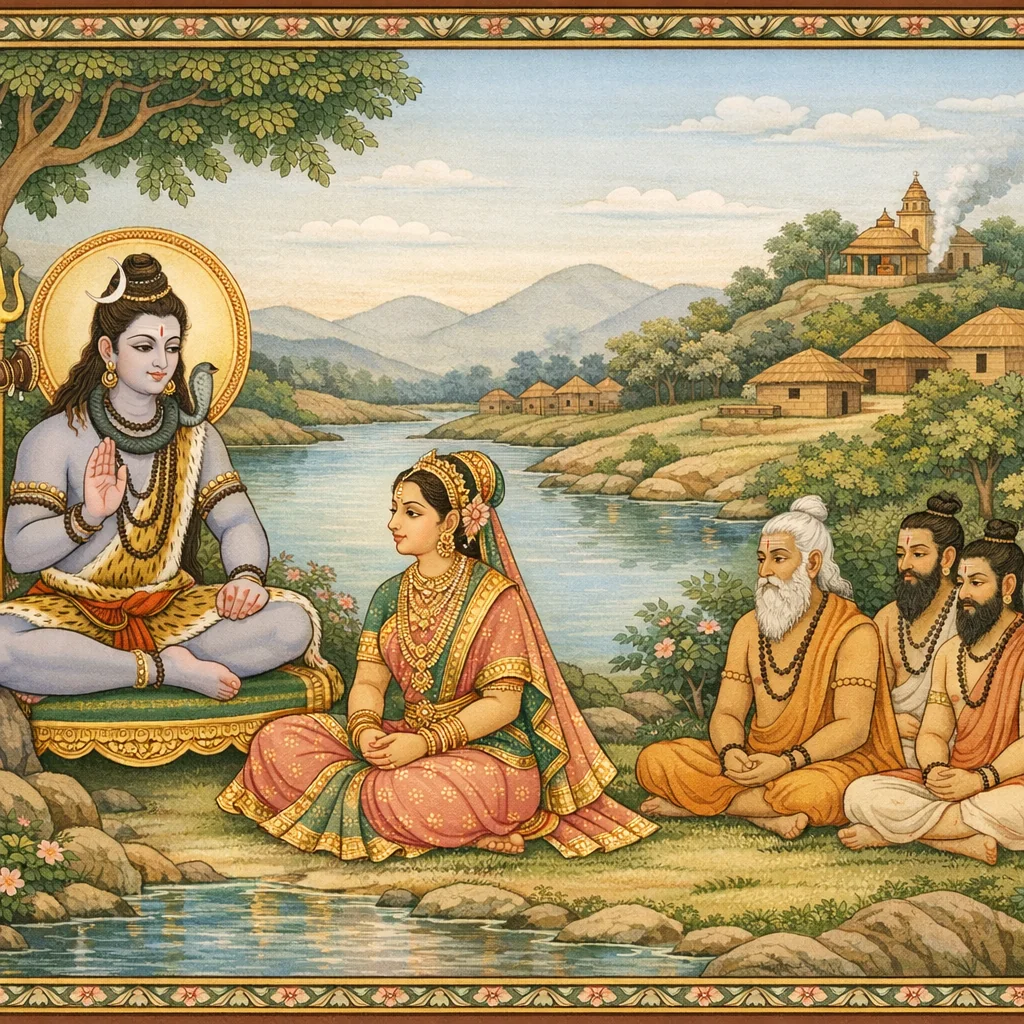
In an Īśvara–Devī dialogue, Śiva leads Devī to an auspicious northern tract near the Ṛṣitoyā riverbank and reveals the sacred site called Unnata. Devī asks the meaning of the name, how Śiva came to “forcibly” grant the place to brāhmaṇas, and what its boundaries are. Śiva explains layered reasons for “Unnata”: the liṅga is ‘raised’/manifest at Mahodaya, an ‘elevated gate’ is linked with Prabhāsa, and the site is exalted by the superior tapas and vidyā of sages. A narrative follows: countless ascetic ṛṣis perform long austerities; Śiva appears as a mendicant and is recognized, yet in the end they behold only the liṅga, Mūlacandīśa. Those who gain its darśana ascend to heaven, drawing more arrivals, until Indra (Śatakratu) covers the liṅga with a vajra and blocks others’ vision. Śiva calms the enraged sages, teaches the impermanence of heaven, and directs them to accept a splendid settlement where agnihotra, yajña, pitṛ-pūjā, hospitality, and Vedic study continue—promising liberation at life’s end through his grace. Viśvakarmā is summoned to build but warns that householders should not dwell permanently in the immediate liṅga-zone; therefore Śiva orders construction at Unnata on the Ṛṣitoyā bank. The chapter defines the wider sacred district (including “Nagnahara,” with directional markers and an eight-yojana measure) and gives Kali-yuga assurances: Mahākāla as guardian; Unnata as Vighnarāja/Gaṇanātha and giver of wealth; Durgāditya as giver of health; Brahmā as bestower of aims and liberation. It culminates in establishing Sthalakeśvara, with yuga-specific descriptions of the shrine and a special Māgha lunar-14 observance featuring night vigil (jāgara).
Shlokas
Verse 1
ईश्वर उवाच । ततो गच्छेन्महादेवि ह्युन्नतस्थानमुत्तमम् । तस्यैवोत्तरदिग्भाग ऋषितोयातटे शुभे
Īśvara said: “Then, O Mahādevī, one should go to the excellent ‘Unnata-sthāna’ (the Elevated Sacred Spot). It lies in the northern part of that very area, on the auspicious bank of Ṛṣitoya.”
Verse 2
एतत्स्थानं महादेवि विप्रेभ्यः प्राददां बलात् । सर्वसीमासमायुक्तं चंडीगणसुरक्षितम्
O Mahādevī, this place I granted to the brāhmaṇas by force. It is complete with all its boundaries and is guarded by the hosts of Caṇḍī.
Verse 3
देव्युवाच । कथमुन्नतनामास्य बभूव सुरसत्तम । कथं त्वया बलाद्दत्तं कियत्सीमासमन्वितम्
The Goddess said: “O best among the gods, how did this place come to bear the name ‘Unnata’? And how was it given by you ‘by force’? How extensive are its boundaries?”
Verse 4
एतत्सर्वं ममाचक्ष्व संक्षेपान्नातिविस्तरात्
Tell me all this, but briefly—without over-elaboration.
Verse 5
ईश्वर उवाच । शृणु देवि प्रवक्ष्यामि कथां पापप्रणाशिनीम् । यां श्रुत्वा मानवो देवि मुच्यते सर्वपातकैः
Īśvara said: “Listen, O Goddess. I shall relate a sin-destroying account—hearing which, O Devī, a human being is freed from all transgressions.”
Verse 6
एतत्सर्वं पुरा प्रोक्तं स्थानसंकेतकारणम् । तृतीये ब्रह्मणः कुंडे सृष्टिसंक्षेपसूचके
All this was explained long ago as the reason for this place’s identifying signs—at the third “Brahmā’s pond”, which indicates creation in brief.
Verse 7
तथापि ते प्रवक्ष्यामि संक्षेपाच्छुणु पार्वति
Even so, I shall tell it to you in brief—listen, O Pārvatī.
Verse 8
उन्नामितं पुनस्तत्र यत्र लिंगं महोदये । तदुन्नतमिति प्रोक्तं स्थानं स्थानवतां वरम्
Again, in that place where, at Mahodaya, the Liṅga was raised up—this is declared to be ‘Unnata’, the foremost among sacred sites.
Verse 9
अथवा चोन्नतं द्वारं पूर्वं प्राभासिकस्य वै । तदुन्नतमिति प्रोक्तं स्थानं स्थानवतां वरम्
Or else, the eastern ‘elevated gate’ of Prābhāsika (Prabhāsa) is spoken of—therefore it is called ‘Unnata’, the best among holy places.
Verse 10
विद्यया तपसा चैव यत्रोत्कृष्टा महर्षयः । तदुन्नतमिति प्रोक्तं स्थानं स्थानवतां वरम्
Where the great sages excel through learning and austerity—this is declared to be ‘Unnata’, the best among sacred places.
Verse 11
यदा देवकुले विप्रा मूलचंडीशसंज्ञकम् । प्रसाद्य च महादेवं पुनः प्राप्ता महोदयम्
When, in the Deva-temple, the brāhmaṇas propitiated Mahādeva—known there as Mūla-Caṇḍīśa—and then returned again to Mahodaya,
Verse 12
षष्टिवर्षसहस्राणि तपस्तेपुर्महर्षयः । ध्यायमाना महेशानमनादिनिधनं परम्
For sixty thousand years the great sages performed tapas, meditating upon Maheśāna—the supreme Lord, without beginning or end.
Verse 13
तेषु वै तप्यमानेषु कोटिसंख्येषु पार्वति । ऋषितोयातटे रम्ये पवित्रे पापनाशने । भिक्षुर्भूत्वा गतश्चाहं पुनस्तत्रैव भामिनि
While those sages—numbering in crores—were practicing austerities, O Pārvatī, on the lovely bank of Ṛṣi-toyā, pure and sin-destroying, I too went there again, O fair one, taking the form of a mendicant.
Verse 14
त्रिकालं दर्शिभिस्तत्र दोषरागविवर्जितैः । तपस्विभिस्तदा सर्वैर्लक्षितोऽहं वरानने
There I was beheld—O fair-faced one—by all those ascetics who perceive the three times, who are free from fault and attachment.
Verse 15
दृष्टमात्रस्तदा विप्रैर्विरराम महेश्वरः । क्व यासि विदितो देव इत्युक्त्वानुययुर्द्विजाः
When the brāhmaṇas had merely seen Him, Maheśvara at once vanished from view. The twice-born then followed, saying, ‘Where do You go, O Deva? You are now known to us!’
Verse 16
यावदायांति मुनय ईशेशेति प्रभाषकाः । धावमानाः स्वतपसा द्योतयन्तो दिशोदश
As the sages came, crying ‘O Lord, O Lord!’, they ran forth, and by their own tapas they made the ten directions blaze with radiance.
Verse 17
लिंगमेव प्रपश्यंति न पश्यंति महेश्वरम्
They behold only the Liṅga; they do not behold Mahēśvara (Śiva) in His personal form.
Verse 18
येये च ददृशुर्लिंगं मूलचण्डीशसंज्ञकम् । तदा च मुनयः सर्वे सदेहाः स्वर्गमाययुः
And all those who beheld the Liṅga known as Mūlacaṇḍīśa—then all the sages went to heaven with their bodies intact.
Verse 19
यदा त्रिविष्टपं व्याप्तं दृष्टं वै शतयज्वना । आयांति च तथैवान्ये मुनयस्तपसोज्वलाः
When Śatayajvan (Indra) saw that heaven had become filled, other sages too arrived, ablaze with the splendor of their tapas.
Verse 20
एतदंतरमासाद्य समागत्य महीतले । लिंगमाच्छादयामास वज्रेणैव शतक्रतुः
Seizing this interval, Śatakratu (Indra) came down to the earth and covered the Liṅga with his very Vajra.
Verse 21
अष्टादशसहस्राणि मुनीनामूर्ध्वरेतसाम् । स्थितानि न तु पश्यंति लिंगमेतदनुत्तमम्
Eighteen thousand sages—masters of continence—stood there, yet they could not see this unsurpassed Liṅga.
Verse 22
शक्रस्तु सहसा दृष्टो वज्रेणैव समन्वितः । यावद्वदंति शापं ते तावन्नष्टः पुरंदरः
Śakra (Indra) was suddenly seen, bearing the Vajra in his hand. Yet before they could utter a curse, Purandara vanished.
Verse 23
दृष्ट्वा तान्कोपसंयुक्तान्भगवांस्त्रिपुरांतकः । उवाच सांत्वयन्देवो वाचा मधुरया मुनीन्
Seeing those sages filled with anger, the Blessed Lord Tripurāntaka spoke, soothing the munis with gentle, sweet words.
Verse 24
कथं खिन्ना द्विजश्रेष्ठाः सदा शांतिपरायणाः । प्रसन्नवदना भूत्वा श्रूयतां वचनं मम
How is it, O best of the twice-born, ever devoted to peace, that you have become downcast? Make your faces serene and listen to my words.
Verse 25
भवद्भिर्ज्ञानसंयुक्तैः स्वर्गः किं मन्यते बहु । यत्रैके वसवः प्रोक्ता आदित्याश्च तथा परे
You who are endowed with discernment—why regard heaven as something great? There, some are known as the Vasus, and others likewise as the Ādityas.
Verse 26
रुद्रसंज्ञास्तथा चैके ह्यश्विनावपि चापरौ । एतेषामधिपः कश्चिदेक इन्द्रः प्रकीर्तितः
Likewise, some are designated as Rudras, and two others are the Aśvins. Over all these, a single lord is proclaimed—Indra.
Verse 27
स्वपुण्यसंख्यया प्राप्ते यस्माद्विभ्रश्यते नरैः । एवं दुःखसमायुक्तः स्वर्गो नैवेष्यते बुधैः
Since heaven, though attained by the measure of one’s own merit, is again lost by men, the wise do not desire that heaven which is bound up with sorrow.
Verse 28
एतस्मात्कारणाद्विप्राः कुरुध्वं वचनं मम । गृह्णीध्वं नगरं रम्यं निवासाय महाप्रभम्
For this reason, O Brāhmaṇas, follow my instruction: accept this delightful, most splendid city as your place of residence.
Verse 29
हूयंतामग्निहोत्राणि देवताः सर्वदा द्विजाः । इज्यंतां विविधैर्यागैः क्रियतां पितृपूजनम्
Let Agnihotra offerings be performed, and may the deities be worshipped always, O twice-born. Let sacrifices of various kinds be offered, and let the ancestors be duly honored.
Verse 30
आतिथ्यं क्रियता नित्यं वेदाभ्यासस्तथैव हि
Let hospitality be practiced daily, and likewise, indeed, let there be continual study of the Vedas.
Verse 31
एवं हि कुर्वतां नित्यं विना ज्ञानस्य संचयैः । प्रसादान्मम विप्रेन्द्राः प्रांते मुक्तिर्भविष्यति
For those who practice in this way continually, even without amassing stores of philosophical knowledge, by my grace, O best of Brāhmaṇas, liberation will come at the end.
Verse 32
ऋषय ऊचुः । असमर्थाः परित्राणे जिताहारास्तपोन्विताः । नगरेणेह किं कुर्मस्तव भक्तिमभीप्सवः
The sages said: “We are not able to protect and govern; we are restrained in food and endowed with austerity. What are we to do here with a city—we who seek only devotion to You?”
Verse 33
ईश्वर उवाच । भविष्यति सदा भक्तिर्युष्माकं परमेश्वरे । गृह्णीध्वं नगरं रम्यं कुरुध्वं वचनं मम
Īśvara said: “Your devotion to the Supreme Lord will ever remain steadfast. Accept this beautiful city and carry out my command.”
Verse 34
इत्युक्त्वा भगवान्देव ईषन्मीलितलोचनः । सस्मार विश्वकर्माणं सर्वशिल्पवतां वरम्
Having spoken thus, the Blessed Lord—his eyes gently half-closed in yogic composure—remembered Viśvakarmā, the foremost among all masters of craft and architecture.
Verse 35
स्मृतमात्रो विश्वकर्मा प्रांजलिश्चाग्रतः स्थितः । आज्ञापयतु मां देवो वचनं करवाणि ते
The moment he was remembered, Viśvakarmā appeared, standing before him with folded hands, and said: “Let the Lord command me—what is your word that I should accomplish?”
Verse 36
ईश्वर उवाच । नगरं क्रियतां त्वष्टर्विप्रार्थं सुंदरं शुभम्
Īśvara said: “O Tvaṣṭṛ, build a city—beautiful and auspicious—for the sake of the brāhmaṇas.”
Verse 37
इत्युक्तो विश्वकर्मा स भूमिं वीक्ष्य समंततः । उवाच प्रणतो भूत्वा शंकरं लोकशंकरम्
Thus addressed, Viśvakarmā surveyed the land on all sides; then, bowing in reverence, he spoke to Śaṅkara, the benefactor of the worlds.
Verse 38
परीक्षिता मया भूमिर्न युक्तं नगरं त्विह । अत्र देवकुलं साक्षाल्लिंगस्य पतनं तथा
“I have examined this ground; it is not suitable to build a city here. For here stands a manifest divine precinct, and here too is the very place where the Liṅga descended (fell).”
Verse 39
यतिभिश्चात्र वस्तव्यं न युक्तं गृहमेधिनाम्
“It is the renunciants who should dwell here; it is not proper for householders to reside (permanently) in this place.”
Verse 40
त्रिरात्रं पंचरात्रं वा सप्तरात्रं महेश्वर । पक्षं मासमृतुं वापि ह्ययनं यावदेव च । पुत्रदारयुतैस्तीर्थे वस्तव्यं गृहमेधिभिः
“O Maheśvara, householders should stay at the tīrtha along with their children and wives for three nights, or five nights, or seven nights; or for a fortnight, a month, a season, or even up to the length of an ayana.”
Verse 41
वसत्यूर्ध्वं तु षण्मासाद्यदा तीर्थे गृहाधिपः । अवज्ञा जायते तस्य मनश्चापल्यभावतः । तदा धर्माद्विनश्यंति सकला गृहमेधिनः
“But when a householder remains at a tīrtha beyond six months, contempt arises in him due to the mind’s fickle nature; then householders, as a class, fall away from dharma.”
Verse 42
इत्युक्तः स तदा देवस्तेन वै विश्वकर्मणा । पुनः प्रोवाच तं तस्य प्रशस्य वचनं शिवः
Thus addressed by Viśvakarmā, the god Śiva praised his words and spoke to him again.
Verse 43
रोचते मे न वासोऽत्र विप्राणां गृहमेधिनाम् । यत्र चोन्नामितं लिंगमृषितोयातटे शुभे । तत्र निर्मापय त्वष्टर्नगरं शिल्पिनां वर
Śiva said: “I do not approve that brāhmaṇa householders dwell in this very place. But where the Liṅga has been raised—on the auspicious bank of the Ṛṣitoyā—there, O Tvaṣṭṛ, build the city, O best among artisans.”
Verse 44
तस्य तद्वचनं श्रुत्वा विश्वकर्मा त्वरान्वितः । गत्वा चकार नगरं शिल्पिकोटिभिरावृतः
Hearing his command, Viśvakarmā, filled with urgency, went forth and built a city, surrounded by crores of artisans.
Verse 45
उन्नतं नाम यल्लोके विख्यातं सुरसुन्दरि । ततो हृष्टमना भूत्वा विलोक्य नगरं शिवः । आहूय ब्राह्मणान्सर्वानुवाचानतकन्धरः
“O fair goddess, that city is famed in the world by the name Uṇṇata.” Then Śiva, delighted at heart on beholding the city, summoned all the brāhmaṇas and spoke, bowing his neck in humility.
Verse 46
इदं स्थानं वरं रम्यं निर्मितं विश्वकर्मणा । ग्रामाणां च सहस्रैस्तु प्रोक्तं सर्वासु दिक्षु च
“This excellent, delightful place has been fashioned by Viśvakarmā; and in all directions it is spoken of as being accompanied by thousands of villages.”
Verse 47
नगरात्सर्वतः पुण्यो देशो नग्नहरः स्मृतः । अष्टयोजनविस्तीर्ण आयामव्यासतस्तथा
On every side of the city lies a sacred region remembered as “Nagnahara”; in both length and breadth it extends for eight yojanas.
Verse 48
नग्नो भूत्वा हरो यत्र देशे भ्रांतो यदृच्छया । तं नग्नहरमित्याहुर्देशं पुण्यतमं जनाः
In that land, Hara (Śiva), having become unclothed, once wandered by chance; therefore people call that supremely holy region “Nagnahara”.
Verse 49
पूर्वे तु शांकरी चाऽर्या पश्चिमे न्यंकुमत्यपि । उत्तरे कनकनंदा दक्षिणे सागरावधिः । एतदंतरमासाद्य देशो नग्नहरः स्मृतः
To the east are Śāṃkarī and Āryā; to the west is Nyaṃkumatī; to the north is Kanakanandā; and to the south the boundary is the ocean. The tract enclosed within these is remembered as the land called Nagnahara.
Verse 50
अष्टयोजनमानेन आयामव्यासतस्तथा । प्रोक्तोऽयं सकलो देश उन्नतेन समं मया
Thus, by the measure of eight yojanas in both length and breadth, this entire region—together with Uṇṇata—has been described by me.
Verse 51
गृह्यतां नगरश्रेष्ठं प्रसीदध्वं द्विजोत्तमाः । अत्र भक्तिश्च मुक्तिश्च भविष्यति न संशयः
Accept this best of cities, O foremost of the twice-born; be gracious. Here there will arise both devotion (bhakti) and liberation (mokṣa)—of this there is no doubt.
Verse 52
इत्युक्तास्ते तदा सर्वे विप्रा ऊचुर्महेश्वरम्
Thus addressed, all those brāhmaṇas then replied to Maheśvara.
Verse 53
विप्रा ऊचुः । ईश्वराज्ञा वृथा कर्तुं न शक्या परमात्मनः । तपोऽग्निहोत्रनिष्ठानां वेदाध्ययनशालिनाम्
The brāhmaṇas said: “O Supreme Self, the Lord’s command cannot be made futile. We are devoted to austerity and the agnihotra, and endowed with the discipline of Vedic study.”
Verse 54
अस्माकं रक्षिता कोऽस्ति कलिकाले च दारुणे । को दाताऽरोग्यदः कश्च को वै मुक्तिं प्रदास्यति
In this dreadful age of Kali, who will be our protector? Who will be the giver—who will grant health? And who indeed will bestow liberation upon us?
Verse 55
ईश्वर उवाच । महाकाल स्वरूपेण स्थित्वा तीर्थे महोदये । नाशयिष्यामि शत्रून्वः सम्यगाराधितो ह्यहम्
Īśvara said: “Abiding at the Mahodaya Tīrtha in the form of Mahākāla, when I am properly worshiped, I shall destroy your enemies.”
Verse 56
उन्नतो विघ्नराजस्तु विघ्नच्छेत्ता भविष्यति । गणनाथस्वरूपोऽयं धनदो निधीनां पतिः
The exalted Lord of Obstacles shall become the remover of obstacles. In the form of Gaṇanātha, this one will be the giver of wealth—the lord of treasures.
Verse 57
युष्मभ्यं दास्यति द्रव्यं सम्यगाराधितोऽपि सः । आरोग्यदायको नित्यं दुर्गादित्यो भविष्यति
When duly worshiped, he will also grant you wealth; and Durgāditya will ever be the giver of health.
Verse 58
महोदयं महानन्ददायकं वो भविष्यति । सम्यगाराधितो ब्रह्मा सर्वकार्येषु सर्वदा । सर्वान्कामांश्च मुक्तिं च युष्मभ्यं संप्रदास्यति
Mahodaya shall become for you a giver of great joy. When Brahmā is duly worshiped, he will always aid in every undertaking and bestow upon you every desired aim—and liberation as well.
Verse 59
विप्रा ऊचुः । यदि तीर्थानि तिष्ठंति सर्वाणि सुरसत्तम । संगालेश्वरतीर्थे च तथा देवकुले शिवे
The brāhmaṇas said: O best among the gods, if indeed all sacred tīrthas are present—there at Saṅgāleśvara Tīrtha, and likewise at Devakula, the divine abode of Śiva—
Verse 60
कलावपि महारौद्रे ह्यस्माकं पावनाय वै । स्थातव्यं तर्हि गृह्णीमो नान्यथा च महेश्वर
Even in the fiercely terrible Kali age, for our purification we accept this resolve: we must dwell here; it cannot be otherwise, O Maheśvara.
Verse 61
स तथेति प्रतिज्ञाय ददौ तेभ्यः पुरं वरम् । सप्तभौमैः शशांकाभैः प्रासादैः परिभूषितम् । नानाग्रामसमायुक्तं सर्वतः सीमयान्वितम्
Pledging, “So be it,” he granted them an excellent city—adorned with moon-bright mansions of seven stories, joined with many villages, and bounded on every side by well-marked borders.
Verse 62
सूत उवाच । एवं तेभ्यो हि नगरं दत्त्वा देवो महेश्वरः । ददर्श विश्वकर्माणं प्राञ्जलिं पुरतः स्थितम्
Sūta said: Thus, having granted them the city, the god Maheśvara beheld Viśvakarmā standing before him with folded hands.
Verse 63
विश्वकर्मोवाच । विलोक्यतां महादेव नगरं नगरोपमम् । सौवर्णस्थलमारुह्य निर्मितं त्वत्प्रसादतः
Viśvakarmā said: “O Mahādeva, behold this city, fit to be compared with the greatest of cities. Ascending the golden terrace, it has been fashioned by your grace.”
Verse 64
विश्वकर्मवचः श्रुत्वा भगवांस्त्रिपुरान्तकः । समारुरोह स्थलकं सह सर्वैर्महर्षिभिः
Hearing the words of Viśvakarman, the Blessed Lord—Tripurāntaka—ascended to Sthalaka together with all the great sages.
Verse 65
नगरं विलोकयामास रम्यं प्राकारमण्डितम् । ऋषयस्तुष्टुवुः सर्वे तत्रस्थं त्रिपुरान्तकम् । तानुवाच महादेवो वृणुध्वं वरमुत्त मम्
He beheld the beautiful city adorned with ramparts. All the sages praised Tripurāntaka who stood there; and Mahādeva said to them, “Choose an excellent boon.”
Verse 66
ऋषय ऊचुः । यदि तुष्टो महादेव स्थलकेश्वरनामभृत् । अवलोकयंश्च नगरं सदा तिष्ठ स्थले हर
The sages said: “If you are pleased, O Mahādeva—bearer of the name Sthalakeśvara—then, O Hara, ever remain in this place, continually watching over the city.”
Verse 67
इत्युक्तस्तैस्तदा देवः स्थलकेऽस्मिन्सदा स्थितः । कृते रत्नमयं देवि त्रेतायां च हिरण्मयम्
Thus addressed by them, the Deva then abided forever in this Sthalaka. In the Kṛta age, O Devī, the sacred form/abode was of jewels; and in the Tretā age, it was of gold.
Verse 68
रौप्यं च द्वापरे प्रोक्तं स्थलमश्ममयं कलौ । एवं तत्र स्थितो देवः स्थलकेश्वरनामतः
In the Dvāpara age it was said to be of silver, and in the Kali age the place is of stone. Thus the Deva abides there, known by the name Sthalakeśvara.
Verse 69
सदा पूज्यो महादेव उन्नतस्थानवासिभिः । माघे मासि चतुर्दश्यां विशेषस्तत्र जागरे
Mahādeva is ever to be worshiped by the residents of Unnata-sthāna. In the month of Māgha, on the fourteenth lunar day, keeping vigil there is especially meritorious.
Verse 70
इत्येतत्कथितं देवि ह्युन्नतस्य महोद्यम् । श्रुतं पापहरं नॄणां सर्वकामफलप्रदम्
Thus, O Devī, has the great sacred account of Unnata been told. When heard, it removes the sins of people and grants the fruits of all rightful desires.
Verse 319
इति श्रीस्कांदे महापुराण एकाशीतिसाहस्र्यां संहितायां सप्तमे प्रभासखण्डे प्रथमे प्रभासक्षेत्रमाहात्म्य उन्नतस्थानमाहात्म्यवर्णनंनामैकोनविंशत्युत्तरत्रिशततमोऽध्यायः
Thus ends the three-hundred-and-nineteenth chapter, entitled “The Description of the Greatness of Unnata-sthāna,” in the Prabhāsa-khaṇḍa—within the Prabhāsa-kṣetra-māhātmya—of the Śrī Skanda Mahāpurāṇa, in the Ekāśītisāhasrī Saṃhitā.