Adhyaya 311
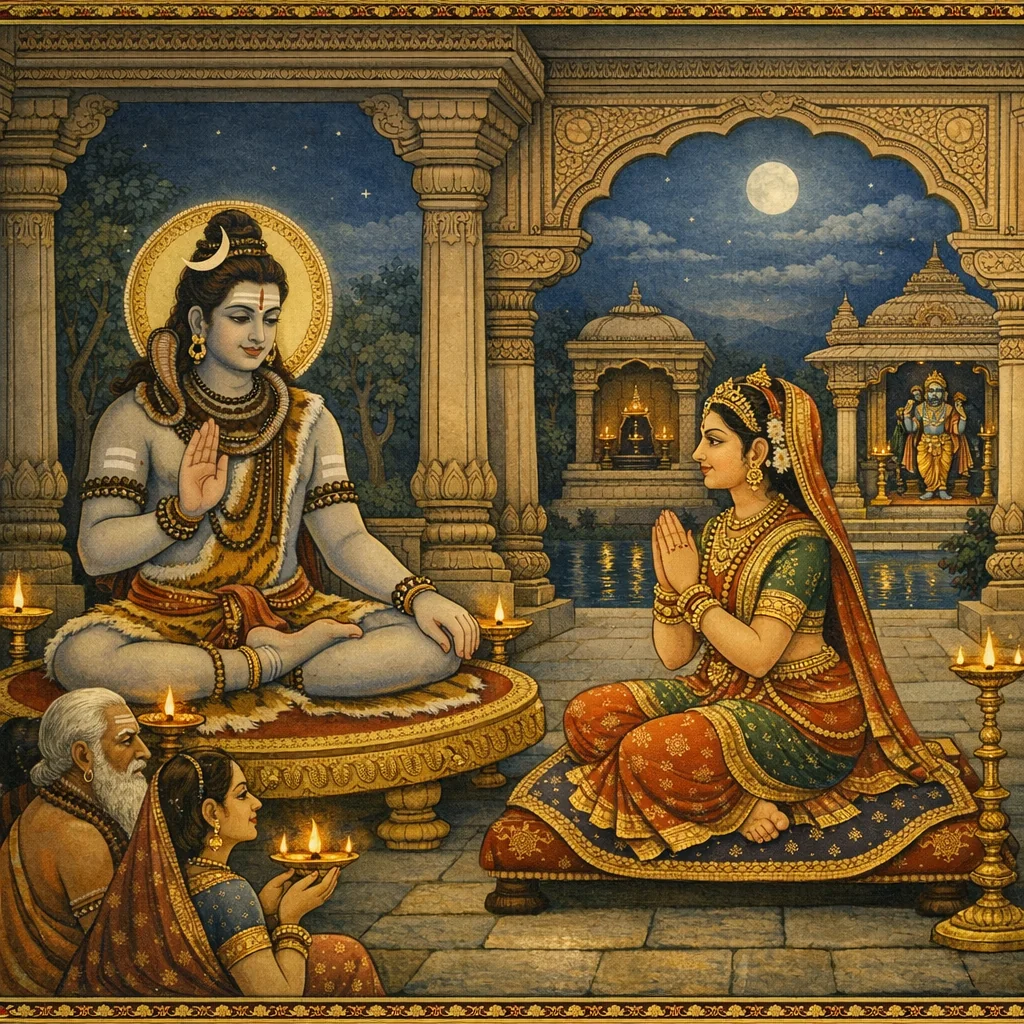
This adhyāya presents a brief theological instruction. Īśvara directs Mahādevī to go to the shrine of Hari Gopāla-svāmin, giving a precise location: east of Caṇḍīśa, at a distance of twenty dhanu (bows). It then declares the shrine’s Purāṇic saving power: by darśana and pūjā there, all sins are pacified and the waves of poverty are destroyed. Worship is especially commended in the month of Māgha, with pūjā and jāgaraṇa (night vigil). One who performs these observances is promised attainment of the “supreme state” (paraṃ padam), making the shrine both a sacred destination and a disciplined path of devotion.
Shlokas
Verse 1
ईश्वर उवाच । ततो गच्छेन्महादेवि गोपालस्वामिनं हरिम् । चण्डीशात्पूर्वदिग्भागे धनुषां विंशतौ स्थितम्
Īśvara said: “Then, O great Goddess, one should go to Hari known as Gopāla-svāmin. He is situated to the east of Caṇḍīśa, at a distance of twenty dhanuṣ (bow-lengths).”
Verse 2
सर्वपापोपशमनं दारिद्र्यौघविनाशनम् । तं दृष्ट्वा पूजयित्वा च माघे मासि विशेषतः । पूजा जागरणं कृत्वा तत्र गच्छेत्परं पदम्
He brings the pacification of all sins and destroys the flood of poverty. Having beheld him and worshipped him—especially in the month of Māgha—one who performs pūjā and keeps vigil there attains the supreme state.
Verse 311
इति श्रीस्कांदे महापुराण एकाशीतिसाहस्र्यां संहितायां सप्तमे प्रभासखण्डे प्रथमे प्रभासक्षेत्रमाहात्म्ये गोपाल स्वामिहरिमाहात्म्यवर्णनंनामैकादशोत्तरत्रिशततमोऽध्यायः
Thus ends the three-hundred-and-eleventh chapter, entitled “The Description of the Greatness of Gopāla-svāmin Hari,” in the Prabhāsa Khaṇḍa, within the Prabhāsakṣetra Māhātmya of the venerable Śrī Skanda Mahāpurāṇa (the Saṃhitā of eighty-one thousand verses).