Adhyaya 310
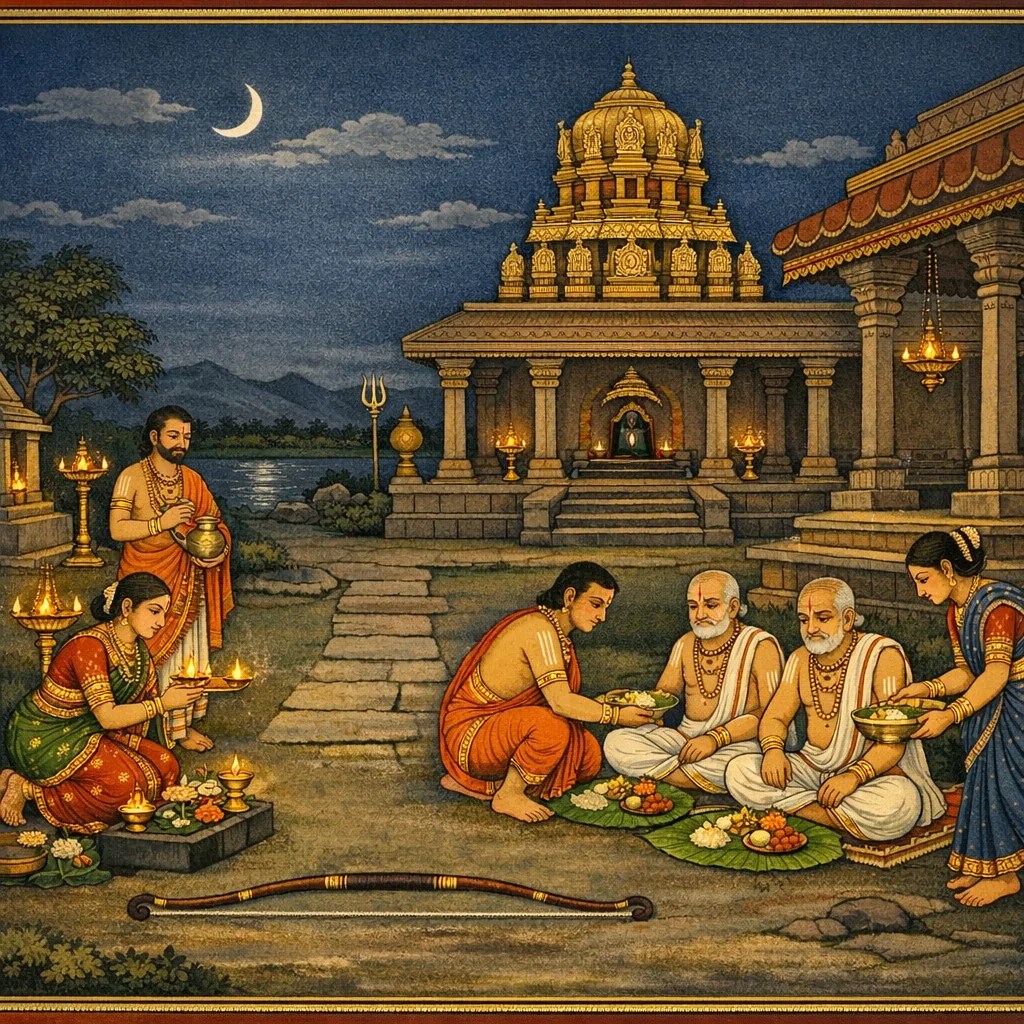
Chapter 310, spoken in Īśvara’s voice, locates the shrine of Kalambeśvara within Prabhāsa-kṣetra by a clear directional marker: it stands in the vāyavya (northwest) sector, at a distance described as “two bow-lengths” (dhanus-dvitaya). The teaching ties sacred place to practice: mere darśana (beholding) and pūjā (worship) of Kalambeśvara are said to purify one from all kilbiṣas (moral impurities) and to destroy every sin (sarva-pātaka-nāśana). A special merit-enhancing time is specified—Somavāra (Monday) when it coincides with Amāvāsyā (new moon). As an ethical injunction alongside the rite, seekers of merit are instructed to perform dāna through hospitality by providing bhojana (food) to vipras (Brahmins) there. The chapter ends by identifying itself as the Kalambeśvara-māhātmya within the Prabhāsakṣetramāhātmya of the Prabhāsa Khaṇḍa.
Shlokas
Verse 1
ईश्वर उवाच । तस्माद्वायव्यदिग्भागे धनुषां द्वितये स्थितम् । कलंबेश्वरनामानं सर्वपातकनाशनम्
Īśvara said: From there, in the north-western quarter, at a distance of two bow-lengths, is the Lord named Kalaṃbeśvara, the destroyer of all sins.
Verse 2
तं दृष्ट्वा पूजयित्वा च मुक्तः स्यात्सर्वकिल्बिषैः । सोमवारे त्वमावास्या तत्रैव बहुपुण्यदा । विप्राणां भोजनं देयं तत्र पुण्य फलेप्सुभिः
Having beheld him and worshipped him, one is freed from all sins. If, in that place, the Amāvāsyā (New-Moon day) falls on a Monday, it bestows abundant merit. Those who seek the fruit of dharma should offer a meal to the brāhmaṇas there itself.
Verse 310
इति श्रीस्कान्दे महापुराण एकाशीतिसाहस्र्यां संहितायां सप्तमे प्रभासखण्डे प्रथमे प्रभासक्षेत्रमाहात्म्ये कलंबेश्वरमाहात्म्य वर्णनंनाम दशोत्तरत्रिशततमोऽध्यायः
Thus ends, in the venerable Śrī Skanda Mahāpurāṇa—within the Saṃhitā of eighty-one thousand verses—the three-hundred-and-tenth chapter of the seventh Prabhāsa Khaṇḍa, in the first Prabhāsakṣetra Māhātmya, entitled “Narration of the Glory of Kalaṃbeśvara.”