Adhyaya 308
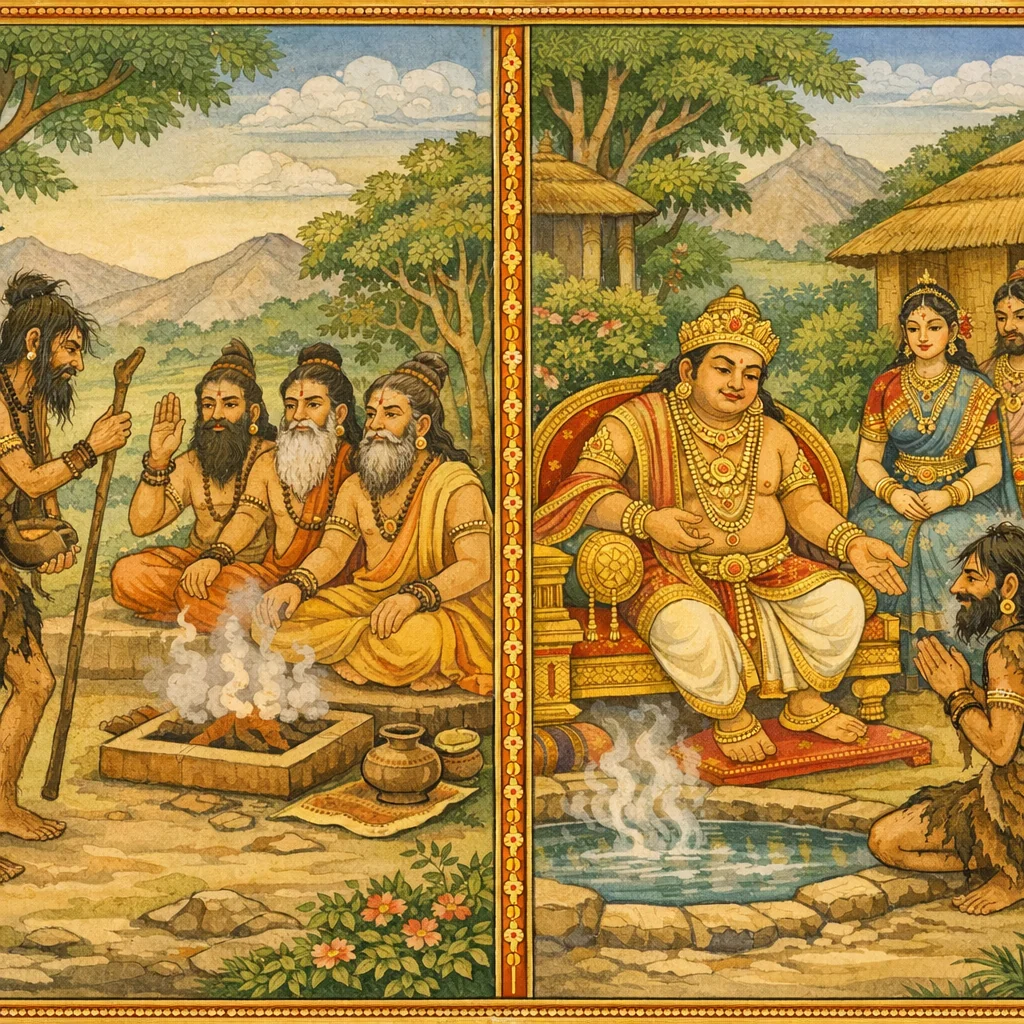
Īśvara tells Devī how the liṅga called Mūla-Caṇḍīśa became renowned in the three worlds. In an earlier episode at Devadāruvana, Īśvara assumes the provocative guise of an ascetic-beggar (Ḍiṇḍi), unsettling the sages; in anger they utter a curse, and the prominent liṅga falls. Grieved at the loss of auspiciousness, the sages seek Brahmā’s counsel, and he directs them to approach Rudra, who is present in an elephant form near Kubera’s āśrama. On the way, compassionate Gaurī provides gōrasa (milk) and brings about an excellent bathing place. Its waters become heated and are known as Taptodaka, relieving weariness. The sages finally meet Rudra, reconcile through praise and apology, and pray for the restoration of welfare for all beings. Rudra agrees; the liṅga is raised and re-established (linked with the sense of “Unnata,” the uplifted). The chapter states the phalāśruti: darśana of Mūla-Caṇḍīśa grants merit surpassing even great waterworks, and prescribed dānas are recommended. Worship after bathing at Taptodaka is said to bestow spiritual potency and worldly eminence in Purāṇic idiom. It concludes by explaining the name and etymology—Caṇḍīśa as “lord of Caṇḍī,” and Mūla as the “root” liṅga where it fell—and by listing associated tīrthas such as Sangameśvara, Kuṇḍikā, and Taptodaka.
Shlokas
Verse 1
ईश्वर उवाच । तस्मान्नारायणात्पूर्वे किंचिदीशानसंस्थितम् । मूलचण्डीशनाम्ना तु विख्यातं भुवनत्रयं
Īśvara said: Before that Nārāyaṇa, there is something established in the Īśāna domain; it is famed throughout the three worlds by the name Mūlacaṇḍīśa.
Verse 2
यत्र लिंगं पुराऽस्माकं पातितं त्वृषिभिः प्रिये । क्रोधरक्तेक्षणैर्देवि मूलचण्डीशता गतम्
Beloved, it was there that our liṅga was once cast down by the sages; and, O Goddess, through eyes reddened with wrath it came to be in the state known as Mūlacaṇḍīśa.
Verse 3
आद्यं लिंगोद्भवं देवि ऋषिकोपान्निपातितम् । ये केचिदृषयस्तत्र देवदारुवने स्थिताः
O Goddess, the primal liṅga—self-manifest—was cast down due to the sages’ anger; those sages who were dwelling there in the Devadāru forest were involved.
Verse 4
कालांतरे महादेवि अहं तत्र समागतः । तेषां जिज्ञासया देवि ततस्ते रोषिता भवन् । शप्तस्ततोऽहं देवेशि चक्रुर्मे लिंगपातनम्
After some time, O Great Goddess, I came there. O Goddess, out of their desire to test and know me, they became enraged; then, O Lady of the gods, I was cursed, and they brought about the casting down of my liṅga.
Verse 5
देव्युवाच । रोषोपहतसद्भावाः कथमेते द्विजातयः । संजाता एतदाख्याहि परं कौतूहलं मम
The Goddess said: “How did these twice-born men, their good sense struck down by anger, come to act in this way? Tell me—my curiosity is great.”
Verse 6
ईश्वर उवाच । डिंडि रूपः पुरा देवि भूत्वाऽहं दारुके वने । ऋषीणामाश्रमे पुण्ये नग्नो भिक्षाचरोऽभवम् । भिक्षंतमाश्रमे दृष्ट्वा ताः सर्वा ऋषियोषितः
Īśvara said: “Long ago, O Goddess, taking the form of a ḍiṃḍi, I went to the Dāruka forest. In the sages’ holy hermitage I became a naked mendicant, seeking alms. Seeing me begging in the āśrama, all the sages’ wives took notice.”
Verse 7
कामस्य वशमापन्नाः प्रियमुत्सृज्य सर्वतः । तमूर्ध्वलिंगमालोक्य जटामुकुटधारिणम्
Overpowered by desire, they cast aside what was dear to them on every side; and, seeing that ascetic with the upward-pointing liṅga, wearing a crown of matted locks, they were drawn toward him.
Verse 8
भिक्षंतं भस्मदिग्धांगं झषकेतुमिवापरम् । विक्षोभिताश्च नः सर्वे दारा एतेन डिंडिना
“He wanders begging, his limbs smeared with ash, like another Jhaṣaketu; and by this Ḍiṃḍin our wives have all been disturbed.”
Verse 9
तस्माच्छापं च दास्याम ऋषयस्ते तदाऽब्रुवन् । ततः शापोदकं गृह्य संध्यात्वाऽथ तपोधनाः
Therefore the sages said at that time, “We shall indeed give a curse.” Then those rich in austerity took the water meant for cursing and, having performed the twilight rite (saṁdhyā), proceeded.
Verse 10
अस्य लिंगमधो यातु दृश्यते यत्सदोन्नतम् । इत्युक्ते पतितं लिंगं तत्र देवकुले मम
“Let his liṅga go downward, for it is seen ever raised!”—when this was spoken, the liṅga fell down there, within my divine precinct.
Verse 11
मूलचण्डीशनाम्ना तु विख्यातं भुवनत्रये । तल्लिंगं पतितं दृष्ट्वा कोपोपहतचेतसः । पुनर्हंतुं समारब्धा डिंडिनं ते तपोधनाः
That liṅga became renowned in the three worlds by the name Mūlacaṇḍīśa. Seeing the liṅga fallen, those ascetics—minds struck by anger—again set about to slay Ḍiṁḍin.
Verse 12
वृसिकापाणयः केचित्कमंडलुधराः परे । गृहीत्वा पादुकाश्चान्ये तस्य धावंति पृष्ठतः
Some held ladles in their hands, others carried water-pots; yet others, seizing sandals, ran behind him.
Verse 13
डिंडिश्चांतर्हितो भूत्वा त्वामुवाच सुमध्यमाम् । रोषोपहतचेतस्कान्पश्यैतांस्त्वं तपोधनान्
And Ḍiṁḍin, having become invisible, spoke to you, O slender-waisted lady: ‘Look at these ascetics, their minds overcome by wrath.’
Verse 14
एतस्मात्कारणाद्देवि तव वाक्यान्मयाऽनघे । न कृतोऽनुग्रहस्तेषां सरोषाणां तपस्विनाम्
For this reason, O Goddess—because of your words, O sinless one—I did not bestow favor upon those ascetics who were filled with anger.
Verse 15
अत्रांतरे ते मुनयो ह्यपश्यंतो हि डिंडिनम् । निरानंदं गताः सर्वे द्रष्टुं देवं पितामहम्
Meanwhile, those sages, not seeing Ḍiṁḍin, all became bereft of joy and went to behold the god Pitāmaha (Brahmā).
Verse 16
तं दृष्ट्वा विबुधेशानं विरंचिं विगतज्वरम् । प्रणम्य शिरसा सर्व ऋषयः प्राहुरंजसा
Seeing him—Virañci (Brahmā), lord of the gods, free from agitation—the sages all bowed their heads in reverence and spoke to him plainly.
Verse 17
भगवन्डिंडि रूपेण कश्चिदस्ति तपोधनः । विध्वंसनाय दाराणां प्रविष्टः किल भिक्षितुम्
There is a certain holy ascetic, rich in austerities, who—assuming the form called Ḍiṃḍi—has, it is said, entered (our dwelling) to beg, with the intent of bringing ruin upon our wives.
Verse 18
शप्तोऽस्माभिस्तु दुर्वृत्तस्तस्य लिंगं निपातितम् । तस्मिन्निपतितेऽस्माकं तथैव पतितानि च
We cursed that wicked one, and his liṅga fell down. When it fell, ours too likewise fell (from our former state).
Verse 19
गतोऽसौ कारणात्तस्मात्तल्लिंगे पतिते वयम् । निरानंदाः स्थिताः सर्व आचक्ष्वैतद्धि कारणम्
Therefore he departed for that reason; and when that liṅga fell, all of us have remained bereft of joy. Tell us the true cause of this.
Verse 20
ब्रह्मोवाच । अशोभनमिदं कार्यं युष्माभिर्यत्कृतं महत् । रुद्रस्यातिसुरूपस्य सेर्ष्या ये हन्तुमुद्यताः
Brahmā said: This great deed you have done is unseemly—out of jealousy you were prepared to strike down Rudra, the one of surpassing beauty.
Verse 21
आसुरीं दानवीं दैवीं यक्षिणीं किंनरीं तथा । विद्याधरीं च गन्धर्वीं नागकन्यां मनोरमाम् । एता वरस्त्रियस्त्यक्त्वा युष्मदीयासु तास्वपि
(He could delight in) an Asurī, a Dānavī, a Devī, a Yakṣiṇī, a Kiṃnarī, a Vidyādharī, a Gandharvī, or a charming Nāga-maiden—having forsaken such excellent women, why would he seek pleasure even among your women?
Verse 22
आह्लादं कुरुते सर्वे नैव जानीत भो द्विजाः । त्रैलोक्यनायकां सर्वां रूपातिशयसंयुताम्
All beings take delight in her; yet you do not understand, O twice-born—she is the sovereign Lady of the three worlds, endowed with unsurpassed beauty.
Verse 23
तां त्यक्त्वा मुनिपत्नीनामाह्लादं कुरुते कथम् । तया रुद्रो हि विज्ञप्त ऋषीणां कुर्वनुग्रहम्
How could he, abandoning her, take delight in the wives of sages? Truly, Rudra acted only at her request, bestowing favor upon the ṛṣis.
Verse 24
तेन वाक्येन पार्वत्या जिज्ञासार्थं कृतं मनः । चतुर्द्दशविधस्यापि भूतग्रामस्य यः प्रभुः
By those words, Pārvatī’s mind was turned toward inquiry; for he is the Lord of the entire host of beings, of all the fourteen kinds of existence.
Verse 25
स शप्तो डिंडिरूपस्तु भवद्भिः करणेश्वरः । तच्छापाच्छप्तमेवैतत्समस्तं तद्गुणास्पदम् । देवतिर्यङ्मनुष्याणां निरानंदमिति स्थितम्
That Karaṇeśvara, appearing in the Ḍiṃḍi-form, was cursed by you. By that very curse, this entire realm that depends upon him and his qualities has become cursed; thus gods, animals, and humans have come to abide in joylessness.
Verse 26
शापेनानेन भवतां महा दोषः प्रजायते । आराध्यं नान्यथा लिंगमुन्नतिं यात्यधोगतम्
By this curse, a great fault arises for you. The liṅga is to be worshipped and not treated otherwise; one who violates this falls from elevation into downfall.
Verse 27
एवमुक्तेऽथ देवेन विप्रा ऊचुः पितामहम् । द्रष्टव्यः कुत्र सोऽस्माभिः कथयस्व यथास्थितम्
When the god had spoken thus, the brāhmaṇas said to Pitāmaha (Brahmā): “Where is He to be seen by us? Tell us exactly as it is.”
Verse 28
ब्रह्मोवाच । आस्ते गजस्वरूपेण कुबेराश्रमसंस्थितः । तत्र गत्वा तमासाद्य तोषयध्वं पिनाकिनम्
Brahmā said: “He abides there in the form of an elephant, residing at Kubera’s hermitage. Go there, approach Him, and propitiate Pinākin (Śiva, bearer of the bow Pināka).”
Verse 29
एतच्छ्रुत्वा वचस्तस्य सर्वे ते हृष्टमानसाः । गंतुं प्रवृत्ताः सहसा कोटिसंख्यास्तपोधनाः
Hearing his words, all those ascetics—rich in austerity—became joyful at heart, and at once set out to go, in numbers of crores.
Verse 30
चिंतयंतः शुभं देशं द्रष्टुं तं गजरूपिणम् । रुद्रं पितामहाख्यातं कुबेराश्रमवासिनम्
Meditating on that auspicious land, they longed to behold Rudra—of elephant-form—spoken of by Pitāmaha, dwelling at Kubera’s hermitage.
Verse 31
क्षुत्कामकंठास्तृषितान्गौरी मत्वा तपोधनान् । आदाय गोरसं तेषां कारुण्यात्सा पुरः स्थिता
Thinking those ascetics—whose wealth was tapas—to be hungry and parched, Gaurī, out of compassion, took milk for them and stood before them.
Verse 32
असितां कुटिलां स्निग्धामायतां भुजगीमिव । वेणीं शिरसि बिभ्राणा गौरी गोरससंयुता
Gaurī—bearing milk—wore upon her head a braid that was dark, wavy, glossy, and long, like a serpent.
Verse 33
सा तानाह मुनीन्सर्वान्यन्मया पर्वताहृतम् । कपित्थफलसंगंधं गोरसं त्वमृतोपमम्
She said to all those sages: “This milk that I have brought from the mountain—fragrant like the kapittha fruit—is like nectar.”
Verse 34
तयैवमुक्ता विप्रास्तु आहुस्तां विपुलेक्षणाम् । स्नात्वा च सर्वे पास्यामो गोरसं तु त्वयाहृतम्
Thus addressed, the brāhmaṇas said to that large-eyed Devī: “After bathing, we shall all drink the milk you have brought.”
Verse 35
ततः श्रुत्वा तथा देव्या स्नानार्थं तीर्थमुत्तमम् । तप्तोदकेनसंपूर्णं कृतं कुण्डं मनोरमम्
Then, hearing this, the Goddess created for bathing an excellent tīrtha—a delightful pool, filled with warm water.
Verse 36
तत्र ते संप्लुताः सर्वे विमुक्ता विपुलाच्छ्रमात् । कृताऽह्ना गोरसस्वैव पानार्थं समुपस्थिताः
There they all bathed, freed from great fatigue; having completed their ablutions, they then came forward to drink that milk.
Verse 37
पत्रैर्दिवाकरतरोर्विधाय पुटकाञ्छुभान् । उपविश्य क्रमात्सर्वे ते पिबंति स्म गोरसम्
Making neat leaf-cups from the leaves of the Divākara tree, they all sat down in order and drank the milk (goras) offered there.
Verse 38
गोरसेन तदा तेषाममृतेनेव पूरितान् । बुभुक्षितानां पुटकान्मुनीनां तृप्तिकारणात्
Then their leaf-cups were filled with milk as though with nectar—becoming the very cause of satisfaction for those hungry sages.
Verse 39
पुनः पूरयते गौरी पीत्वा ते तृप्तिमागताः । क्षुत्तृषाश्रमनिर्मुक्ताः पुनर्जाता इव स्थिताः
Again and again Gaurī refilled their cups. After drinking, they became fully satisfied—freed from hunger, thirst, and fatigue, standing as if newly reborn.
Verse 40
स्वस्थचित्तैस्ततो ज्ञात्वा नेयं गोपालिसंज्ञिका । अनुग्रहार्थमस्माकं गौरीयं समुपागता
Then, their minds made calm, they understood: “This is no cowherd woman; this is Gaurī herself, who has come for our sake to bestow grace.”
Verse 41
प्रणम्य शिरसा सर्वे तामूचुस्ते सुमध्यमाम् । उमे कथय कुत्रस्थं द्रक्ष्यामो रुद्रमेकदा
All of them bowed their heads and said to that slender-waisted Goddess: “O Umā, tell us where Rudra abides, so that we may behold him at least once.”
Verse 42
तथोक्तास्ते महात्मानस्तं पश्यत महागजम् । गजतां च समासाद्य संचरंतं महाबलम्
Thus addressed, those great-souled ones were told: “Behold that mighty elephant—having reached the herd of elephants, he moves about with great strength.”
Verse 43
भवद्भिर्निजभक्त्यायं संग्राह्यो हि यथासुखम् । ते तद्वचनमासाद्य समेत्यैकत्र च द्विजाः
“With your own devotion, capture and secure him as you please.” Receiving those words, the twice-born sages gathered together in one place.
Verse 44
पवित्रास्तं गजं द्रष्टुं भावितेनांतरात्मना । यत्रैकत्र स्थिता विप्रास्तत्र तीर्थं महोदयम् । संगमेश्वरसंज्ञं तु पूर्वं सर्वत्र विश्रुतम्
Purified within, intent on beholding that elephant, the brāhmaṇas stayed together at one spot. That very place is the greatly exalting holy ford, formerly renowned everywhere by the name Saṃgameśvara.
Verse 45
ततस्तस्मात्प्रवृत्तास्ते द्रष्टुकामा महागजम् । कुंडिकाः संपरित्यज्य संनह्यात्मानमात्मना
Then they set out from there, eager to behold the great elephant. Casting aside their water-pots (kuṇḍikā), they steeled themselves with unwavering resolve.
Verse 46
यत्र ताः कुंडिकास्त्यक्तास्तत्तीर्थं कुण्डिकाह्वयम् । सर्वपापहरं पुंसां दृष्टाऽदृष्टफलप्रदम्
Where those water-pots were cast away, that spot became the sacred tīrtha called Kuṇḍikā. It removes all sins of people and bestows fruits both seen in this life and unseen in the life to come.
Verse 47
कुबेरस्याश्रमं प्राप्य ततस्ते मुनिसत्तमाः । नालिकेरवनीसंस्थं ददृशुस्तं द्विपं तदा
Reaching Kubera’s hermitage, those foremost sages then beheld an elephant abiding in a grove of coconut palms.
Verse 48
करे ग्रहीतुमारब्धाः स्वकरैर्हृष्टमानसाः । गजस्तान्करसंलग्नान्विचिक्षेप तपोधनान्
Delighted at heart, they began to seize its trunk with their own hands; but the elephant flung away those ascetics who had clung to its trunk.
Verse 49
काश्चिदंगसमालग्नान्समंताद्भयवर्जितान् । एवं स तैः पुनः सर्वैर्मशकैरिव चेष्टितम्
Some clung to its limbs on every side, fearless; thus, again and again, it was pestered by them all, as though by mosquitoes.
Verse 50
क्रीडां करोति विविधां वनसंस्थो हरद्विपः । तद्रूपं संपरित्यज्य रुद्रो रौद्रगजात्मकम्
Hara’s elephant, dwelling in the forest, sported in many ways. Then Rudra, casting off that form—having assumed the fierce nature of an elephant—passed on to another manifestation.
Verse 51
पुनरन्यच्चकारासौ डिंडिरूपं मनोरमम् । जयशब्दप्रघोषेण वेदमङ्गलगीतकैः
Again he assumed yet another delightful form—the Ḍiṃḍi-form—amid resounding cries of victory and auspicious Vedic chants.
Verse 52
उन्नामितं पुनस्तेन यत्र लिंगं महोदयम् । तदुन्नतमिति प्रोक्तं स्थानं स्थानवतां वरम्
Where that exalted liṅga was again raised up by him, that place is declared to be ‘Unnata’—the foremost among holy abodes.
Verse 53
गजरूपधरस्तत्र स्थितः स्थाने महाबलः । गणनाथस्वरूपेण ह्युन्नतो जगति स्थितः
There, in that place, the mighty one remained, bearing the elephant-form; and indeed, established in the world as ‘Unnata’, he abides in the form of Gaṇanātha.
Verse 54
डिंडिरूप धरो भूत्वा रुद्रः प्राह तपोधनान् । यन्मया भवतां कार्यं कर्तव्यं तदिहोच्यताम्
Assuming the Ḍiṃḍi-form, Rudra spoke to the sages rich in austerity: “Whatever task you have for me—whatever is to be done—let it be stated here.”
Verse 55
एवमुक्तस्तु तैरुक्तः सर्वज्ञानक्रियापरैः । सानन्दाः प्राणिनः संतु त्वत्प्रसादात्पुरा यथा
Thus addressed, those devoted to all knowledge and righteous action replied: “By your grace, may all living beings be joyful, as they were in former times.”
Verse 56
क्षंतव्यं देवदेवेश कृतं यन्मूढमानसैः । त्वत्प्रसादात्सुरेशान तत्त्वं सानुग्रहो भव
O Lord of lords, forgive what has been done by minds grown foolish. O ruler of the gods, by your grace, be truly compassionate and gracious toward us.
Verse 57
एवमस्त्विति तेनोक्तास्ते सर्वे विगतज्वराः । तल्लिंगानुकृतिं लिंगमीजिरे मुनयस्तथा । चक्रुस्ते मुनयः सर्वे स्तुतिं विगतमत्सराः
When he said, “So be it,” all of them became free from their fever. Then the sages worshipped a liṅga fashioned in the likeness of that divine liṅga, and all those sages—free from envy—composed hymns of praise.
Verse 58
क्षमस्व देवदेवेश कुर्वस्माकमनुग्रहम् । अस्मिंल्लिंगे लयं गच्छ मूलचण्डीशसंज्ञके । त्रिकालं देवदेवेश ग्राह्या ह्यत्र कला त्वया
“Forgive us, O Lord of the gods; show your favor to us. Abide, merging in stillness, within this liṅga known as Mūlacaṇḍīśa. O Lord of the gods, may your divine portion be received here at the three times of day.”
Verse 59
ईश्वर उवाच । चण्डी तु प्रोच्यते देवी तस्या ईशस्त्वहं स्मृतः । तस्य मूलं स्मृतं लिंगं तदत्र पतितं यतः
Īśvara said: “The Goddess is called Caṇḍī, and I am remembered as her Lord. That liṅga is known as her ‘mūla’—her root and source—for it fell here.”
Verse 60
तस्मात्तन्मूल चण्डीश इति ख्यातिं गमिष्यति वा । पीकूपतडागानां शतैस्तु विपुलैरपि
Therefore it shall become renowned by the name “Mūlacaṇḍīśa.” Even if one were to build hundreds of vast wells and tanks as pious works …
Verse 61
कृतैर्यज्जायते पुण्यं तत्पुण्यं लिंगदर्शनात् । ब्रह्माण्डं सकलं दत्त्वा यत्पुण्यफलमाप्नुयात्
Whatever merit arises from such deeds—that very merit is gained by the mere sight (darśana) of the liṅga. The fruit of merit one would obtain by gifting the entire universe …
Verse 62
तत्पुण्यं लभते देवि मूलचण्डीशदर्शनात् । तत्र दानानि देयानि षोडशैव नरोत्तमैः
That very merit, O Goddess, is obtained by beholding Mūlacaṇḍīśa. There, the best of men should offer sixteen kinds of gifts.
Verse 63
एवं तद्भविता सर्वं यन्मयोक्तं द्विजोत्तमाः । यात दारुवनं विप्राः सर्वे यूयं तपोधनाः । मया सर्वे समादिष्टा यात दारुवनं द्विजाः
All this will come to pass exactly as I have spoken, O best of the twice-born. Go to Dāruvana, O brāhmaṇas—all of you whose wealth is austerity. I have instructed you all: go to Dāruvana, O twice-born.
Verse 64
ततस्तु संप्राप्य महद्वचो मम सर्वे प्रहृष्टा मुनयो महोदयम् । गत्वा च तद्दारुवनं महेश्वरि पुनश्च चेरुः सुतपस्तपोधनाः
Then, having received my great words, all the sages rejoiced, O Maheśvarī. Going to that Dāruvana, those ascetics—whose wealth was noble tapas—again engaged in excellent tapas.
Verse 65
एतस्मात्कारणाद्देवि मूलचण्डीशसंज्ञितम् । लिंगं पापहरं नृणामर्द्धचन्द्रेण भूषितम्
For this reason, O Goddess, the liṅga is known as Mūlacaṇḍīśa. It removes the sins of men and is adorned with the half-moon.
Verse 66
दोहनी दुग्थदानेन मुनीनां तृषितात्मनाम् । श्रमापहारं यद्देवि त्वया कृतमनुत्तमम् । तत्तप्तोदकनाम्ना वा अभूत्कुण्डं धरातले
By the milch-cow (dohanī), through the gift of milk to the sages whose hearts were parched with thirst, you performed an unsurpassed act that removed fatigue, O Goddess. That spot became a pond on earth known as “Taptodaka.”
Verse 67
ऋषितोयाजले स्नात्वा चण्डीशं यः प्रपूजयेत् । स प्रचण्डो भवेद्भूमौ भुवनानामधीश्वरः
Whoever bathes in the sacred water known as Ṛṣitoya and then worships Caṇḍīśa with devotion becomes mighty upon the earth, attaining lordship and eminence among beings in the worlds.
Verse 68
एतत्संक्षेपतो देवि माहात्म्यं कीर्तितं तव । मूलचण्डीशदेवस्य श्रुतं पातकनाशनम्
Thus, O Goddess, your greatness has been proclaimed in brief. Hearing the account of the deity Mūlacaṇḍīśa becomes a destroyer of sins.
Verse 308
इति श्रीस्कांदे महापुराण एकाशीतिसाहस्र्यां संहितायां सप्तमे प्रभासखंडे प्रथमे प्रभासक्षेत्रमाहात्म्ये तप्तोदककुण्डोत्पत्तौ मूलचण्डीशोत्पत्तिमाहात्म्यवर्णनंनामाष्टोत्तर त्रिशततमोऽध्यायः
Thus ends, in the Śrī Skanda Mahāpurāṇa—within the collection of eighty-one thousand verses—the three-hundred-and-eighth chapter in the seventh, the Prabhāsa Khaṇḍa, in the first section, the Prabhāsakṣetra Māhātmya, entitled “Narration of the Glory of the Origin of Mūlacaṇḍīśa,” in the account of the arising of the Taptodaka Kuṇḍa.