Adhyaya 307
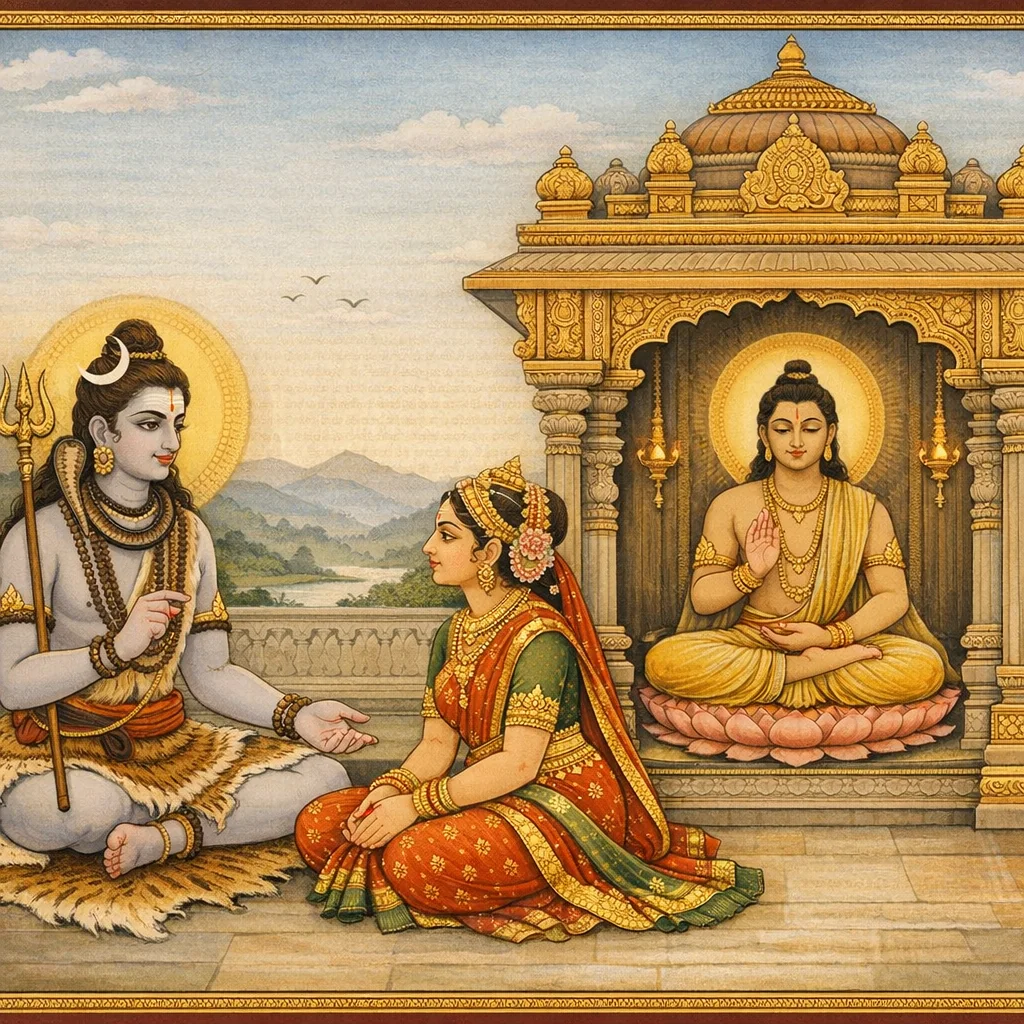
Chapter 307 records Īśvara’s account of a sacred shrine or divine presence called Apara-Nārāyaṇa, located somewhat to the east of Sāmbāditya. The deity is identified as Viṣṇu in a solar mode: Sūrya is declared to be Viṣṇu-svarūpa, and the Lord assumes an “other/further” (apara) form in order to grant boons—hence the name “Apara.” The teaching then turns from the origin of the epithet to ritual prescription: one should worship Puṇḍarīkākṣa there, according to rule (vidhānataḥ), especially on Ekādaśī in the bright fortnight (śukla) of Phālguna. The phalaśruti states the fruit plainly—destruction of sins and the attainment of all desired aims.
Shlokas
Verse 1
ईश्वर उवाच । सांबादित्याच्च पूर्वेण किञ्चिदाग्नेयसंस्थितः । अपरनारायणोनाम यस्मान्नास्ति परो भुवि
Īśvara said: To the east of Sāmbāditya, slightly toward the southeast, there is a sacred place named Aparanārāyaṇa—than which none is higher upon the earth.
Verse 2
स तु सांबस्य देवेशि सूर्यो विष्णुस्वरूपवान् । अपरां मूर्तिमास्थाय विष्णुरूपो वरं ददौ
O Goddess, for Sāmba’s sake the Sun—bearing the very form of Viṣṇu—assumed another manifestation; taking on the appearance of Viṣṇu, he granted a boon.
Verse 3
तेनापरेति नाम्ना वै ख्यातो विष्णुः पुराऽभवत् । फाल्गुनामलपक्षे तु एकादश्यां विधानतः
Therefore, in ancient times Viṣṇu became renowned by the name “Apara”; and on the Ekādaśī of the bright fortnight of Phālguna, the rite should be performed according to rule.
Verse 4
पूजयेत्पुण्डरीकाक्षं तत्र सूर्यस्वरूपिणम् । मुक्तो भवति पापेभ्यः सर्वकामैः समृध्यते
There one should worship Puṇḍarīkākṣa, who abides in the form of the Sun; one is freed from sins and fulfilled in all desired aims.
Verse 307
इति श्रीस्कांदे महापुराण एकाशीतिसाहस्र्यां संहितायां सप्तमे प्रभास खंडे प्रथमे प्रभासक्षेत्रमाहात्स्येऽपरनारायणमाहात्म्यवर्णनंनाम सप्तोत्तरत्रिशततमोऽध्यायः
Thus ends, in the revered Skanda Mahāpurāṇa—within the Ekāśītisāhasrī Saṃhitā, in the seventh (Prabhāsa) Khaṇḍa, in the first Prabhāsakṣetra-māhātmya—the three-hundred-and-seventh chapter, entitled “Description of the Greatness of Aparanārāyaṇa.”