Adhyaya 303
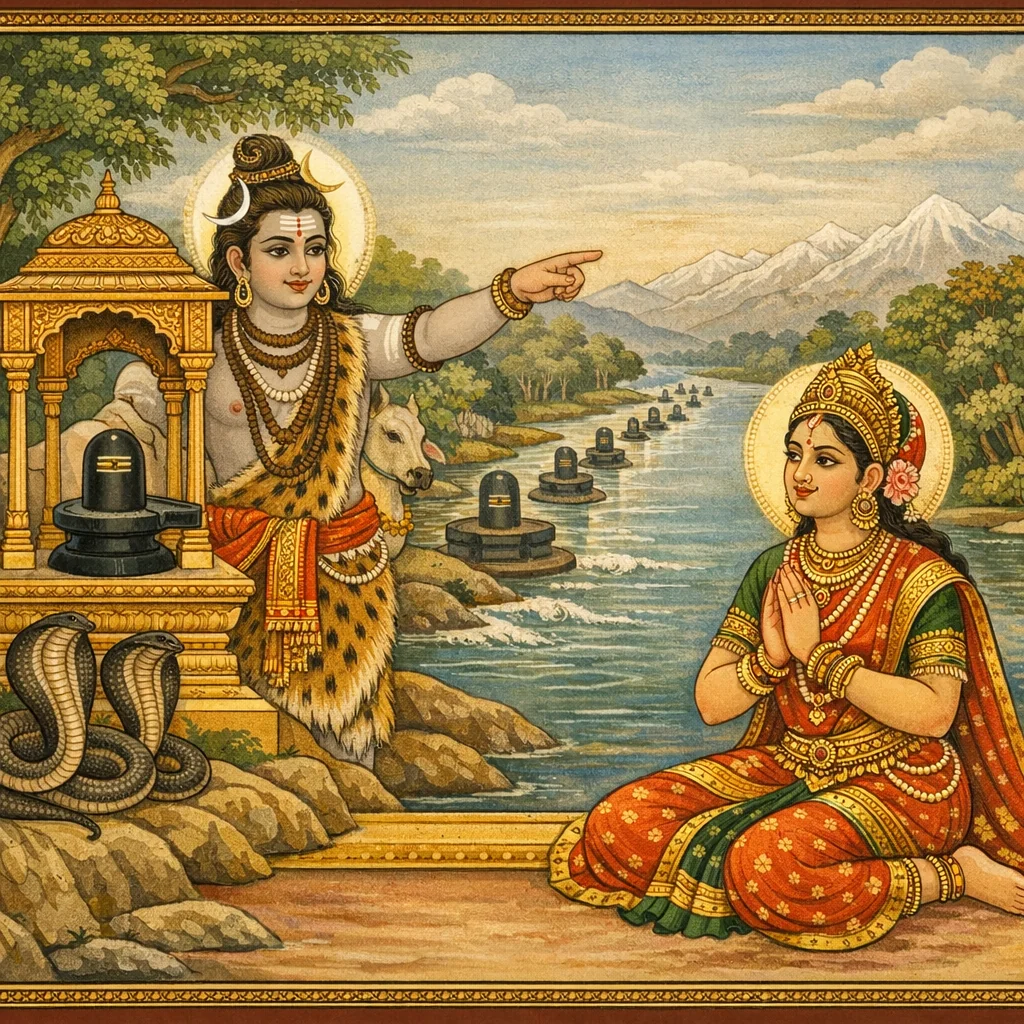
The chapter records Īśvara’s instruction to Devī to proceed northward to an excellent deity whose worship is praised as destroying the gravest sins (mahāpātaka-nāśana). It then points out that to the west of that deity stands a still superior liṅga, established after intense tapas by the nāgas led by Śeṣa. Its emphasis is protective devotion: one who worships the nāga-venerated deity is said to remain unharmed by poison throughout life, and serpents become favorably disposed and refrain from injury. Hence the practical injunction that people should worship that liṅga with full effort. The chapter also notes a wider sacred landscape: on the highly meritorious western bank of the Gaṅgā, many liṅgas were installed by ṛṣis. Darśana and pūjā of these liṅgas are declared to free one from all sins and to yield merit equal to a thousand Aśvamedha sacrifices, in phalaśruti fashion exalting pilgrimage.
Shlokas
Verse 1
ईश्वर उवाच । ततो गच्छेन्महादेवि उत्तरे देवमुत्तमम् । यस्तमाराधयेद्देवं महापातकनाशनम्
Īśvara said: “Then, O great goddess, one should go northward to the supreme Lord. Whoever worships that deity—the destroyer of the great sins—has those grave faults removed.”
Verse 2
तस्यैव पश्चिमे भागे धनुषां त्रितये स्थितम् । शेषादिप्रमुखैर्नागैर्महता तपसा युतैः । समाराध्य महादेवं स्थापितं लिंगमुत्तमम्
“On its western side, at a distance of three bow-lengths, stands an excellent liṅga. It was established by the Nāgas—headed by Śeṣa—endowed with great austerity, after worshipping Mahādeva.”
Verse 3
यस्तमाराधयेद्देवं सर्पैराराधितं पुरा । न विषं क्रमते देहे तस्य जन्मावधि प्रिये
“Whoever worships that deity—once worshipped by the serpents—poison does not spread in that person’s body throughout the span of life, O beloved.”
Verse 4
सर्पास्तस्य प्रसीदन्ति न कुंथंति कदाचन । तस्मात्सर्वं प्रयत्नेन तल्लिंगं पूजयेन्नरः
Serpents become gracious toward him and never harm him. Therefore, with every effort, a person should worship that liṅga.
Verse 5
तत्र लिंगान्यनेकानि ऋषिभिः स्थापितानि तु । गंगातीरे महापुण्ये पश्चिमे वरवर्णिनि
There, indeed, many liṅgas were established by Ṛṣis, on the highly meritorious bank of the Gaṅgā, to the west, O fair-complexioned one.
Verse 6
तानि दृष्ट्वा पूजयित्वा सर्वपापैः प्रमुच्यते । अश्वमेधसहस्रस्य फलं प्राप्नोति मानवः
Having beheld and worshipped them, a person is freed from all sins and attains the merit equal to a thousand Aśvamedha sacrifices.
Verse 303
इति श्रीस्कांदे महापुराण एकाशीतिसाहस्र्यां संहितायां सप्तमे प्रभासखण्डे प्रथमे प्रभासक्षेत्रमाहात्म्ये संगालेश्वरमाहात्म्य उत्तरेश्वरमाहात्म्यवर्णनंनाम त्र्युत्तरत्रिशततमोऽध्यायः
Thus ends, in the Śrī Skanda Mahāpurāṇa—within the eighty-one-thousand-verse Saṃhitā—within the seventh, the Prabhāsa-khaṇḍa, in the first, the Prabhāsakṣetra-māhātmya, the chapter titled “Description of the Greatness of Saṅgāleśvara and the Greatness of Uttareśvara,” being Chapter 303.