Adhyaya 301
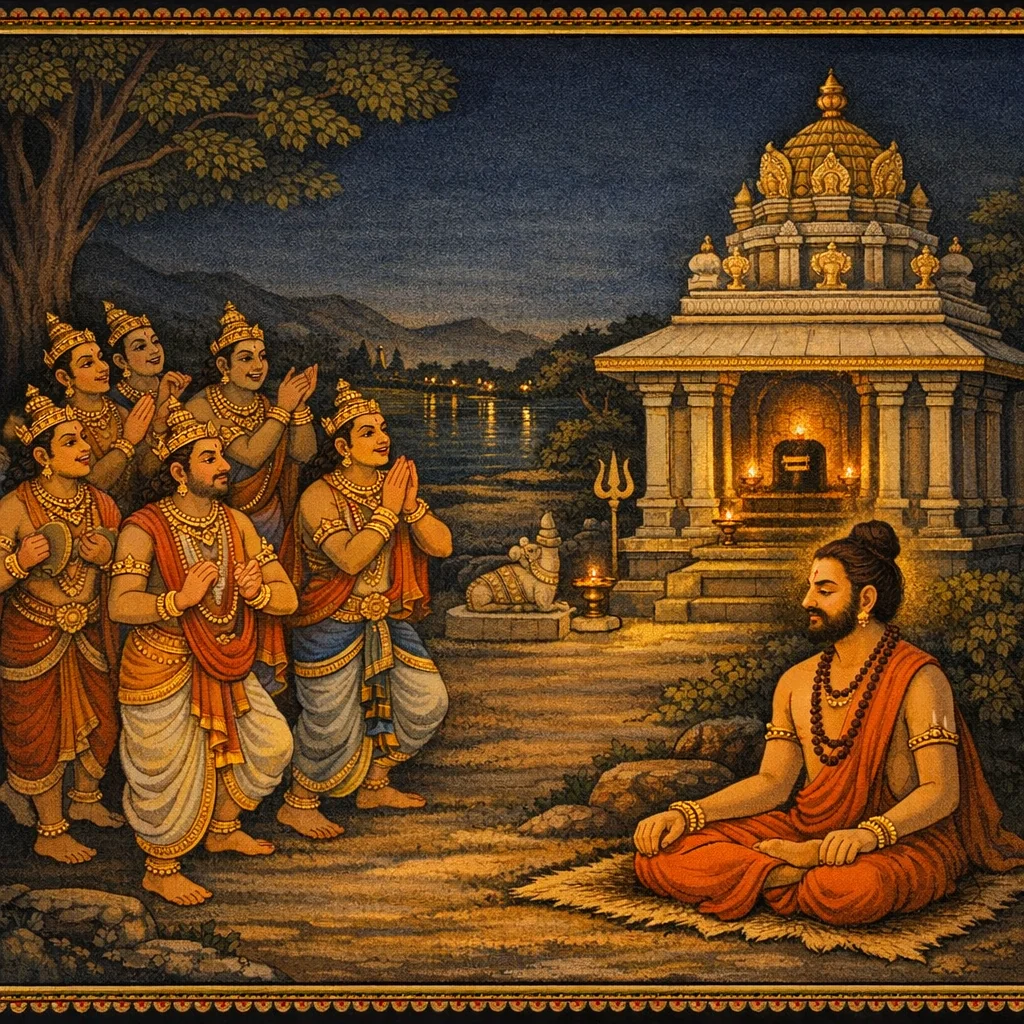
This chapter is a concise theological dialogue between Īśvara and Devī that places Siddheśvara among the Prabhāsa sacred sites as a preeminent liṅga, specifying its nearby location and directional setting. It then recounts the origin of the shrine: the devas swiftly consecrated a Śiva-liṅga called Saṅgāleśvara, and later the siddha-gaṇas installed and praised Siddheśvara as the bestower of all attainments. Śiva grants a boon that one who comes there, bathes according to rule, worships Siddhanātha, and performs japa—especially the Śatarudrīya, the Aghora mantra, and the Gāyatrī addressed to Maheśvara—gains siddhi and aṇimā-like powers within six months. The merit is heightened on the great night of the caturdaśī in the dark fortnight of Āśvayuja, when a fearless and steady practitioner is said to obtain success. The chapter ends with a phalaśruti declaring this account to be sin-destroying and a giver of the fruits of all desires.
Shlokas
Verse 1
ईश्वर उवाच । ततो गच्छेन्महादेवि सिद्धेश्वरमनुत्तमम् । तस्यैव पूर्वदिग्भागे नातिदूरे व्यवस्थितम्
Īśvara said: “Then, O great goddess, one should go to the unsurpassed Siddheśvara, situated not far away, in the eastern quarter of that very place.”
Verse 2
यदा देवैः समेत्याशु शिवलिंगं प्रतिष्ठितम् । संगालेश्वर नामाढ्यं सर्वपापहरं शुभम्
When the gods assembled and swiftly established the Śiva-liṅga—renowned by the name Saṃgāleśvara—it became auspicious and a remover of all sins.
Verse 3
तदा सिद्धगणाः सर्वे समाराध्य वृषध्वजम् । स्थापयांचक्रिरे लिंगं सर्वसिद्धिप्रदायकम्
Then all the hosts of Siddhas, having worshipped the Bull-bannered Lord (Śiva), installed the liṅga that bestows every spiritual attainment.
Verse 4
तत्सिद्धेश्वर नामाढ्यं महापातकनाशनम् । तुष्टुवुर्विविधैः स्तोत्रैस्तदा सिद्धगणाः शिवम्
That liṅga, famed as Siddheśvara and the destroyer of great sins, was then praised by the Siddha-hosts with many kinds of hymns to Śiva.
Verse 5
ततस्तुष्टो महादेवो याच्यतां वरमुत्तमम् । नमस्कृत्य ततः सर्वे प्रोचुश्च शशिशेखरम्
Then Mahādeva, being pleased, said, “Ask for the highest boon.” Thereupon all of them, having bowed down, addressed Śaśiśekhara, the Moon-crested Lord.
Verse 6
इहागत्य नरो यस्तु स्नात्वा च विधिपूर्वकम् । अर्चयेत्सिद्धनाथं च जपेच्च शतरुद्रियम्
Any person who comes here and bathes according to proper rite, then worships Siddhanātha and recites the Śatarudriya,
Verse 7
अघोरं वा जपेन्मन्त्रं गायत्र्यं च महेश्वरम् । षण्मासाभ्यन्तरेणैव जपेच्च मुनिसत्तमाः । अणिमादिगुणैश्वर्यं संसिद्धिं प्राप्नुयाद्ध्रुवम्
Or one may recite the Aghora mantra and also the Maheśvara Gāyatrī. By performing this japa within six months, O best of sages, one surely attains complete success and the lordly powers beginning with aṇimā.
Verse 8
ईश्वर उवाच । एवं भविष्यतीत्युक्त्वा ह्यंतर्धानं गतो हरः । सिद्धेश्वरं तु संपूज्य ह्यघोरं च जपेन्नरः
Īśvara said: “So shall it be.” Having spoken thus, Hara vanished from sight. Then one, having duly worshiped Siddheśvara, should recite in japa the Aghora mantra.
Verse 9
आश्वयुक्कृष्णपक्षे तु चतुर्दश्यां महानिशि । धैर्यमालंब्य निर्भीकः स सिद्धिं प्राप्नुयान्नरः
On the fourteenth night (caturdaśī) of the dark fortnight of Āśvayuja, in that great night, steadfast and fearless, one attains siddhi—spiritual accomplishment.
Verse 10
इत्येतत्कथितं देवि माहात्म्यं पापनाशनम् । सिद्धेश्वरस्य देवस्य सर्वकामफलप्रदम्
Thus, O Devī, has this sin-destroying greatness of the god Siddheśvara been declared—he who grants the fruits of all rightful desires.
Verse 301
इति श्रीस्कांदे महापुराण एकाशीतिसाहस्र्यां संहितायां सप्तमे प्रभासखंडे प्रथमे प्रभासक्षेत्रमाहात्म्य सिद्धेश्वरमाहात्म्यवर्णनंनामैकोत्तरत्रिशत तमोऽध्यायः
Thus ends the three-hundred-and-first chapter, called “The Description of the Greatness of Siddheśvara,” in the Prabhāsa Khaṇḍa—within the Prabhāsa-kṣetra Māhātmya—of the Śrī Skanda Mahāpurāṇa, in the Saṃhitā of eighty-one thousand verses.