Adhyaya 298
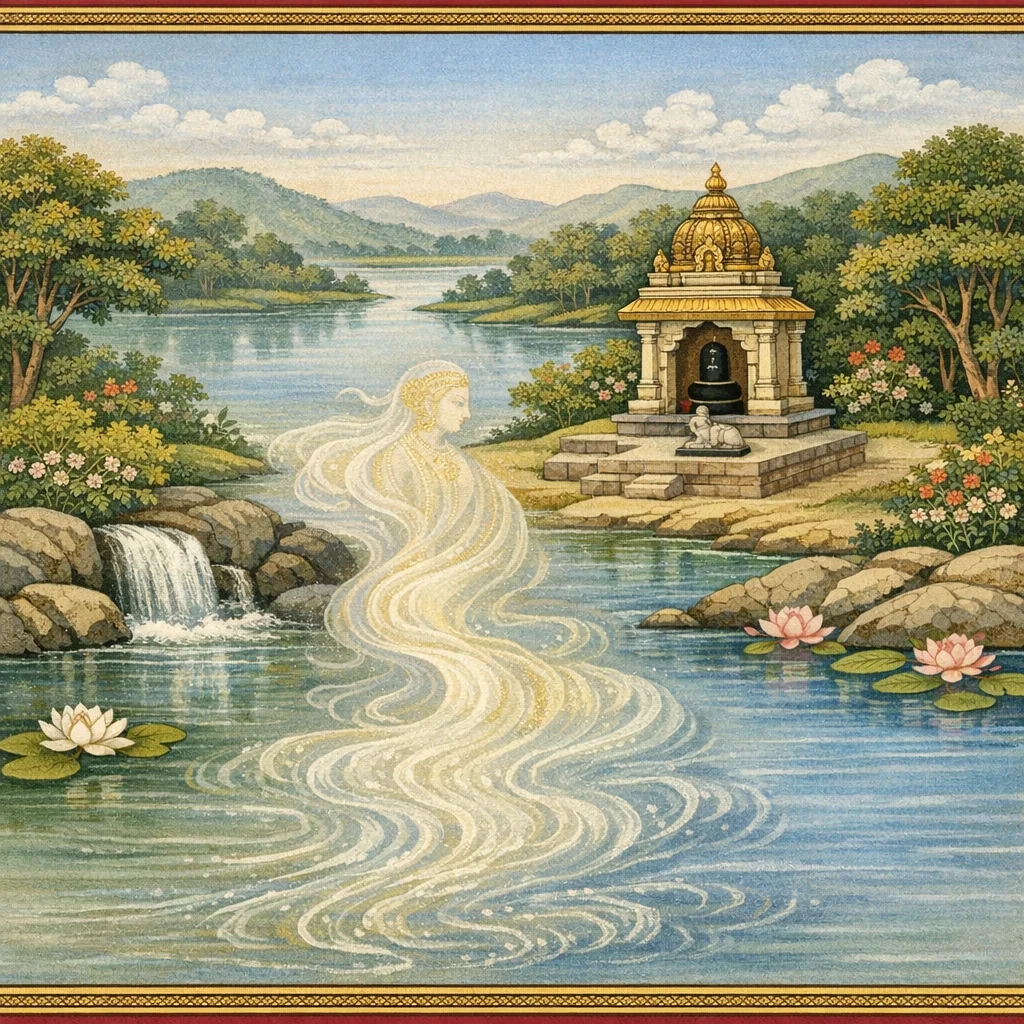
The chapter unfolds as a dialogue in which Pārvatī asks how Prayāga—the king of tīrthas—and the rivers Gaṅgā, Yamunā, and Sarasvatī can be present in Prabhāsa near the shrine of Saṅgāleśvara. Īśvara replies that in an earlier divine assembly connected with a liṅga-related episode, countless tīrthas gathered, and Prayāga concealed itself among them, thus becoming “Gupta” (hidden). It then maps the sacred landscape: three chief bathing tanks—Brahma-kuṇḍa to the west, Vaiṣṇava-kuṇḍa to the east, and Rudra/Śiva-kuṇḍa in the middle—along with a fourth area called Tri-saṅgama, where Gaṅgā and Yamunā meet while Sarasvatī is described as subtle and hidden between them. The text specifies auspicious calendrical times and teaches graded purification: successive baths remove faults of mind, speech, body, relationships, secret sins, and minor transgressions; repeated bathing and kuṇḍa-abhisheka are said to cleanse even major impurities. Devotional duties are prescribed: honoring the Mātṛs (Divine Mothers) with offerings—especially on Kṛṣṇa-pakṣa Caturdaśī—to allay fear from their many attendant beings. Ancestor rites (śrāddha) are praised for uplifting both paternal and maternal lineages, and the gift of a bull is recommended for pilgrims seeking the full fruit of the journey. The chapter ends with a phalaśruti, declaring that hearing and affirming this māhātmya leads toward Śaṅkara’s abode.
Shlokas
Verse 1
ईश्वर उवाच । ऋषितोयापश्चिमे तु तत्र गव्यूतिमात्रतः । संगालेश्वरनामास्ति सर्वपातकनाशनः
Īśvara said: To the west of Ṛṣitoyā, at a distance of only one gavyūti, there is a sacred liṅga named Saṃgāleśvara, the destroyer of all sins.
Verse 2
गुप्तस्तत्र प्रयागश्च देवो वै माधवस्तथा । जाह्नवी यमुना चैव देवी तत्र सरस्वती
There too is a hidden Prayāga, and there is also the god Mādhava. There are the river-goddesses Jāhnavī (Gaṅgā) and Yamunā, and there too is the goddess Sarasvatī.
Verse 3
अन्यानि तत्र तीर्थानि बहूनि च वरानने । स्नात्वा दृष्ट्वा पूजयित्वा मुक्तः स्यात्सर्वकिल्बिषैः
O fair-faced one, many other holy tīrthas are there as well. By bathing, beholding, and worshipping them, one becomes freed from all sins.
Verse 4
पार्वत्युवाच । कथय त्वं महेशान सर्वदेवनमस्कृत । तीर्थराजः प्रयागस्तु कथं विष्णुः सनातनः
Pārvatī said: Tell me, O Maheśāna, revered by all the gods—how is Prayāga the king of tīrthas, and how is the eternal Viṣṇu present here?
Verse 5
कथं गंगा च यमुना तथा देवी सरस्वती । अन्यान्यपि बहून्येव तीर्थानि वृषभध्वज
How are Gaṅgā and Yamunā, and likewise the goddess Sarasvatī, present here? And how are there so many other holy tīrthas as well, O Bull-bannered Lord?
Verse 6
समायातानि तत्रैव संगालेश्वरसंनिधौ । संगालेशेति किं नाम ह्येतन्मे वद कौतुकम्
They have gathered there itself, in the presence of Saṃgāleśvara. And why is it called ‘Saṃgāleśa’? Tell me this, to satisfy my curiosity.
Verse 7
ईश्वर उवाच । पुरा वै लिंगपतने सर्वदेवसमागमे । सार्धत्रितयकोटीनि पुण्यानि सुरसुन्दरि
Īśvara said: Formerly, at the time of the falling of the liṅga, when all the gods had assembled—O fairest among the celestials—three-and-a-half crores of sacred merits (tīrtha-puṇyas) were present.
Verse 8
तीर्थानि तीर्थराजोऽयं प्रयागः समुपस्थितः । आत्मानं गोपयामास तीर्थकोटिभिरावृतम्
All the tīrthas were present; and Prayāga, the king of tīrthas, arrived as well. Covered by crores of tīrthas, it concealed itself.
Verse 9
ततस्तत्र समायाता ब्रह्मविष्णुपुरोगमाः । विबुधास्तीर्थराजं तं ददृशुर्दिव्यचक्षुषा
Then Brahmā and Viṣṇu, with the other gods in their train, came to that place; and with divine sight they beheld that king of tīrthas, Prayāga.
Verse 10
तीर्थकोटिभिराकीर्णं पवित्रं पापनाशनम् । लिंगस्य पतनं श्रुत्वा महादुःखेन संवृताः
That place was thronged with crores of tīrthas—pure and sin-destroying. Hearing that the liṅga had fallen, they were overwhelmed by great sorrow.
Verse 11
स्थिताः सर्वे तदा देवि ब्रह्माद्याः सुरसत्तमाः
Then, O Goddess, all the foremost gods—headed by Brahmā—stood assembled there.
Verse 12
एतस्मिन्नेव काले तु देवो रुद्रः सनातनः । निरानंदः समायातो वाक्यमेतदुवाच ह
At that very time, the eternal god Rudra arrived, bereft of joy, and spoke these words.
Verse 13
शृणुध्वं वचनं देवा ब्रह्मविष्णुपुरोगमाः । ऋषिशापान्निपतितं मम लिंगमनुत्तमम् । तस्माल्लिंगं पूजयत सर्व कामार्थसिद्धये
“Hear my word, O gods, led by Brahmā and Viṣṇu. Through a sage’s curse my unsurpassed liṅga has fallen here. Therefore worship that liṅga, for the fulfillment of all desired aims and rightful prosperity.”
Verse 14
एवमुक्त्वा महादेवो देशे तस्मिन्स्थितः प्रिये । ब्राह्मं च वैष्णवं रौद्रं तत्र कुण्डत्रयं स्मृतम्
Having spoken thus, Mahādeva remained in that place, O beloved. There, a triad of sacred ponds is remembered: the Brāhma, the Vaiṣṇava, and the Raudra.
Verse 15
चतुर्थं त्रिसंगमाख्यं नदीनां यत्र संगमः । गंगायाश्च सरस्वत्याः सूर्यपुत्र्यास्तथैव च
A fourth holy spot is known as Trisaṅgama, where the rivers meet—Gaṅgā, Sarasvatī, and likewise the Daughter of the Sun (Yamunā).
Verse 16
कोटिरेका च तीर्थानां ब्रह्मकुण्डे व्यवस्थिता । तथा च वैष्णवे कुण्डे कोटिरेका प्रकीर्तिता
In the Brahmā-kuṇḍa there abides an immeasurable abundance of tīrthas, exceeding a koṭi (a crore); likewise, in the Vaiṣṇava-kuṇḍa too a “crore-and-more” is proclaimed.
Verse 17
सार्धकोटिस्तु संप्रोक्ता शिवकुण्डे प्रकीर्तिता । पश्चिमे ब्रह्मकुण्डं च पूर्वे वै वैष्णवं स्मृतम्
In the Śiva-kuṇḍa, a koṭi and a half of tīrthas is declared. The Brahmā-kuṇḍa is remembered in the west, and the Vaiṣṇava-kuṇḍa in the east.
Verse 18
मध्यभागे स्थितं यच्च रुद्रकुण्डं प्रकीर्तितम् । कुण्डमध्याद्विनिर्गत्य यत्र गंगा वरानने
And that which is situated in the middle is proclaimed as Rudra-kuṇḍa. From the center of that pond, O fair-faced one, Gaṅgā emerges forth.
Verse 19
सूर्यपुत्र्या समेता च तत्त्रिसंगम उच्यते । अनयोरंतरे सूक्ष्मे तत्र गुप्ता सरस्वती
United with the Daughter of the Sun (Yamunā), that confluence is called Trisaṅgama. Between those two, in a subtle way, Sarasvatī lies hidden there.
Verse 20
एषु सन्निहितो नित्यं प्रयागस्तीर्थनायकः । अत्रागत्य नरो यस्तु माघमासे वरानने
In these tīrthas, Prayāga—the lord of pilgrimage places—abides eternally. Whoever comes here in the month of Māgha, O fair-faced one, …
Verse 21
स्नायात्प्रभातसमये मकरस्थे रवौ प्रिये । किञ्चिदभ्युदिते सूर्ये शृणु तस्य च यत्फलम्
Beloved, one should bathe at dawn when the Sun is in Makara (Capricorn). And when the Sun has risen only a little, listen to the fruit that comes from such a bath.
Verse 22
आद्येनैकेन स्नानेन पापं यन्मनसा कृतम् । व्यपोहति नरः सम्यक्छ्रद्धायुक्तो जितेन्द्रियः
By the very first bath, a person—self-controlled and endowed with faith—fully removes the sin that was committed in the mind.
Verse 23
वाचिकं तु द्वितीयेन कायिकं तु तृतीयकात् । संसर्गजं चतुर्थेन रहस्यं पञ्चमेन तु
By the second bath, verbal sin is removed; by the third, bodily sin; by the fourth, sin arising from association; and by the fifth, secret (hidden) sin.
Verse 24
उपपातकानि षष्ठेन स्नानेनैव व्यपोहति
By the sixth bath alone, the minor yet blameworthy sins (upapātakas) are dispelled.
Verse 25
अभिषेकेण कुण्डानां सप्तकृत्वो वरानने । महांति चैव पापानि क्षाल्यंते पुरुषैः सदा
O fair-faced one, by performing the sacred ablution (abhiṣeka) in the pools seven times, even great sins are ever washed away by people.
Verse 26
यः स्नाति सकलं मासं प्रयागे गुप्तसंज्ञके । ब्रह्मादिभिर्न तद्वक्तुं शक्यते कल्पकोटिभिः
Whoever bathes for an entire month at Prayāga known as ‘Gupta’—even Brahmā and the other gods cannot fully describe that merit, even across crores of aeons.
Verse 27
यानि कानि च तीर्थानि प्रभासे संति भामिनि । तेभ्योऽतिवल्लभं तीर्थं सर्वपापप्रणाशनम्
O radiant lady, whatever sacred fords (tīrthas) exist in Prabhāsa—among them there is one tīrtha most beloved, the destroyer of all sins.
Verse 28
एषां संरक्षणार्थाय मया वै तत्र मातरः । पूजनीयाः प्रयत्नेन नैवेद्यैर्विविधैः शुभैः
For the protection of these tīrthas, I established the Mothers (Mātṛs) there; they should be worshipped with earnest effort, with various auspicious food-offerings (naivedya).
Verse 29
कृष्णपक्षे चतुर्दश्यां श्रद्धायुक्तेन चेतसा । तासामनुचरा देवि भूतप्रेताश्च कोटिशः
O Goddess, on the fourteenth lunar day of the dark fortnight, with a mind filled with faith, there are crores of bhūtas and pretas who serve as attendants of those Mothers.
Verse 30
तेषां भयविनाशाय ता मातॄश्च प्रपूजयेत् । अस्मिंस्तीर्थे नरः स्नात्वा ब्रह्महत्यां व्यपोहति
To destroy their fear, one should worship those Mothers properly; and in this tīrtha, a man who has bathed casts off even the sin of brahmin-slaying (brahmahatyā).
Verse 31
यः कश्चित्कुरुते श्राद्धं पितॄनुद्दिश्य भक्तितः । उद्धरेच्च पितुर्वर्गं मातुर्वर्गं नरोत्तमः
Whoever performs śrāddha with devotion, dedicating it to the Pitṛs, that best of men uplifts and delivers both his father’s lineage and his mother’s lineage.
Verse 32
वृषभस्तत्र दातव्यः सम्यग्यात्राफलेप्सुभिः । एवं यः कुरुते यात्रां तस्य फलमनन्तकम्
Those who seek the full fruit of the pilgrimage should gift a bull (vṛṣabha) there in the proper manner. One who undertakes the yātrā thus gains limitless merit.
Verse 33
एवं गुप्तप्रयागस्य माहात्म्यं कथितं तव । श्रुत्वाभिनन्द्य पुरुषः प्राप्नुयाच्छंकरालयम्
Thus the greatness of Guptaprayāga has been told to you. Hearing it and rejoicing in it, a person attains the abode of Śaṅkara.
Verse 298
इति श्रीस्कांदेमहापुराण एकाशीतिसाहस्र्यां संहितायां सप्तमे प्रभासखण्डे प्रथमे प्रभासक्षेत्रमाहात्म्ये गुप्तप्रया गमाहात्म्यवर्णनंनामाष्टनवत्युत्तरद्विशततमोऽध्यायः
Thus ends the two-hundred-and-ninety-eighth chapter, entitled “The Description of the Greatness of Guptaprayāga,” in the Prabhāsa Khaṇḍa—within the first Prabhāsakṣetra-māhātmya—of the Śrī Skanda Mahāpurāṇa, in the Ekāśīti-sāhasrī Saṃhitā.