Adhyaya 296
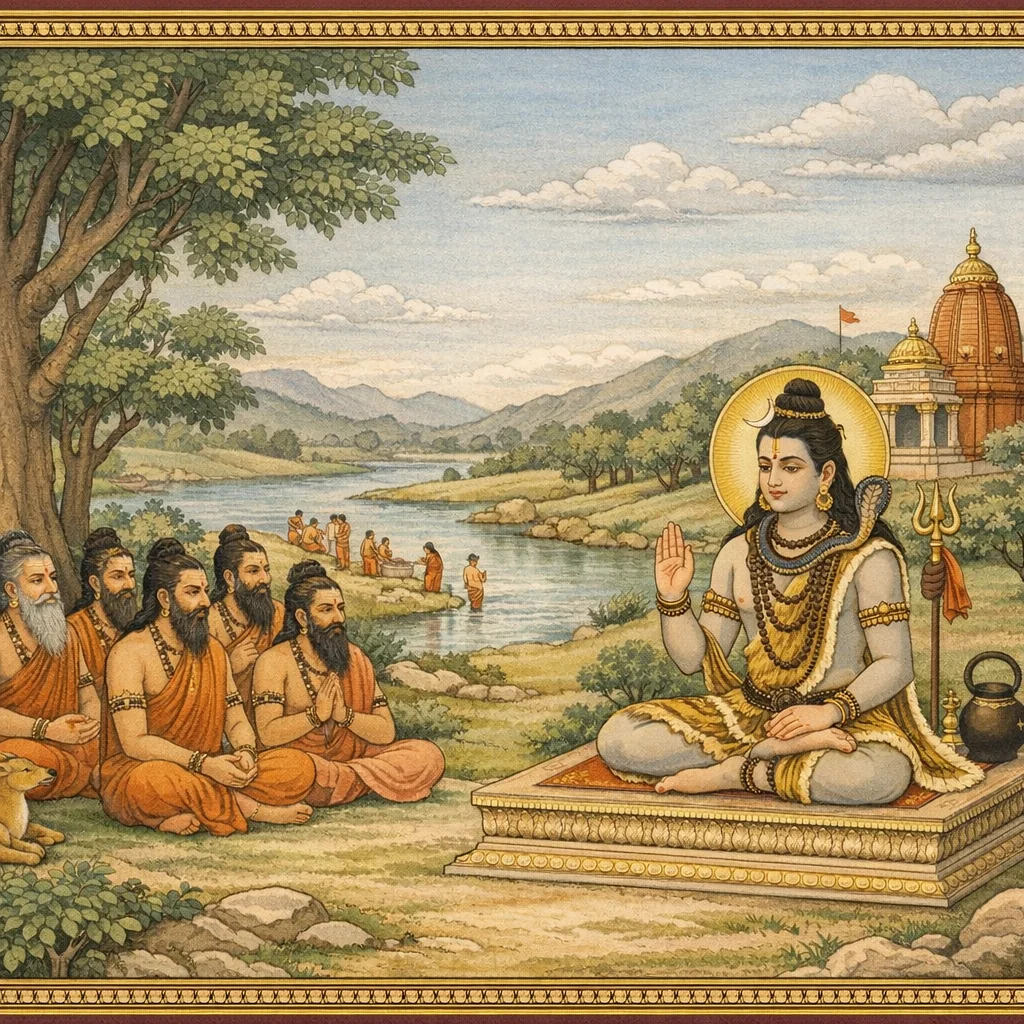
This adhyāya records Īśvara’s theological account of a sacred site called Devakula, situated in the āgneya (southeast) direction at a distance measured in gavyūti. Devakula’s holiness is traced to primordial gatherings of devas and ṛṣis and to the earlier स्थापना of a liṅga, from which the place gains its authoritative name. The narrative then turns westward to the Ṛṣitoyā River, “beloved of the sages,” praised as a remover of all sins. Ritual instruction is given: a pilgrim who bathes properly and offers rites to the pitṛs (ancestors) is said to bring lasting satisfaction to the forefathers. The chapter further teaches the ethics of giving: gifts such as gold, ajina (animal hide), and kambala (blankets) offered on the new-moon day of Āṣāḍha increase in merit up to sixteenfold, growing until the full moon. The concluding phalaśruti declares freedom from sins—even those amassed over seven births—through these acts within this sacred geography.
Shlokas
Verse 1
ईश्वर उवाच । तस्मादाग्नेयदिग्भागे गव्यूतिसप्तकेन च । स्थानं देवकुलंनाम देवानां यत्र संगमः
Īśvara said: From that place, in the south-eastern direction, at a distance of seven gavyūtis, lies a sacred spot named Devakula, where the gods assemble.
Verse 2
ऋषीणां यत्र सिद्धानां पुरा लिंगे निपातिते । यस्माज्जातो महादेवि तस्माद्देवकुलं स्मृतम्
O Great Goddess, because in ancient times, when sages and Siddhas made their offerings upon the liṅga there, a divine manifestation arose from it; therefore it is remembered as Devakula.
Verse 3
तस्य पश्चिमदिग्भाग ऋषितोया महानदी । ऋषीणां वल्लभा देवि सर्वपातकनाशिनी
On its western side flows the great river Ṛṣitoyā—O Goddess—beloved of the Ṛṣis and the destroyer of all sins.
Verse 4
तत्र स्नात्वा नरः सम्यक्पितॄणां निर्वपेन्नरः । सप्तवर्षायुतान्येव पितॄणां तृप्तिमावहेत्
Having bathed there properly, a man should offer the due oblations to the Pitṛs; indeed, he brings satisfaction to the ancestors for seventy thousand years.
Verse 5
सुवर्णं तत्र देयं तु अजिनं कंबलं तथा । आषाढे त्वमावास्यायां यत्किञ्चिद्दीयते ध्रुवम्
In that sacred place one should indeed give gold, and also a deer-skin and a woolen blanket. Whatever is given on the new-moon day in the month of Āṣāḍha becomes unfailingly fruitful.
Verse 6
वर्द्धते षोडशगुणं यावदायाति पूर्णिमा
Its merit increases sixteenfold, until the full-moon day arrives.
Verse 7
सुवर्णं तत्र देयं तु अजिनं कंबलं तथा । मुच्यते पातकैः सर्वैः सप्तजन्मकृतैरपि
There one should indeed give gold, and also a deer-skin and a blanket. By that, one is released from all sins—even those committed across seven births.
Verse 296
इति श्रीस्कान्दे महापुराण एकाशीतिसाहस्र्यां संहितायां सप्तमे प्रभासखण्डे प्रथमे प्रभासक्षेत्रमाहात्म्य ऋषितोयानदीमाहात्म्यवर्णनंनाम षण्णवत्युत्तरद्विशततमोऽध्यायः
Thus ends Chapter 296, entitled “The Description of the Greatness of the Ṛṣitoyā River,” in the Prabhāsa Khaṇḍa (Book Seven) of the holy Skanda Mahāpurāṇa, within the Ekāśītisāhasrī Saṃhitā, in the first part called “Prabhāsa-kṣetra Māhātmya.”