Adhyaya 289
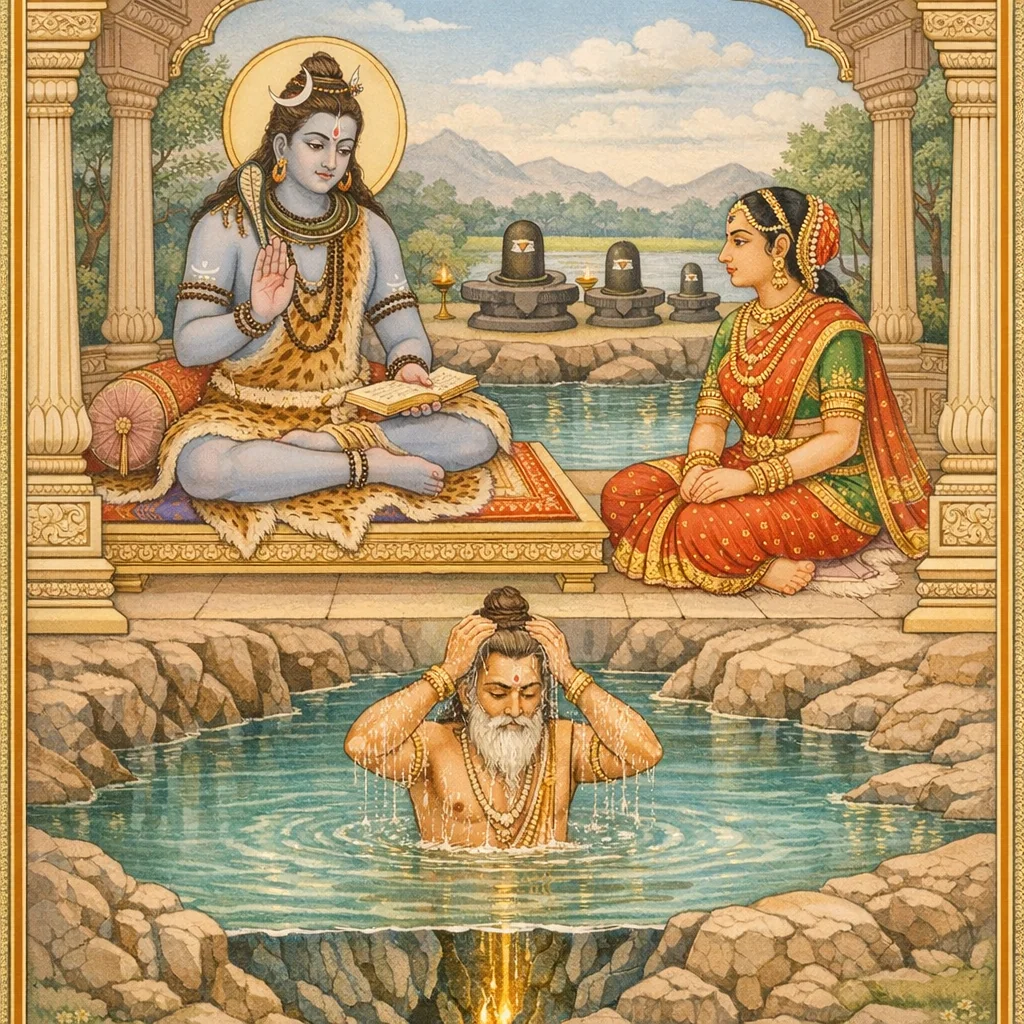
In this adhyāya, Īśvara speaks to Devī and points out a purifying tīrtha to the south, at a short distance measured in gav-yūti. The place is marked by a manifestation of Gaṅgā described as pātāla-gāminī—descending and connected with the subterranean realm—and is explicitly praised as pāpa-nāśinī, the destroyer of sin. The narrative associates the site with the great sage Viśvāmitra, who invoked Gaṅgā for ritual bathing (snāna); it is declared that bathing there frees one from all sins. The chapter then names three liṅgas—Gaṅgeśvara, Viśvāmitreśvara, and Bāleśvara—and affirms that their darśana grants the fulfillment of desired aims, following the tīrtha-māhātmya pattern of location, sacred authorization, and prescribed acts with promised fruits.
Shlokas
Verse 1
ईश्वर उवाच । तस्यैव दक्षिणे देवि तस्माद्गव्यूतिमात्रतः । पातालगामिनी गंगा संस्थिता पापनाशिनी
Īśvara said: O Goddess, just to the south of that very place, at a distance of only a gavyūti, the Gaṅgā that flows to the nether regions (Pātāla) is established there—she who destroys sins.
Verse 2
विश्वामित्रेण चाहूता स्नानार्थं वरवर्णिनि । तत्र स्नात्वा महादेवि मुच्यते सर्वपातकैः
O fair-complexioned Lady, Gaṅgā was summoned by Viśvāmitra for the sake of sacred bathing. O Great Goddess, by bathing there one is freed from all sins.
Verse 3
तत्र गंगेश्वरं दृष्ट्वा विश्वामित्रेश्वरं तथा । बालेश्वरं च संप्रेक्ष्य सर्वान्कामानवाप्नुयात्
There, having beheld Gaṅgeśvara and likewise Viśvāmitreśvara, and having also gazed upon Bāleśvara, one would obtain all desired aims.
Verse 289
इति श्रीस्कान्दे महापुराण एकाशीतिसाहस्र्यां सहितायां सप्तमे प्रभासखण्डे प्रथमे प्रभासक्षेत्रमाहात्म्ये बालार्कमाहात्म्ये पाताल गंगेश्वरविश्वामित्रेश्वरबालेश्वराभिधलिंगत्रयमाहात्म्यवर्णनंनामैकोननवत्युत्तरद्विशततमोऽध्यायः
Thus, in the glorious Skanda Mahāpurāṇa, in the compilation of eighty-one thousand verses, within the seventh division—the Prabhāsa Khaṇḍa—within the first part, the Prabhāsakṣetra Māhātmya, in the Bālārka Māhātmya, ends Chapter 289, named “Description of the Glory of the Three Liṅgas called Pātāla Gaṅgeśvara, Viśvāmitreśvara, and Bāleśvara.”