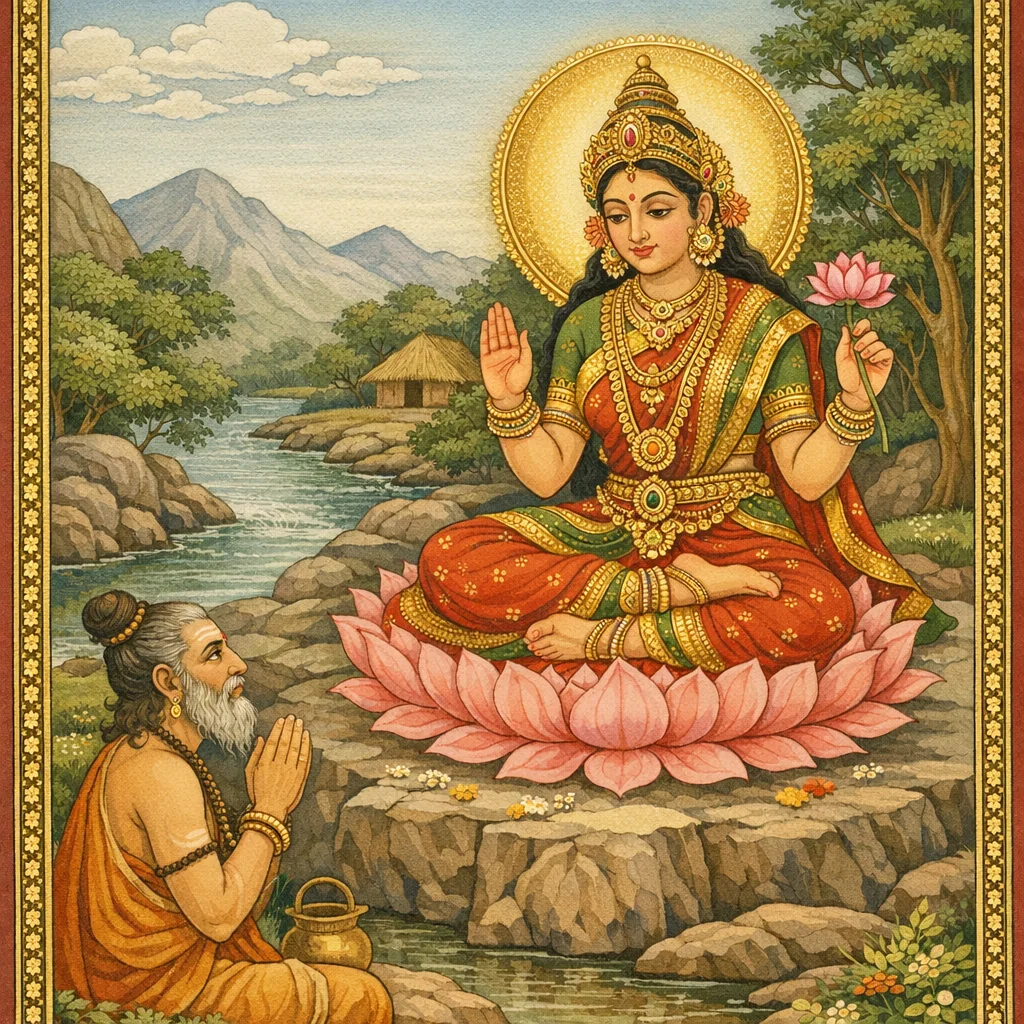
Adhyaya 287
Īśvara speaks to Devī and points out a highly auspicious shrine named Ajāpāleśvarī, situated not far from Agastya-sthāna. The place is praised as a sacred seat that destroys sin and relieves disease. The chapter credits its establishment to King Ajāpāla, a distinguished ruler of the Raghu lineage, who worships the Goddess as the remover of sin and illness. As an etiological account, it links the king with the management or easing of ailments metaphorically described as “goat-form” (ajā-rūpa) diseases, and says he installed the deity under his own name so that she might abide there as a sin-destroying presence. A brief phalaśruti concludes the chapter: worship performed with devotion on the third lunar day (tṛtīyā), according to proper procedure, bestows strength, intellect, fame, learning, and good fortune. Thus the māhātmya weaves together sacred geography, royal patronage, and tithi-based ritual timing into a compact instruction.
Shlokas
Verse 1
ईश्वर उवाच । ततो गच्छेन्महादेवि अजापालेश्वरीं शुभाम् । अगस्त्यस्थानपूर्वेण नातिदूरे व्यवस्थिताम्
Īśvara said: “Then, O great goddess, one should go to the auspicious Ajāpāleśvarī, situated not far to the east of Agastya’s sacred place.”
Verse 2
रघुवंशसमुद्भूतो ह्यजापालो नृपोत्तमः । स तत्र देवीमाराध्य पापरोगवशंकरीम्
Ajāpāla, an excellent king born in the Raghu lineage, worshipped the Goddess there—she who subdues the power of sin and disease.
Verse 3
अजारूपांश्च रोगान्वै चारयामास भूमिपः । तत्र तां स्थापयामास स्वनाम्ना पापनाशिनीम्
The king drove away the diseases that assumed the form of goats; and there he established the sin-destroying Goddess, naming her after himself.
Verse 4
यस्तां पूजयते भक्त्या तृतीयायां विधानतः । बल बुद्धिर्यशो विद्यां सौभाग्यं प्राप्नुयान्नरः
Whoever worships her with devotion, on the third lunar day (tṛtīyā) according to proper rule, attains strength, intelligence, fame, learning, and good fortune.
Verse 287
इति श्रीस्कांदे महापुराण एकाशीति साहस्र्यां संहितायां सप्तमे प्रभासखंडे प्रथमे प्रभासक्षेत्रमाहात्म्येऽजापालेश्वरीमाहात्म्यवर्णनंनाम सप्ताशीत्युत्तरद्विशततमोऽध्यायः
Thus ends, in the holy Skanda Mahāpurāṇa—within the Saṃhitā of eighty-one thousand verses—within the seventh book, the Prabhāsa Khaṇḍa, and within the first part, the Māhātmya of Prabhāsa-kṣetra, the chapter entitled “The Description of the Greatness of Ajāpāleśvarī,” being Chapter 287.