Adhyaya 286
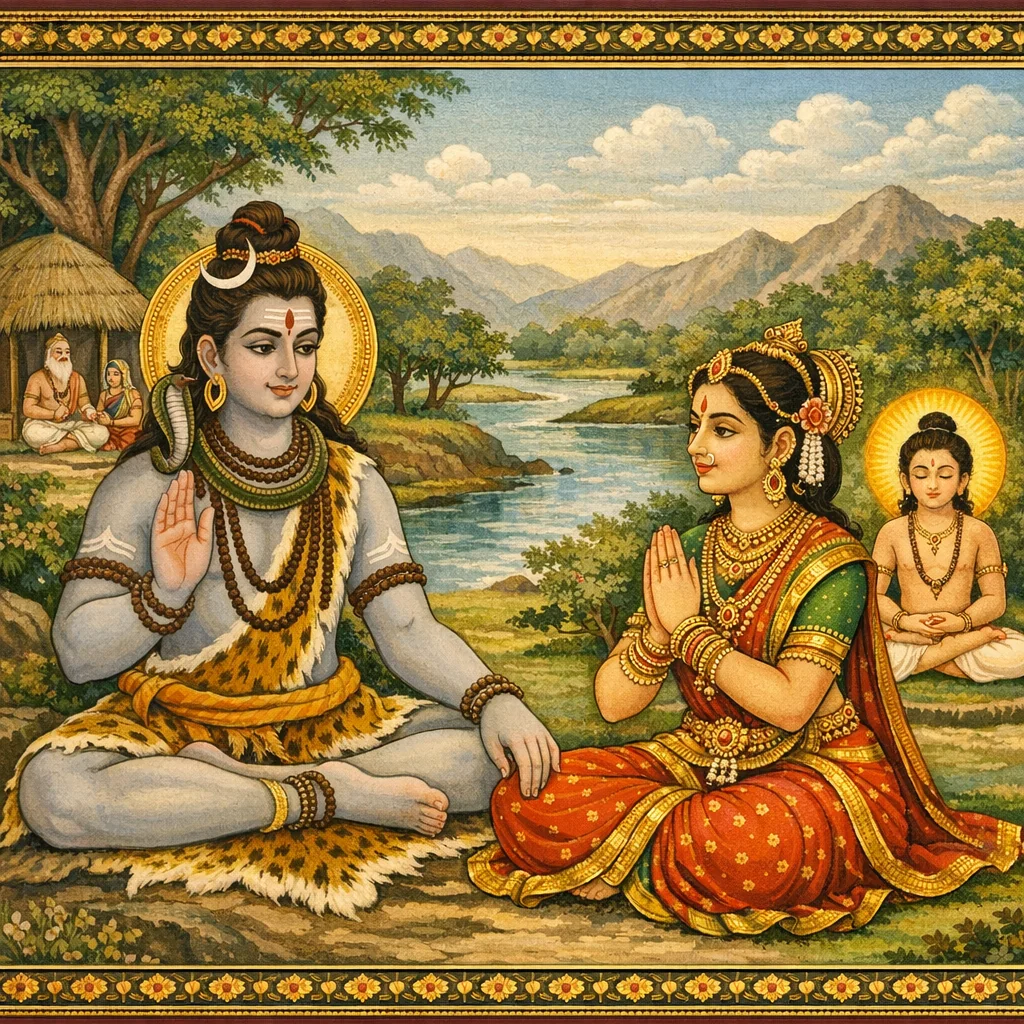
The chapter is framed as Īśvara’s instruction to Devī during a pilgrimage itinerary through Prabhāsa-kṣetra. Īśvara directs the pilgrim to Bālārka, praised as pāpa-nāśana, the destroyer of sin, and places it a short distance north of Agastya’s āśrama. It then explains the name’s origin: the site is called Bālārka because, in ancient times, the Sun (Arka) in a youthful, childlike form (bāla) is said to have performed austerities (tapas) there. A phala is also declared for darśana on Sunday (ravivāra): the devotee will not be afflicted with kuṣṭha (a class of skin disease), and children’s sufferings born of illness are said not to arise. Thus the unit weaves sacred geography, theological etiology, and a health-focused phalaśruti tied to calendrical devotion.
Shlokas
Verse 1
ईश्वर उवाच । ततो गच्छेन्महादेवि बालार्कं पापनाशनम् । अगस्त्याश्रमतो देवि उत्तरे नातिदूरतः
Īśvara said: Then, O Great Goddess, one should go to Bālārka, the destroyer of sins, which lies not far to the north of Agastya’s āśrama.
Verse 2
बाल एव तु यत्रार्कस्तपस्तेपे पुरा प्रिये । तेन बालार्क इत्येतन्नाम ख्यातं धरातले
O beloved, in the place where the Sun, while still a child, once performed sacred austerities, that spot became renowned on earth by the name “Bālārka” (Child-Sun).
Verse 3
तं दृष्ट्वा रविवारेण न कुष्ठी जायते नरः । बालानां रोगजा पीडा न संभूयात्कदाचन
By beholding it on a Sunday, a man is not afflicted with leprosy; and for children, pain born of disease does not arise at any time.
Verse 286
इति श्रीस्कांदे महापुराण एकाशीतिसाहस्र्यां संहितायां सप्तमे प्रभासखण्डे प्रथमे प्रभासक्षेत्र माहात्म्ये बालार्कमाहात्म्यवर्णनंनाम षडशीत्युत्तरद्विशततमोऽध्यायः
Thus ends, in the holy Skanda Mahāpurāṇa—within the Saṃhitā of eighty-one thousand verses—within the seventh book, the Prabhāsa Khaṇḍa, and within the first part, the Māhātmya of Prabhāsa-kṣetra, the chapter entitled “The Description of the Greatness of Bālārka,” being Chapter 286.