Adhyaya 282
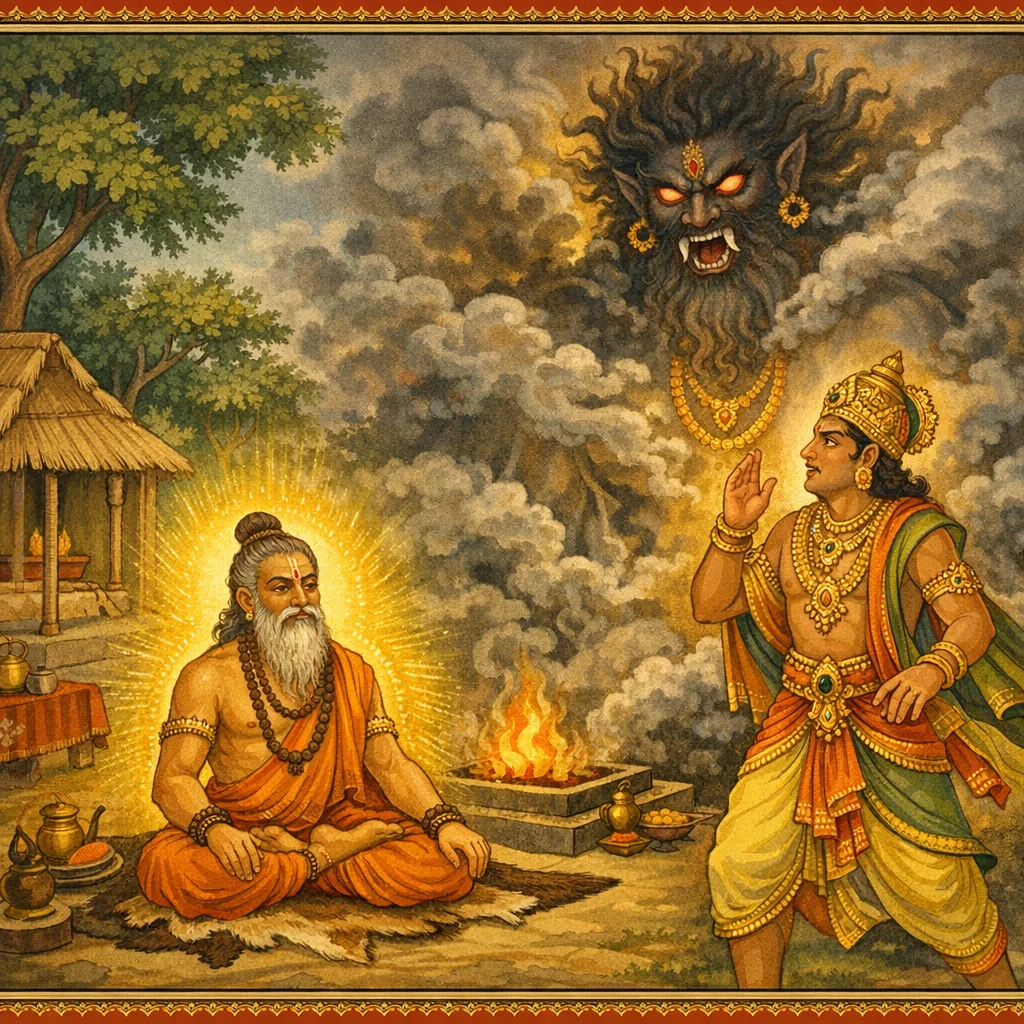
The chapter recounts a ritual-theological clash at the āśrama of the Bhārgava ṛṣi Cyavana. King Śaryāti, delighted to hear of Cyavana’s renewed vigor and prosperity, arrives with his retinue and is honorably received. Cyavana offers to officiate a yajña for the king, and an exemplary sacrificial arena is prepared. At the time of soma distribution, Cyavana takes a soma-graha for the Aśvins (Nāsatyas). Indra objects, claiming that the Aśvins—physicians and attendants who move among mortals—are not entitled to soma like the other devas. Cyavana rebukes Indra, affirms the Aśvins’ divine status and beneficence, and proceeds with the offering despite Indra’s warning. Indra then raises the vajra to strike, but Cyavana, by ascetic power, immobilizes Indra’s arm. As the confrontation escalates, Cyavana performs a mantra-based oblation to generate a kṛtyā; from his tapas arises a terrifying being named Mada, described in cosmic, world-covering proportions, roaring as it rushes toward Indra with intent to devour him. The episode highlights ritual entitlement, the authority of the officiant, and the ethical limits of divine coercion within the sacred setting of sacrifice.
Shlokas
Verse 1
ईश्वर उवाच । ततः श्रुत्वा च शर्यातिर्वलभीस्थान संस्थितः । वयस्थं च्यवनं श्रुत्वा आनन्दोद्गतमानसः
Īśvara said: Then King Śaryāti, staying at Valabhī, hearing that Cyavana had become youthful, felt his heart rise with joy.
Verse 2
प्रहृष्टः सेनया सार्द्धं स प्रायाद्भार्गवाश्रमम् । च्यवनं च सुकन्यां च हृष्टां देव सुतामिव
Delighted, he set out with his army to the Bhārgava hermitage, and there he beheld Cyavana and Sukanyā—she radiant and joyful like a daughter of the gods.
Verse 3
गतो महीपः शर्यातिः कृत्स्नानंदमहोदधिः । ऋषिणा सत्कृतस्तेन सभार्यः पृथिवीपतिः । तत्रोपविष्टः कल्याणीः कथाश्चक्रे महामनाः
King Śaryāti—an ocean of complete joy—went there. Honoured by that sage, the lord of the earth sat down together with his queen; and seated there, the great-souled king spoke auspicious and elevating words.
Verse 4
अथैनं भार्गवो देवि ह्युवाच परिसांत्वयन् । याजयिष्यामि राजंस्त्वां संभारानुपकल्पय
Then the Bhārgava sage, O Devī, spoke to him in a soothing manner: “O King, I shall officiate your sacrifice—make ready the required materials.”
Verse 5
ततः परमसंहृष्टः शर्यातिः पृथिवीपतिः । च्यवनस्य महादेवि तद्वाक्यं प्रत्यपूजयत्
Thereupon King Śaryāti, the lord of the earth, greatly delighted, O Mahādevī, respectfully accepted and honoured Cyavana’s words.
Verse 6
प्रशस्तेऽहनि याज्ञीये सर्वकामसमृद्धिमत् । कारयामास शर्यातिर्यज्ञायतनमुत्तमम्
On an auspicious day fit for sacrifice, Śaryāti had an excellent sacrificial enclosure constructed, endowed with every prosperity and the fulfilment of all aims.
Verse 7
तत्रैव च्यवनो देवि याजयामास भार्गवम् । अद्भुतानि च तत्रासन्यानि तानि महेश्वरि
Right there, O Devī, Cyavana—the Bhārgava—conducted the sacrifice; and many wondrous events occurred there, O Maheśvarī.
Verse 8
अगृह्णाच्च्यवनः सोममश्विनोर्देवयोस्तदा । तमिन्द्रो वारयामास मा गृहाण तयोर्ग्रहम्
Then Cyavana took Soma on behalf of the two divine Aśvins. Indra restrained him, saying, “Do not take the offering-share meant for them.”
Verse 9
इन्द्र उवाच । उभावेतौ न सोमार्हौ नासत्याविति मे मतिः । भिषजौ देवतानां हि कर्मणा तेन गर्हितौ
Indra said: “In my view, these two—the Nāsatyas—are not worthy of Soma. For they are physicians to the gods, and by that occupation they are regarded as blameworthy.”
Verse 10
च्यवन उवाच । माऽवमंस्था महात्मानौ रूपद्रविणवर्चसौ । यौ चक्रतुश्च मामद्य वृंदारकमिवाजरम्
Cyavana said: “Do not disparage those two great souls, radiant with beauty, wealth, and splendour. It is they who have made me today youthful and undecaying—like one of the gods.”
Verse 11
समत्वेनान्यदेवानां कथं वै नेक्षते भवान् । अश्विनावपि देवेन्द्र देवौ विद्धि परंतप
“Why do you not regard them as equal to the other gods? O Lord of the Devas, know that the Aśvins too are gods, O subduer of foes.”
Verse 12
इन्द्र उवाच । चिकित्सकौ कर्मकरौ कामरूपसमन्वितौ । लोके चरंतौ मर्त्यानां कथं सोममिहार्हतः
Indra said: “They are healers, mere functionaries, able to assume forms at will, moving about in the world among mortals—how can they deserve Soma here?”
Verse 13
ईश्वर उवाच । एतदेव यदा वाक्यमाम्रेडयति वासवः । अनादृत्य ततः शक्रं ग्रहं जग्राह भार्गवः
Īśvara said: When Vāsava (Indra) kept repeating these very words, then Bhārgava (Cavana), disregarding Śakra, seized the Soma-offering (the ritual cup/portion).
Verse 14
ग्रहीष्यंतं ततः सोममश्विनोः सत्तमं तदा । समीक्ष्य बलभिद्देव इदं वचनमब्रवीत्
Then, seeing him about to take the Soma portion meant for the Aśvins, Balabhid (Indra), the god, spoke these words.
Verse 15
आभ्यामर्थाय सोमं त्वं ग्रहीष्यसि यदि स्वयम् । वज्रं ते प्रहरिष्यामि घोररूपमनुत्तमम्
“If you yourself take the Soma for the sake of those two (Aśvins), then I shall strike you with my vajra—terrible in form and unsurpassed.”
Verse 16
एवमुक्तः स्वयमिन्द्रमभिवीक्ष्य स भार्गवः । जग्राह विधिवत्सोममश्विभ्यामुत्तमं ग्रहम्
Thus addressed, Bhārgava (Cyavana), looking straight at Indra, duly took the Soma—the finest graha—for the Aśvins.
Verse 17
ततोऽस्मै प्राहरत्कोपाद्वज्रमिंद्रः शचीपतिः । तस्य प्रहरतो बाहुं स्तंभयामास भार्गवः
Then, in anger, Indra—the lord of Śacī—struck at him with the vajra; but Bhārgava immobilized the arm as it was striking.
Verse 18
स्तंभयित्वाथ च्यवनो जुहुवे मन्त्रतोऽनलम् । कृत्यार्थी सुमहातेजा देवं हिंसितुमुद्यतः
After immobilizing him, Cyavana invoked the sacred fire with mantras—seeking a kṛtyā—his great splendor roused, intent on harming the god.
Verse 19
तत्र कृत्योद्भवो यज्ञे मुनेस्तस्य तपोबलात् । मदोनाम महावीर्यो महाकायो महासुरः
There, in that sacrifice, from the sage’s power of austerity, a kṛtyā-born being arose—an immense great-asura named Mada, of mighty valor and gigantic body.
Verse 20
शरीरं यस्य निर्देष्टुमशक्यं च सुरासुरैः । तस्य प्रमाणं वपुषा न तुल्यमिह विद्यते
His body was such that even gods and asuras could not define its measure; in sheer magnitude of form, nothing here could equal him.
Verse 21
तस्यास्यं चाभवेद्घोरं दंष्ट्रा दुर्दर्शनं महत् । हनुरेकः स्थितस्तस्य भूमावेको दिवं गतः
Its mouth became dreadful, with enormous, fearsome fangs, hard to behold; of its two jaws, one rested upon the earth while the other rose up to the heavens.
Verse 22
चतस्रश्चापि ता दंष्ट्रा योजनानां शतंशतम् । इतरे त्वस्य दशना बभूबुर्दशयोजनाः
Those four fangs each stretched a hundred hundreds of yojanas; his other teeth, each one, were ten yojanas long.
Verse 23
प्राकारसदृशाकारा मूलाग्रसमदर्शनाः । नाम्ना पर्वतसंकाशाश्चायुतायुतयोजनाः
They were shaped like ramparts, appearing the same from root to tip; and by name they were “Mountain-like,” stretching to tens of thousands upon tens of thousands of yojanas.
Verse 24
नेत्रे रविशशिप्रख्ये भ्रुवावंतकसन्निभे । लेलिहज्जिह्वया वक्त्रं विद्युच्चलितलोलया । व्यात्ताननो घोरदृष्टिर्ग्रसन्निव जगद्बलात्
Its eyes blazed like the sun and moon; its eyebrows were like mountain peaks. With a licking tongue, flickering restlessly like lightning, its mouth gaped wide—its dreadful gaze as though it would swallow the world by sheer force.
Verse 25
स भक्षयिष्यन्संक्रुद्धः शतक्रतुमुपाद्रवत् । महता घोरनादेन लोकाञ्छब्देन छादयन्
Enraged and intent on devouring him, it rushed at Śatakratu (Indra), covering the worlds with its tremendous, terrifying roar.
Verse 282
इति श्रीस्कांदे महापुराण एकाशीतिसाहस्र्यां संहितायां सप्तमे प्रभासखण्डे प्रथमे प्रभासक्षेत्रमाहात्म्ये च्यवनेश्वरमाहात्म्ये च्यवनेन नासत्ययज्ञभागप्रतिरोधकवज्र मोचनोद्यतशक्रनाशाय कृत्योद्भवमदनामकमहाऽसुरोत्पादनवृत्तान्तवर्णनंनाम द्व्यशीत्युत्तरद्विशततमोऽध्यायः
Thus ends, in the venerable Skanda Mahāpurāṇa—within the eighty-one-thousand-verse Saṃhitā—the two-hundred-and-eighty-second chapter of the seventh, Prabhāsa Khaṇḍa, in the Prabhāsakṣetra Māhātmya, in the Cyavaneśvara Māhātmya, entitled: “The account of the creation of the Kṛtyā and the arising of the great asura named Mada, brought forth by Cyavana to destroy Śakra (Indra), who had risen to release the vajra in order to obstruct the Aśvins’ share in the sacrifice.”