Adhyaya 281
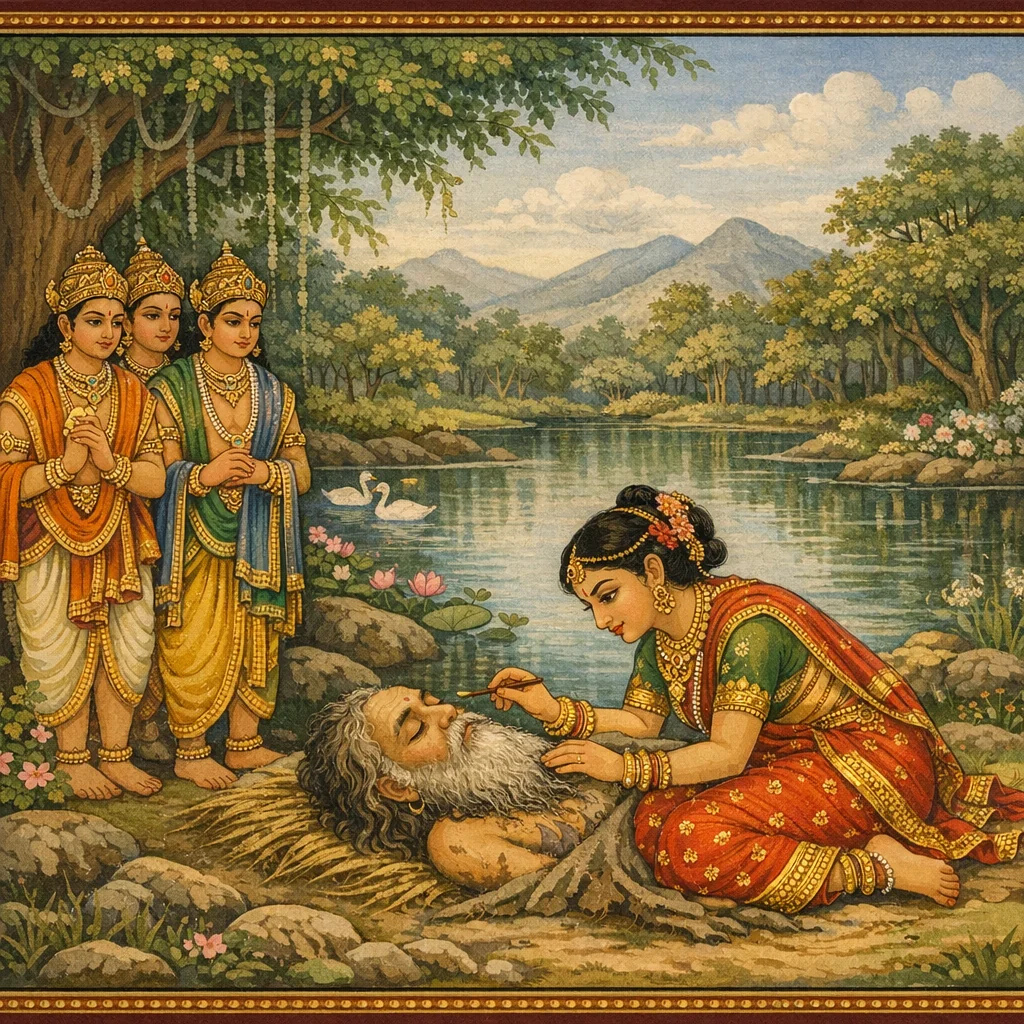
Īśvara recounts an episode about Sukanyā, daughter of Śaryāti and wife of the sage Cyavana. The Aśvinīkumāras (the Nāsatya twins), divine physicians, meet her in the forest and try to persuade her to abandon her aged husband, praising her beauty and pointing to Cyavana’s frailty. Sukanyā firmly upholds marital fidelity and refuses. The Aśvins then offer a remedy: they will restore Cyavana to youth and handsomeness, after which Sukanyā may choose her husband from among them. She conveys this to Cyavana, and the sage consents. Cyavana and the Aśvins enter the waters of a ritual pond and soon emerge in equally youthful, radiant forms, indistinguishable from one another. By discernment, Sukanyā selects Cyavana as her rightful spouse. Pleased, Cyavana promises to grant the Aśvins what they seek. They ask for the right to drink Soma and to receive a share in yajña rites—privileges said to have been denied by Indra. Cyavana agrees to establish their entitlement; the Aśvins depart satisfied, and Cyavana and Sukanyā return to a restored household life, exemplifying fidelity, healing within dharma, and sage authority in ritual status.
Shlokas
Verse 1
ईश्वर उवाच । कस्यचित्त्वथ कालस्य त्रिदशावश्विनौ प्रिये । कृताभिषेकां विवृतां सुकन्यां तामपश्यताम्
Īśvara said: “At a certain time, O beloved, the two divine Aśvin brothers happened to see Sukanyā—fresh from her bath and with her form revealed.”
Verse 2
तां दृष्ट्वा दर्शनीयांगीं देवराजसुतामिव । ऊचतुः समभिद्रुत्य नासत्यावश्विनावथ
Seeing her—lovely-limbed, like the daughter of the king of the gods—the two Aśvins (the Nāsatyas) rushed up to her and spoke.
Verse 3
कस्य त्वमसि वामोरु किं वनेऽस्मिंश्चिकीर्षसि । इच्छावस्त्वां च विज्ञातुं तत्त्वमाख्याहि शोभने
“Whose are you, O woman of lovely thighs, and what do you intend to do in this forest? We wish to know you—tell us the truth, O beautiful one.”
Verse 4
ततः सुकन्या संवीता तावुवाच सुरोत्तमौ । शर्यातितनयां वित्तं भार्यां च च्यवनस्य माम्
Then Sukanyā, properly covered, said to those best of gods: “Know me as the daughter of Śaryāti, and the wife of Cyavana.”
Verse 5
ततोऽश्विनौ प्रहस्यैनामब्रूतां पुनरेव तु । कथं त्वं च विदित्वा तु पित्रा दत्ताऽगता वने
Then the Aśvins, smiling, spoke to her again: “How is it that you—knowing (better)—were given by your father and have come to dwell in a forest?”
Verse 6
भ्राजसे गगनोद्देशे विद्युत्सौदामनी यथा । न देवेष्वपि तुल्यां हि तव पश्याव भामिनि
“You shine in this woodland like a flash of lightning in the sky; even among the gods we do not see your equal, O radiant lady.”
Verse 7
सर्वाभरणसंपन्ना परमांबरधारिणी । मामैवमनवद्यांगि त्यजैनमविवेकिनम्
Adorned with every ornament and clothed in the finest garments—O flawless-limbed one—choose me alone; abandon this undiscerning man.
Verse 8
कस्मादेवंविधा भूत्वा जराजर्जरितं भुवि । त्वमुपास्ये हि कल्याणि कामभावबहिष्कृतम्
Why, being such as you are, do you serve on earth one who is shattered by old age—O auspicious lady—one cast out from the life of desire?
Verse 9
असमर्थं परित्राणे पोषणे वा शुचिस्मिते । सा त्वं च्यवनमुत्सृज्य वरयस्वैकमावयोः
O pure-smiling one, he is unable either to protect you or to maintain you. Therefore, abandon Cyavana and choose one of us as your husband.
Verse 10
पत्यर्थं देवगर्भाभे मा वृथा यौवनं कृथाः । एवमुक्ता सुकन्या सा सुरौ ताविदमब्रवीत्
O maiden of radiant, divine beauty, do not let your youth be spent in vain for the sake of a husband. Thus addressed, Sukanyā spoke these words to the two gods.
Verse 11
रताऽहं च्यवने पत्यौ न चैवं परिशंकतम् । तावब्रूतां पुनश्चैतामावां देवभिषग्वरौ
She said, “I am devoted to Cyavana, my husband; do not suspect otherwise.” Then again the two foremost divine physicians spoke to her.
Verse 12
युवानं रूपसंपन्नं करिष्यावः पतिं तव । ततस्तस्यावयोश्चैव पतिमेकतमं वृणु
“We shall make your husband youthful and endowed with beauty. Then, from among us, choose one as your husband.”
Verse 13
एतेन समयेनावां शमं नय सुमध्यमे । सा तयोर्वचनाद्देवि उपसंगम्य भार्गवम् । उवाच वाक्यं यत्ताभ्यामुक्तं भृगुसुतं प्रति
“Meanwhile, O slender-waisted one, keep your mind calm.” At their words, the lady approached Bhārgava (Cyavana), and repeated to Bhṛgu’s son what the two had told her.
Verse 14
तद्वाक्यं च्यवनो भार्यामुवाचाद्रियतामिति । इत्युक्ता च्यवनेनाथ सुकन्या तावुवाच वै
Hearing that, Cyavana said to his wife, “Let it be accepted.” Thus instructed by Cyavana, Sukanyā then spoke to the two Aśvins.
Verse 15
एवं देवौ भवद्भ्यां यत्प्रोक्तं तत्कियतां लघु । इत्युक्तौ भिषजौ तत्र तया चैव सुकन्यया । ऊचतू राजपुत्रीं तां पतिस्तव विशत्वपः
Sukanyā said, “So be it, O gods; let what you have spoken be done quickly.” Thus addressed, the two physicians said to the princess, “Let your husband enter the waters.”
Verse 16
ततोऽपश्च्यवनः शीघ्रं रूपार्थी प्रविवेश ह । अश्विनावपि तद्देवि ततः प्राविशतां जलम्
Then Cyavana quickly entered the waters, seeking beauty (youthful form). And then, O lady, the two Aśvins also entered the water.
Verse 17
ततो मुहूर्त्तादुत्तीर्णाः सर्वे ते सरसस्ततः । दिव्यरूपधराः सर्वे युवानो मृष्टकुण्डलाः
After a short while, all of them emerged from that lake. All bore divine forms—youthful, and adorned with shining earrings.
Verse 18
दिव्यवेषधराश्चैव मनसः प्रीतिवर्द्धनाः । तेऽब्रुवन्सहिताः सर्वे वृणीष्वान्यतमं शुभे
Clad in divine attire, delighting the mind, they all together said, “O auspicious one, choose whichever you wish.”
Verse 19
अस्माकमीप्सितं भद्रे यतस्त्वं वरवर्णिनी । यत्र वाप्यभि कामासि तं वृणीष्व सुशोभने
O auspicious lady of excellent complexion, since you are the one we desire to be chosen, select—wherever your heart inclines—whomsoever you wish, O beautiful one.
Verse 20
सा समीक्ष्य तु तान्सर्वांस्तुल्यरूपधरान्स्थितान् । निश्चित्य मनसा बुद्ध्या देवि वव्रे पतिं स्वकम्
After looking upon all of them standing there, each bearing an equal form, the noble lady—deciding with mind and clear understanding—chose her own husband.
Verse 21
लब्ध्वा तु च्यवनो भार्यां वयोरूपमवस्थितः । हृष्टोऽब्रवीन्महातेजास्तौ नासत्याविदं वचः
Having obtained a wife, Cyavana—now established in youthful form—rejoiced. The great radiant sage then spoke these words to the two Nāsatyas (Aśvins).
Verse 22
यदहं रूपसंपन्नो वयसा च समन्वितः । कृतो भवद्भ्यां वृद्धः सन्भार्यां च प्राप्तवान्निजाम् । तद्ब्रूतं वै विधास्यामि भवतोर्यदभीप्सितम्
Through you both I have been endowed with beauty and youth; though once old, I have attained my own wife again. Therefore speak what you desire—I shall surely accomplish it for you both.
Verse 23
अश्विनावूचतुः । आवां तु देवभिषजौ न च शक्रः करोति नौ । सोमपानार्हतां तस्मात्कुरु नौ सोमपायिनौ
The Aśvins said: “We are indeed the physicians of the gods, yet Śakra (Indra) does not grant us the right to drink Soma. Therefore make us worthy of Soma-drinking—make us Soma-drinkers.”
Verse 24
च्यवन उवाच । अहं वां यज्ञभागार्हौ करिष्ये सोमपायिनौ
Cyavana said: “I shall make you both worthy of a share in the sacrifice, and thus Soma-drinkers.”
Verse 25
ईश्वर उवाच । ततस्तौ हृष्टमनसौ नासत्यौ दिवि जग्मतुः । च्यवनोऽपि सुकन्या च सुराविव विजह्रतुः
Īśvara said: Then the two Nāsatyas, their hearts delighted, went to heaven. And Cyavana too, together with Sukanyā, sported joyfully like a divine pair.
Verse 281
इति श्रीस्कांदे महापुराण एकाशीतिसाहस्र्यां संहितायां सप्तमे प्रभासखण्डे प्रथमे प्रभासक्षेत्रमाहात्म्ये च्यवनेश्वर माहात्म्यवर्णनंनामैकाशीत्युत्तरद्विशततमोऽध्यायः
Thus ends the two-hundred-and-eighty-first chapter, called “The Description of the Greatness of Cyavaneśvara,” in the first Prabhāsa-kṣetra Māhātmya of the seventh major division, the Prabhāsa-khaṇḍa, within the Śrī Skanda Mahāpurāṇa of eighty-one thousand verses.