Adhyaya 280
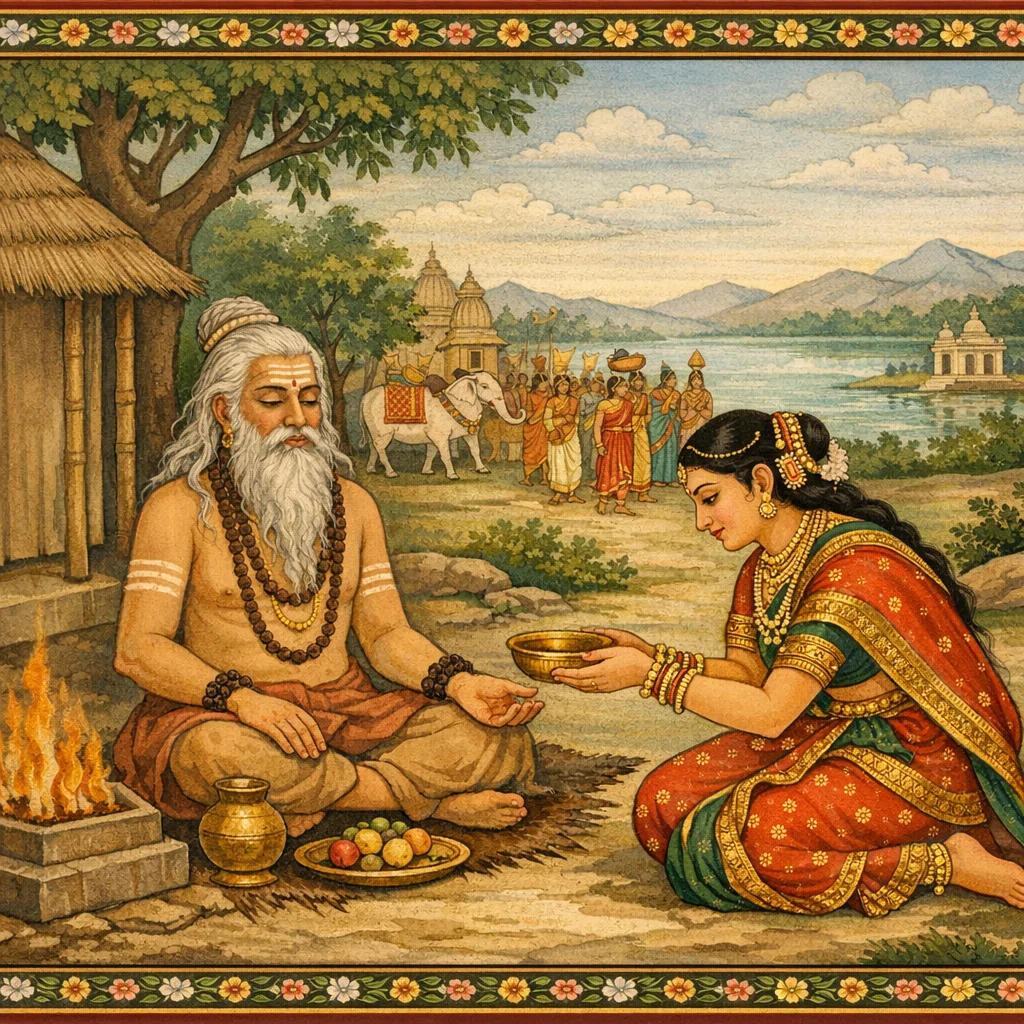
Chapter 280 is a sacred dialogue between Śiva and Devī introducing the liṅga of Cyavaneśvara in Prabhāsa-kṣetra, praised as “sarva-pātaka-nāśana,” the destroyer of all sin. It then recounts the earlier life of the Bhārgava sage Cyavana: arriving at Prabhāsa, he performs fierce tapas, becomes motionless like a “sthāṇu,” and is gradually covered by an anthill, creepers, and ants. King Śaryāti comes on pilgrimage with a vast retinue and his daughter Sukanyā. While roaming with companions, Sukanyā finds the anthill and, mistaking the sage’s eyes for shining objects, pierces them with a thorn. Cyavana’s wrath manifests as a punitive affliction upon the king’s army—described as a disabling blockage of excretory function—leading to inquiry and confession. Sukanyā admits her deed and the king begs forgiveness; Cyavana pardons on the condition that Sukanyā be given to him in marriage, and the king agrees. The chapter ends by praising Sukanyā’s exemplary service to her ascetic husband—discipline, hospitality, and devotion—linking the shrine’s glory with ethical teachings on accountability, restitution, and faithful service.
Shlokas
Verse 1
ईश्वर उवाच । ततो गच्छेन्महादेवि च्यवनेश्वरमुत्तमम् । तत्रैव संस्थितं लिंगं सर्वपातकनाशनम्
Īśvara said: Then, O Great Goddess, one should go to the excellent Cyavaneśvara. There stands a liṅga established on that very spot, which destroys all sins.
Verse 2
यत्र शर्यातिना दत्ता सुकन्या सा महर्षये । यत्र संस्तंभितं सैन्यमानाहार्त्तमथाकरोत्
It is the place where King Śaryāti gave Sukanyā to the great ṛṣi; and it is the place where the army was checked and then made to desist from its aggression.
Verse 3
एष शर्यातियज्ञस्य देशो देवि प्रकाशते । प्रभासक्षेत्रमध्ये तु साक्षात्पातकनाशनः
O Goddess, this place is famed as the site of Śaryāti’s sacrifice; and in the very midst of Prabhāsa-kṣetra it stands manifest as a destroyer of sins.
Verse 4
साक्षात्तत्राभजत्सोममश्विभ्यां सह कौशिकः । चुकोप भार्गवश्चैव महेन्द्राय महातपाः
There, Kauśika shared the Soma directly with the Aśvin twins; and the great ascetic Bhārgava too grew wrathful toward Mahendra (Indra).
Verse 5
संस्तंभयामास च तं वासवं च्यवनः प्रभुः । सुकन्यां चापि भार्यां स राजपुत्रीमवाप्तवान्
The mighty sage Cyavana restrained Vāsava (Indra) himself; and he obtained Sukanyā, the king’s daughter, as his wife.
Verse 6
देव्युवाच । कथं विष्टंभितस्तेन भगवान्पाकशासनः । किमर्थं भार्गवश्चापि कोपं चक्रे महातपाः
The Goddess said: “How was the blessed Pākaśāsana (Indra) restrained by him? And for what reason did the Bhārgava sage, of great austerity, become wrathful?”
Verse 7
नासत्यौ च कथं ब्रह्मन्कृ तवान्सोमपायिनौ । तत्सर्वं च यथावृत्तमाख्यातु भगवान्मम
“And how, O Brahman, did he make the Nāsatya twins drink Soma? Please narrate to me everything exactly as it happened.”
Verse 8
ईश्वर उवाच । भृगोर्महर्षेः पुत्रोऽभूच्च्यवनो नाम नामतः । स प्रभासं समासाद्य तपस्तेपे महामुनिः
Īśvara said: “Cyavana, famed by name, was the son of the great seer Bhṛgu. Reaching Prabhāsa, that great sage undertook austerities.”
Verse 9
स्थाणुभूतो महातेजा वीरस्थाने च भामिनि । अतिष्ठत्सुचिरं कालमेकदेशे वरानने
O radiant lady, in that Vīrasthāna he remained for a very long time—motionless like a pillar—standing in one spot, O fair-faced one.
Verse 10
स वल्मीकोऽभवत्तत्र लताभिरभिसंवृतः । कालेन महता देवि समाकीर्णः पिपीलकैः
Over time, O Goddess, he became there like an anthill, covered over with creepers and, after long ages, filled all around with ants.
Verse 11
स तथा संवृतो धीमान्मृत्पिंड इव सर्वतः । तप्यते स्म तपो घोरं वल्मीकेन समावृतः
Thus enclosed on all sides like a lump of earth, the wise one continued to perform fierce austerities, covered by the anthill.
Verse 12
अथास्य यातकालस्य शर्यातिर्नाम पार्थिवः । तीर्थयात्राप्रसंगेन श्रीसोमेशदिदृक्षया । आजगाम महाक्षेत्रं प्रभासं पापनाशनम्
Then, as time passed, the king named Śaryāti came—on the occasion of a pilgrimage—wishing to behold the glorious Someśa, to the great sacred field of Prabhāsa, the destroyer of sins.
Verse 13
तस्य स्त्रीणां सहस्राणि चत्वार्यासन्परिग्रहाः । एकैव तु सुता शुभ्रा सुकन्यानाम नामतः
He had four thousand wives; yet he had only one radiant daughter, renowned by name as Sukanyā.
Verse 14
सा सखीभिः परिवृता सर्वाभरणभूषिता । चंक्रम्यमाणा वल्मीकं भार्गवस्य समासदत्
Surrounded by her companions and adorned with every ornament, she wandered about and came upon the Bhārgava’s anthill.
Verse 15
सा चैव सुदती तत्र पश्यमाना मनोरमान् । वनस्पतीन्विचिन्वंती विजहार सखीवृता
There that fair-toothed maiden, gazing upon the delightful trees, wandered about joyfully, gathering plants and blossoms, surrounded by her companions.
Verse 16
रूपेण वयसा चैव सुरापानमदेन च । बभंज वनवृक्षाणां शाखाः परम पुष्पिताः
Proud of her beauty and youth—and also intoxicated from drinking liquor—she broke the richly blossoming branches of the forest trees.
Verse 17
तां सखीरहितामेकामेकवस्त्रामलंकृताम् । ददर्श भार्गवो धीमांश्चरंतीमिव विद्युतम्
Bhārgava, the wise sage, saw her alone—bereft of companions—adorned and wearing but a single garment, moving about like a flash of lightning.
Verse 18
तां पश्यमानो विजने स रेमे परमद्युतिः । क्षामकण्ठश्च ब्रह्मर्षिस्तपोबलसमन्वितः
Beholding her in that lonely place, the radiant one rejoiced; there too was the Brahmarṣi—lean of throat, yet endowed with the strength born of austerity.
Verse 19
तामभाषत कल्याणीं सा चास्य न शृणोति वै । ततः सुकन्या वल्मीके दृष्ट्वा भार्गवचक्षुषी
He spoke to that auspicious maiden, but she did not heed him. Then Sukanyā, seeing within an ant-hill the eyes of the Bhārgava sage, took notice.
Verse 20
कौतूहलात्कण्टकेन बुद्धिमोहबलात्कृता । किन्नु खल्विदमित्युक्त्वा निर्बिभेदास्य लोचने
Out of curiosity—her discernment clouded by delusion—she said, “What indeed is this?” and with a thorn she pierced his eyes.
Verse 21
अकुध्यत्स तया विद्धो नेत्रे परममन्युमान् । ततः शर्यातिसैन्यस्य शकृन्मूत्रे समावृणोत्
Though his eyes were pierced by her, he did not flare up in anger; yet thereafter he obstructed the passing of stool and urine in King Śaryāti’s army.
Verse 22
ततो रुद्धे शकृन्मूत्रे सैन्यमानाहदुःखितम् । तथागतमभिभेक्ष्य पर्यतप्यत पार्थिवः
When their excretion was thus blocked, the army was afflicted and cried out in distress; seeing what had occurred, the king was deeply troubled.
Verse 23
तपोनित्यस्य वृद्धस्य रोषणस्य विशेषतः । केनापकृतमद्येह भार्गवस्य महात्मनः । ज्ञातं वा यदि वाऽज्ञातं तदिदं ब्रूत मा चिरम्
“This great Bhārgava is ever devoted to austerity, aged, and especially formidable when angered. By whom has he been wronged here today? Whether knowingly or unknowingly—tell me at once, without delay.”
Verse 24
तत्रोचुः सैनिकाः सर्वे न विद्मोऽपकृतं वयम् । सर्वोपायैर्यथाकामं भवान्समधिगच्छतु
Thereupon all the soldiers replied, “We do not know who has done this wrong. By whatever means you deem fit, may you discover it.”
Verse 25
ततः स पृथिवीपालः साम्ना चोग्रेण च स्वयम् । पर्यपृच्छत्सुहृद्वर्गं प्रत्यजानन्न चैव ते
Then that protector of the earth (the king), using at times gentle words and at times stern ones, personally questioned his circle of companions; yet they did not acknowledge the matter at all.
Verse 26
आनाहार्त्तं ततो दृष्ट्वा तत्सैन्यं संमुखोदितम् । पितरं दुःखितं चापि सुकन्यैवमथाब्रवीत्
Seeing then that the army stood before them distressed, as if without sustenance, and seeing her father also sorrowful, Sukanyā spoke as follows.
Verse 27
मया तातेह वल्मीके दृष्टं सर्वमभिज्वलत् । उद्द्योतवदविज्ञानात्तन्मया विद्धमन्तिकात्
“Dear father, in this anthill I saw everything blazing. In ignorance, mistaking it for a bright light, I struck it from nearby.”
Verse 28
एतच्छ्रुत्वा तु शर्याति र्वल्मीकं क्षिप्रमभ्यगात् । तत्रापश्यत्तपोवृद्धं वयोवृद्धं च भार्गवम्
Hearing this, Śaryāti quickly went to the anthill. There he saw the Bhārgava—great through austerity and advanced in age.
Verse 29
अथावदत्स्वसैन्यार्थं प्रांजलिः स महीपतिः । अज्ञानाद्बालया यत्ते कृतं तत्क्षंतुमर्हसि
Then the king, with joined palms, spoke on behalf of his own army: “What has been done to you by a young girl out of ignorance—you should forgive that.”
Verse 30
ततोऽब्रवीन्महीपालं च्यवनो भार्गवस्तदा । रूपौदार्यसमायुक्तां लोभमोहसमावृताम्
Then Cyavana Bhārgava spoke to the king, describing her as endowed with beauty and graciousness, yet covered over by greed and delusion.
Verse 31
तामेव प्रतिगृह्याहं राजन्दुहितरं तव । क्षमिष्यामि महीपाल सत्यमेतद्ब्रवीमि ते
“O King, if I accept that very daughter of yours, then I shall forgive the offense, O ruler of the earth—this I speak to you in truth.”
Verse 32
ईश्वर उवाच । ऋषेर्वचनमाज्ञाय शर्यातिरविचारयन् । ददौ दुहितरं तस्मै च्यवनाय महात्मने
Īśvara said: Understanding the sage’s words, Śaryāti—without hesitation—gave his daughter to that great-souled Cyavana.
Verse 33
प्रतिगृह्य च तां कन्यां भगवान्प्रससाद ह । प्राप्ते प्रसादे राजा तु ससैन्यः पुरमाव्रजत्
Having accepted that maiden, the venerable sage became gracious. When that favor was obtained, the king, together with his army, returned to the city.
Verse 34
सुकन्यापि पतिं लब्ध्वा तपस्विनमनिन्दितम् । नित्यं पर्यचरत्प्रीत्या तपसा नियमेन च
Sukanyā too, having obtained a blameless ascetic as her husband, served him daily with love—through austerity and disciplined observances.
Verse 35
अग्नीनामतिथीनां च शुश्रूषुरनसूयया । समाराधयत क्षिप्रं च्यवनं सा शुभानना
With guileless devotion and without envy, the fair-faced Sukanyā diligently served the sacred fires and the guests; thus she quickly won the full grace of the sage Cyavana.
Verse 280
इति श्रीस्कान्दे महापुराण एकाशीतिसाहस्र्यां संहितायां सप्तमे प्रभासखण्डे प्रथमे प्रभास क्षेत्रमाहात्म्ये च्यवनेश्वरमाहात्म्यवर्णनंनामाशीत्युत्तरद्विशततमोऽध्यायः
Thus ends the two-hundred-and-eightieth chapter, entitled “The Description of the Greatness of Cyavaneśvara,” in the Prabhāsa-khaṇḍa (the seventh division) of the Śrī Skanda Mahāpurāṇa, within the Ekāśītisāhasrī Saṃhitā, in the Prabhāsa Kṣetra Māhātmya.