Adhyaya 279
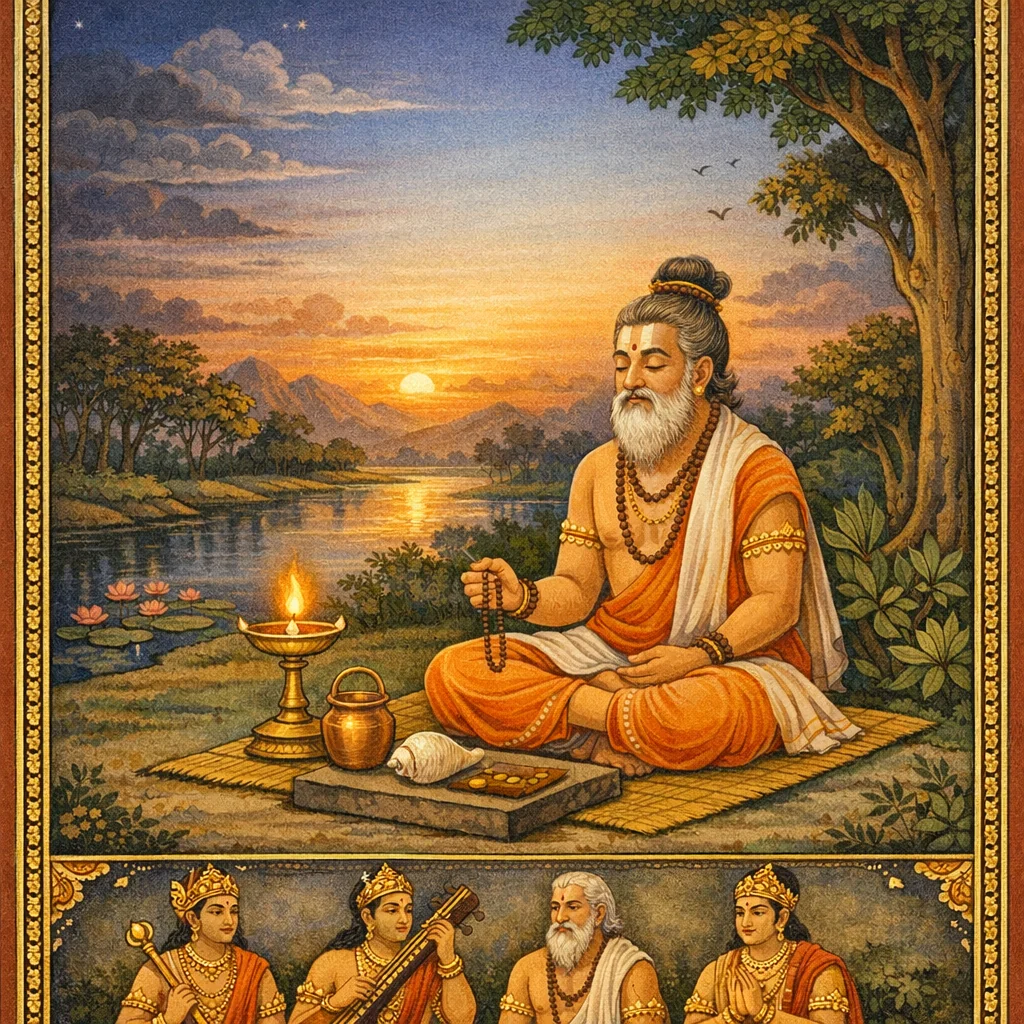
This chapter presents devotional ritual instruction within a sacred place narrative. Īśvara speaks to Devī, directing the devotee to the eminent solar shrine called Cāvanārka in the eastern region of Hiraṇyā, established by the sage Cyavana. On the seventh lunar day (saptamī), the worshipper is enjoined to praise Sūrya with disciplined procedure, purity, and focused attention, and to recite the aṣṭottaraśata-nāma—the Sun’s 108 names. The ensuing name-list expands Sūrya’s identity through cosmic equivalences: units of time (kalā, kāṣṭhā, muhūrta, pakṣa, māsa, ahorātra, saṃvatsara), major deities (Indra, Varuṇa, Brahmā, Rudra, Viṣṇu, Skanda, Yama), and functions such as dhātṛ, prabhākara, tamonuda, and lokādhyakṣa. The discourse also states a clear transmission lineage: the hymn was taught by Śakra, received by Nārada, then by Dhaumya, and finally by Yudhiṣṭhira, who attained his desired aims. The closing phalaśruti declares that daily recitation—especially at sunrise—bestows prosperity (wealth and gems), progeny, strengthened memory and intellect, freedom from grief, and fulfillment of intentions, as blessed fruits of disciplined devotion.
Shlokas
Verse 1
ईश्वर उवाच । ततो गच्छेन्महादेवि च्यवनार्कमनुत्तमम् । हिरण्यापूर्वभागस्थं च्यवनेन प्रतिष्ठितम्
Īśvara said: “Then, O Mahādevī, one should go to the unsurpassed Cyavanārka—the Sun-shrine of Cyavana—situated in the eastern part of Hiraṇyā and established by Cyavana.”
Verse 2
सर्वकामप्रदं नृणां पूजितं विधिवन्नरैः । सप्तम्यां च विधानेन यः स्तोष्यति रविं नरः
Bestowing upon people all desired aims, it is worshipped by men according to proper rite. And the man who, on the Saptamī (the lunar seventh), praises Ravi (the Sun) in the prescribed manner…
Verse 3
अष्टोत्तरशतैर्नाम्नां सम्यक्छ्रद्धासमन्वितः । शृणु तानि महादेवि शुचिर्भूत्वा समाहितः
Endowed with proper faith, (he praises the Sun) with the one hundred and eight names, in due devotion. Hear those names, O Mahādevī—having become pure and composed in mind.
Verse 4
क्षणं त्वं कुरु देवेशि सर्वं वक्ष्याम्यशेषतः । धौम्येन तु यथापूर्वं पार्थाय सुमहात्मने
“Grant me but a moment, O Lady of the Gods; I shall tell everything in full, without remainder—just as, in former times, Dhaumya taught it to the great-souled Pārtha (Arjuna).”
Verse 5
नामाष्टशतमाख्यातं तच्छृणुष्व महामते । सूर्योऽर्यमा भगस्त्वष्टा पूषाऽर्कः सविता रविः
The one-hundred-and-eight Names have been proclaimed; hear them, O great-minded sage: Sūrya, Aryamā, Bhaga, Tvaṣṭā, Pūṣan, Arka, Savitṛ, Ravi.
Verse 6
गभस्तिमानजः कालो मृत्युर्द्धाता प्रभाकरः । पृथिव्यापश्च तेजश्च खं वायुश्च परायणः
He is Gabhastimān, Aja, Kāla, Mṛtyu, Dhātṛ, Prabhākara; and He is Earth, Waters, Fire/Light, Space, and Wind—the Supreme Refuge.
Verse 7
सोमो बृहस्पतिः शुक्रो बुधोंऽगारक एव च । इन्द्रो विवस्वान्दीप्तांशुः शुचिः सौरिः शनैश्चरः
He is praised as Soma (the Moon), Bṛhaspati, Śukra, Budha, and Aṅgāraka; as Indra; as Vivasvān, radiant with blazing rays; as the Pure One; and as Sauri—Śanaiścara himself. Thus is the Lord hymned through the powers that rule the heavens.
Verse 8
ब्रह्मा रुद्रश्च विष्णुश्च स्कन्दो वैश्रवणो यमः । वैद्युतो जाठरश्चाग्निरिंधनस्तेजसां पतिः
He is Brahmā, Rudra, and Viṣṇu; He is Skanda, Vaiśravaṇa (Kubera), and Yama. He is the lightning-fire, the digestive fire, the sacred sacrificial fire, the very fuel that feeds it, and the Lord of all splendors.
Verse 9
धर्मध्वजो वेदकर्त्ता वेदांगो वेदवाहनः । कृतं त्रेता द्वापरश्च कलिः सर्वामराश्रयः
He is the banner of Dharma; the maker of the Veda; the very limbs of the Veda; the bearer of the Veda. He is Kṛta, Tretā, Dvāpara, and Kali—the refuge of all the immortals.
Verse 10
कलाकाष्ठामुहूर्त्ताश्च पक्षा मासा अहर्निशाः । संवत्सरकरोऽश्वस्थः कालचक्रो विभावसुः
He is the kalā, the kāṣṭhā, and the muhūrta; the fortnights, the months, and the days and nights. He is the maker of the year, the ever-abiding Aśvattha, the wheel of Time, and the radiant illuminator.
Verse 11
पुरुषः शाश्वतो योगी व्यक्ताव्यक्तः सनातनः । लोकाध्यक्षः प्रजाध्यक्षो विश्वकर्मा तमोनुदः
He is the Puruṣa, eternal and the supreme Yogi; manifest and unmanifest, the timeless Ancient. He is the overseer of worlds, the overseer of creatures, Viśvakarmā the cosmic artisan, and the dispeller of darkness.
Verse 12
वरुणः सागरोंशुश्च जीवन्तो जीवनोऽरिहा । भूताश्रयो भूतपतिः सर्वभूतनिषेवितः
He is Varuṇa; he is the ocean and its shining rays. He is the living one, life itself, and the destroyer of foes. He is the shelter of beings, the lord of beings, and the one served by all beings.
Verse 13
स्रष्टा संवर्त्तको वह्निः सर्वस्यादिकरोऽमलः । अनंतः कपिलो भानुः कामदः सर्वतोमुखः
He is the creator and the one who brings all to dissolution; he is the fire. He is the stainless originator of all. He is Ananta, Kapila, Bhānu; the granter of desires, and the all-faced one whose presence is everywhere.
Verse 14
जयो विषादो वरदः सर्वधातुनिषेवितः । समः सुवर्णो भूतादिः शीघ्रगः प्राणधारकः
He is Victory and the dispeller of despondency; the giver of boons, pervading all the body’s constituents. He is impartial; golden; the beginning of all beings; swift-moving; and the upholder of life-breath (prāṇa).
Verse 15
धन्वंतरिर्धूमकेतुरादिदेवोऽदितेः सुतः । द्वादशात्माऽरविंदाक्षः पिता माता पितामहः
He is Dhanvantari; he is Dhūmaketu; the primal God, the son of Aditi. He is of twelvefold nature, lotus-eyed; and he is father, mother, and grandsire—the source and support of every lineage.
Verse 17
एतद्वै कीर्तनीयस्य सूर्यस्यामिततेजसः । नाम्नामष्टोत्तरशतं प्रोक्तं शक्रेण धीमता
Thus were declared the one hundred and eight names of Sūrya—worthy of constant praise, of immeasurable splendor—spoken by the wise Śakra (Indra).
Verse 18
शक्राच्च नारदः प्राप्तो धौम्यस्तु तदनन्तरम् । धौम्याद्युधिष्ठिरः प्राप्य सर्वान्कामानवाप्तवान्
From Śakra (Indra) it reached Nārada; thereafter it reached Dhaumya. Receiving it from Dhaumya, Yudhiṣṭhira obtained the fulfillment of all his desired aims.
Verse 19
एतानि कीर्तनीयस्य सूर्यस्यामिततेजसः । नामानि यः पठेन्नित्यं सर्वान्कामानवाप्नुयात्
Whoever daily recites these names of Sūrya—of immeasurable radiance, worthy to be praised—attains the fulfillment of all desired aims.
Verse 20
सुरपितृमनुजयक्षसेवितमसुरनिशाचरसिद्धवंदितम् । वरकनकहुताशनप्रभं त्वमपि नम हिताय भास्करम्
For your own welfare, bow in worship to Bhāskara (the Sun): served by gods, the ancestors (pitṛs), humans, and yakṣas; praised by asuras, night-roamers, and siddhas; shining with the splendor of finest gold and blazing fire.
Verse 21
सूर्योदये यस्तु समाहितः पठेत्स पुत्रलाभं धनरत्नसंचयान् । लभेत जातिस्मरतां सदा नरः स्मृतिं च मेधां च स विंदते पुमान्
He who, at sunrise, recites with a mind gathered in concentration gains sons and the accumulation of wealth and jewels. Such a man ever attains remembrance of former births, and he obtains memory and intelligence.
Verse 22
इमं स्तवं देववरस्य यो नरः प्रकीर्त्तयेच्छुद्धमनाः समाहितः । स मुच्यते शोकदवाग्निसाराल्लभेत कामान्मनसा यथेप्सितान्
Whoever, with a purified and steady mind, proclaims this hymn to the supreme among the gods is freed from the forest-fire of sorrow and gains the wishes longed for in the heart.
Verse 279
इति श्रीस्कांदे महापुराण एकाशीतिसाहस्र्यां संहितायां सप्तमे प्रभासखण्डे प्रथमे प्रभासक्षेत्रमाहात्म्ये च्यवनादित्यमाहात्म्यसूर्याष्टोत्तरशतनाम माहात्म्यवर्णनंनामैकोनाशीत्युत्तरद्विशततमोऽध्यायः
Thus ends, in the Śrī Skanda Mahāpurāṇa—within the compilation of eighty-one thousand verses—within the seventh book, the Prabhāsa Khaṇḍa, and within the first division, the Prabhāsa-kṣetra-māhātmya, the chapter entitled “Narration of the Greatness of Cyavana-Āditya and of the Greatness of Sūrya’s 108 Names,” being Chapter 279.