Adhyaya 278
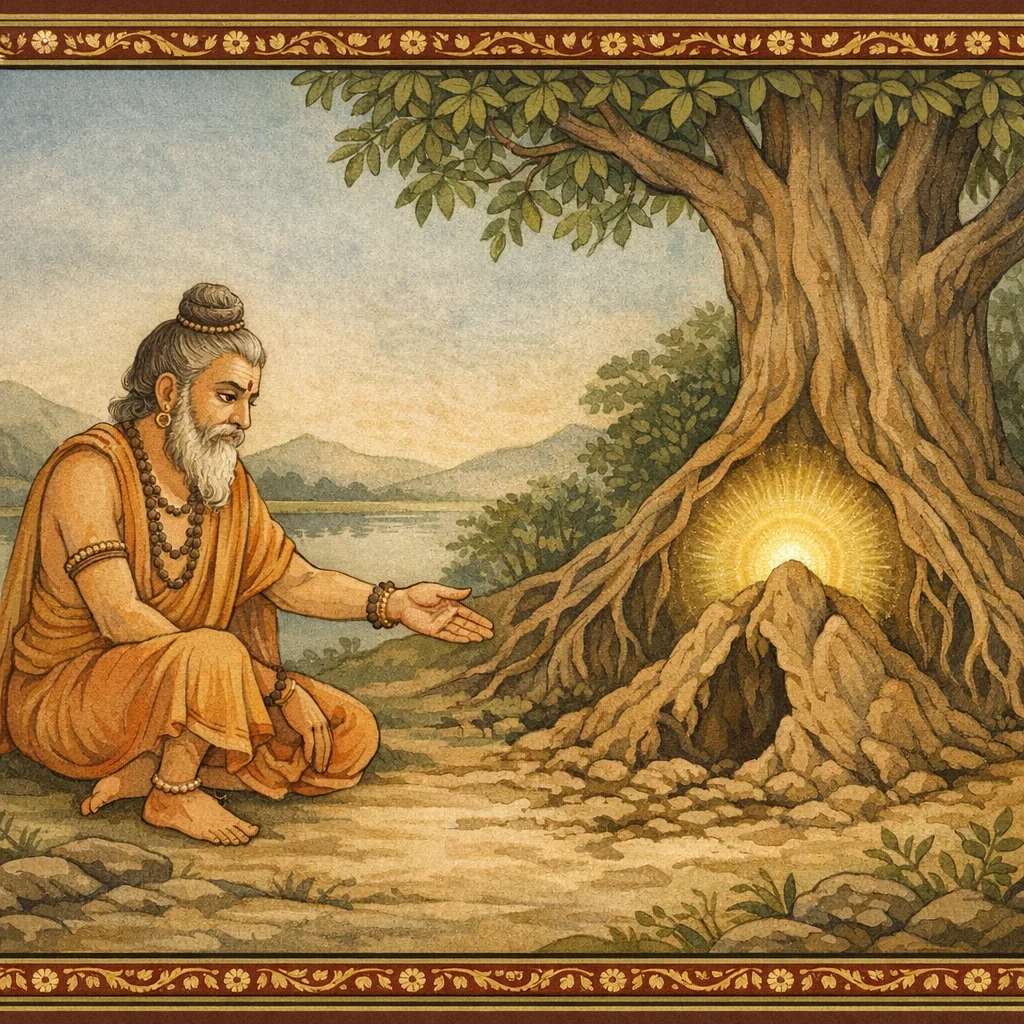
The chapter unfolds as a sacred dialogue between Śiva and Devī. Īśvara points to a famed holy station near the pleasant bank of the Devikā river, described as a place connected with Bhāskara (Sūrya, the Sun). Devī asks how Vālmīki became a “siddha,” and why the Seven Sages were once robbed. Īśvara recounts an earlier life of a brāhmaṇa-born man (named Vaiśākha/Viśākha in the narrative frame) who turns to theft to support his aged parents and household. Meeting the Seven Sages on pilgrimage, he threatens them, yet they remain serene. Aṅgiras then presses a moral question: who will share the karmic burden of wealth gained through wrongdoing? When the thief consults his parents and later his wife, all refuse to share the sin, declaring that the doer alone bears the fruit of action. Struck by this truth, he renounces, confesses, and seeks a way to withdraw from violence. The sages prescribe a four-syllable mantra, “झाटघोट,” said to destroy sin and grant liberation when practiced with one-pointed mind and in alignment with the guru. Through prolonged japa and absorption he becomes steady; time passes until his body is covered by an anthill (valmīka). The sages return, excavate the mound, recognize his attainment, name him Vālmīki, and foretell inspired speech and the composition of the Rāmāyaṇa. The narrative then anchors sacred geography: beneath the root of a nimba tree Sūrya abides as the site-deity; the place is called Sūryakṣetra and Mūlasthāna. Pilgrimage fruits are stated—snāna, tarpaṇa with sesame-water, and śrāddha that uplifts ancestors; even animals benefit by contact with the water. Rites on a specified calendrical occasion are said to relieve certain skin diseases. The chapter closes by commending darśana of the deity and hearing this account as means to remove major faults.
Shlokas
Verse 1
ईश्वर उवाच । ततो गच्छेन्महादेवि शूलस्थानमिति श्रुतम् । देविकायास्तटे रम्ये भास्करं वारितस्करम्
Īśvara said: Then, O great Goddess, one should go to the place known as Śūlasthāna. On the lovely bank of the Devikā river is Bhāskara, the “Restrainer of Thieves”.
Verse 2
यत्रातपत्तपो घोरं वाल्मीकिर्मुनिपुंगवः । वाल्मीकिनामा विप्रर्षिर्यत्र सिद्धो महामुनिः
There the foremost of sages, Vālmīki, performed fierce austerities. There that great sage—Vālmīki, the brāhmaṇa-seer—attained perfection (siddhi).
Verse 3
यत्र सप्तर्षयो मुष्टास्तेनैव मुनिना प्रिये । तस्यैव पश्चिमे भागे मरीचिप्रमुखा द्विजाः
There, O beloved, the Seven Ṛṣis were “held fast” by that very sage (Vālmīki). And in the western part of that place dwell brāhmaṇas headed by Marīci.
Verse 4
देव्युवाच । कथं तु सिद्धो वाल्मीकिः कथं चौर्येऽकरोन्मनः । कथं सप्तर्षयो मुष्टा एतन्मे वद शंकर
The Goddess said: How did Vālmīki attain perfection? How did he set his mind upon theft? How were the Seven Ṛṣis seized? Tell me this, O Śaṅkara.
Verse 5
ईश्वर उवाच । आसीत्पूर्वं द्विजो देवि नाम्ना ख्यातः शमीमुखः । गार्हस्थ्ये वर्तमानस्य तस्य पुत्रो व्यजायत । वैशाख इति नाम्नाऽसौ रौद्रकर्मा व्यजायत
Īśvara said: Formerly, O Goddess, there was a brāhmaṇa renowned by the name Śamīmukha. While he lived the householder’s life, a son was born to him—named Vaiśākha—who grew up inclined toward harsh and violent deeds.
Verse 6
मुक्त्वैकां गुरुशुश्रूषां नान्यत्किंचिदसौ द्विजः । अकरोच्छोभनं कर्म दिवाप्रभृति नित्यशः
Apart from a single act of service to his teacher, that brāhmaṇa did nothing else of merit. From daybreak onward, day after day, he habitually engaged in improper conduct.
Verse 7
अथ कालेन महता पितरौ तस्य तौ प्रिये । वार्द्धक्यभावमापन्नौ भर्तव्यौ तस्य विह्वलौ
In the course of much time, his dear parents grew old and fell into the frailty of advanced age. Distressed and helpless, they became dependent upon him for their support.
Verse 8
स नित्यं पदवीं गत्वा मुष्ट्वा लोकान्स्वशक्तितः । द्रव्यमादाय पितरौ भार्यां चापि पुपोष च
Daily he went out upon the highway and, according to his strength, robbed people and seized their wealth. With those gains he maintained his parents and also his wife.
Verse 9
कस्यचित्त्वथ कालस्य तेन मार्गेण गच्छतः । सप्तर्षींश्च तदापश्यत्तीर्थयात्रापरायणान्
Then, at a certain time, as he traveled along that road, he beheld the Seven Ṛṣis, wholly devoted to pilgrimage to the sacred tīrthas.
Verse 10
तान्दृष्ट्वा यष्टिमुद्यम्य भर्त्सयन्प रुषाक्षरैः । वाक्यैरुवाच तान्सर्वांस्तिष्ठध्वमिति भूरिशः
Seeing them, he raised his staff and, reviling them with harsh words, commanded them all, “Stand still!”—that man of great insolence.
Verse 11
अथ ते मुनयः शांताः समलोष्टाश्मकांचनाः । समाः शत्रौ च मित्रे च रोषरागविवर्जिताः
Then those sages—peaceful, regarding clod, stone, and gold alike—were the same toward enemy and friend, free from anger and attachment.
Verse 12
अस्माकं दर्शनं चास्य संभाष्यमृषिभिः सह । संजातं निष्फलं मा स्यादित्युवाचांगिरा वचः
“Let not our meeting with him, and this conversation with the sages, become fruitless,”—so spoke Aṅgirā.
Verse 13
अंगिरा उवाच । भोभोस्तस्कर मे वाक्यं शृणुष्वावहितः क्षणात् । आत्मनस्तु हितार्थाय सत्यं चैव वदाम्यहम् । तव कः पोष्यवर्गोऽस्ति तच्च सर्वं वदस्व मे
Aṅgirā said: “Listen, O robber, to my words—be attentive for a moment. For your own welfare I speak the truth. Tell me: who are those dependent upon you for support? Declare all of them to me.”
Verse 14
तस्कर उवाच । स्यातां मे पितरौ वृद्धौ भार्यैकाऽपत्यवर्ज्जिता । एका दासी ह्यहं षष्ठो नान्यदस्त्यधिकं मुने
The robber said: “I have two aged parents, and one wife without children. There is one maidservant; I am the sixth. There is nothing more than this, O sage.”
Verse 15
अंगिरा उवाच । गत्वा पृच्छस्व तान्सर्वान्पुष्टान्पापार्जितैर्धनैः । अहं करोमि पापानि सर्वे यूयं तु भक्षकाः
Aṅgirā said: “Go and ask all those who are nourished by wealth earned through sin: ‘I commit the sins—yet you all consume the gains.’”
Verse 16
तत्पापं भविता कस्य कथयंत्विति मे लघु । तथैव गत्वा पप्रच्छ पितरौ तावथोचतुः
“Tell me quickly—whose will that sin become?” Saying this, he went and questioned his parents; then those two replied.
Verse 17
मातापितरावूचतुः । एकः पापानि कुरुते फलं भुंक्ते महा जनः । भोक्तारो विप्रमुच्यंते कर्ता दोषेण लिप्यते
The parents said: “One person commits sins, yet another—some ‘great man’—enjoys the resulting gain. Those who merely consume the benefit may go free, but the doer becomes stained by the fault.”
Verse 18
यः करोत्यशुभं कर्म कुटुंबार्थं तु मंदधीः । आत्मा न वल्लभस्तस्य नूनं पुंसः सुपापिनः
“That dull-witted man who performs an inauspicious deed for the sake of his family—surely, for such a great sinner, even his own self is not truly dear to him.”
Verse 19
ईश्वर उवाच । तयोः स वचनं श्रुत्वा पुनर्भीतमनास्तदा । तयोस्तु संनतिं कृत्वा पितरौ पुनरब्रवीत्
Īśvara said: “Hearing their words, he again became fearful at heart. Having bowed respectfully to them, he then spoke once more to his parents.”
Verse 20
युवाभ्यां हितमेवाहं यत्करोम्यशुभं क्वचित् । तस्यांशं भुज्यते किंचिद्युवाभ्यां वा न वोच्यताम्
“Whatever wrong I may at times do, I do it only for your welfare. Therefore, let some share of its fruit be enjoyed by you—or at least, do not forbid me.”
Verse 21
पितरावूचतुः । पूर्वे वयसि पुत्र त्वमावाभ्यां पाल्य एव हि । उत्तरे तु वयं पाल्याः सम्यक्पुत्र त्वया पुनः
The parents said: “In your early age, son, you were indeed to be cared for by us. But in our later age, we are to be properly cared for by you in return.”
Verse 22
इतरेतरधर्मोऽयं निर्दिष्टः पद्मयोनिना । आवाभ्यां यत्कृतं कर्म युष्मदर्थं शुभाशुभम् । भोक्ष्यामो वयमेवेह तत्सर्वं नात्र संशयः
“This mutual duty has been taught by Padmayoni (Brahmā). Whatever actions—good or bad—we performed for your sake, we ourselves shall experience all their results here; of this there is no doubt.”
Verse 23
अथ त्वमपि यद्वत्स प्रकरोषि शुभाशुभम् । भोक्ष्यसे सकलं तद्वत्स्वयं नान्यः परत्र च
“And you too, dear child—whatever good or bad you do, you will experience it all yourself; no one else will bear it in the next world.”
Verse 24
अवश्यं स्वयमश्नाति कृतं कर्म शुभाशुभम् । तस्मान्नरेण कर्तव्यं शुभं कर्म विपश्चिता
“A person inevitably ‘eats’ (experiences) the good and bad karma he has done. Therefore, a wise man should perform only auspicious deeds.”
Verse 25
चौर्यं वाथ कृषिं वाथ कुसीदं वाथ पुत्रक । वाणिज्यमथवा प्रेष्यं कृत्वाऽस्माकं च भोजनम् । अहर्निशं त्वया देयं न दोषोऽस्मासु पुत्रक
“Whether by theft, or by farming, or by moneylending, dear son—or by trade or by service—having done any of these, you must provide our food day and night. There is no fault in us, dear child.”
Verse 26
ताभ्यां तद्वचनं श्रुत्वा ततो भार्यामभाषत । तदेव वाक्यं साऽवोचद्यत्प्रोक्तं गुरुभिः पुरा । ततो वैराग्यमापन्नो वैशाखो मुनिसत्तमः
Hearing those words from them, he then spoke to his wife. She repeated the very same statement that had earlier been taught by the venerable teachers. Thereupon Vaiśākha, best of sages, attained vairāgya—holy dispassion.
Verse 27
गर्हयन्नेवमात्मानं भूयोभूयः सुदुःखितः । धिङ्मां दुष्कृतकर्माणं पापकर्मरतं सदा
Thus, in grievous sorrow, he reproached himself again and again: “Fie upon me—ever devoted to sinful deeds, a doer of wicked actions!”
Verse 28
विवेकेन परित्यक्तं सत्संगेन विवर्जितम् । यः करोति नरः पापं न सेवयति पंडितान् । न चात्मा वल्लभस्तस्य एतन्मे वर्तते हृदि
“The man who commits sin—abandoned by discernment and deprived of holy company—who does not serve the wise, is not even dear to his own self. This thought abides in my heart.”
Verse 29
एवं विकल्पहृदयो गत्वा स ऋषिसन्निधौ । उवाच श्लक्ष्णया वाचा गम्यतामिति सादरम्
With his heart torn by doubt and reflection, he went into the presence of the sages and, in gentle words, respectfully said: “May I be permitted to depart, as you command.”
Verse 30
वृसी प्रगृह्यतामेषा तथैव च कमण्डलुः । वल्कलानि च चीराणि मृगचर्माण्यशेषतः
Please take up this vṛsī (seat, a grass-mat), and likewise this kamandalu (water-pot); also take the bark-garments, the rags, and all the deer-skins without exception.
Verse 31
क्षम्यतामपराधो मे दीनस्य कृपणस्य च । सत्संगेन वियुक्तस्य मूर्खस्य मुनिसत्तमाः
O best of sages, forgive my offense—of me who am wretched and miserly, a fool cut off from holy company.
Verse 32
अद्यप्रभृति निवृत्तः कर्मणोऽस्याहमेव च । रौद्रस्य सुनृशंसस्य साधुभिर्गर्हितस्य च । तस्मात्कथयतास्माकं निवृत्तिं चास्य कर्मणः
From today onward I myself withdraw from this deed—cruel, violently harsh, and condemned by the righteous. Therefore, tell me how to desist completely from such action.
Verse 33
येन युष्मत्प्रसादेन पापान्मोक्षमहं व्रजे । उपवासोऽथ मन्त्रो वा नियमो वाथ संयमः
By what means—through your grace—may I go to liberation from sin? Is it fasting, or a mantra, or a vow, or self-restraint?
Verse 34
ऋषय ऊचुः । साधु पृष्टं त्वया वत्स तत्त्वमेकमनाः शृणु । संगृह्य कीर्तयिष्यामस्त्वयाऽख्येयं न कस्यचित्
The sages said: “You have asked well, dear one. Listen with single-pointed mind to the one essential truth. We shall state it concisely—something not to be disclosed to just anyone.”
Verse 35
तेन जप्तेन पापत्मन्मोक्षं प्राप्स्यसि निश्चितम् । झाटघोटस्त्वया कीर्त्त्यो मन्त्रोऽयं चतुरक्षरः
By the japa of that mantra, O sinful one, you will surely attain mokṣa, liberation. ‘Jhāṭaghoṭa’ is to be recited by you—this is a four-syllabled mantra.
Verse 36
सर्वपापहरो नृणां स्वर्गमोक्षफलप्रदः । स तदैवं हि तैः प्रोक्तो वैशाखो मुनिपुंगवैः । तस्थौ जाप्यपरो नित्यं गतास्ते मुनिपुंगवाः
It removes all sins of men and bestows the fruits of heaven (svarga) and liberation (mokṣa). Thus indeed was it taught to Vaiśākha by those foremost sages. He remained ever devoted to japa, and the eminent sages departed.
Verse 37
तस्यैवं जपतो देवि देविकायास्तटे शुभे । अनिशं गुरु भक्तस्य समाधिः समपद्यत
O Goddess, as he thus continued his japa on the auspicious bank of the Devikā, the ever-watchful devotee of the Guru naturally attained steady samādhi, unbroken and continuous.
Verse 38
क्षुत्पिपासा तदा नष्टा शुद्धिमायात्कलेवरम्
Then hunger and thirst disappeared, and his body attained purity.
Verse 39
मंत्रे तीर्थे द्विजे देवे दैवज्ञे भेषजे गुरौ । यादृशी भाव ना यस्य सिद्धिर्भवति तादृशी
With regard to a mantra, a tīrtha, a brāhmaṇa, a deity, a knower of omens, a physician, and a Guru—whatever the quality of one’s inner bhāvanā toward them, the resulting siddhi becomes of that very kind.
Verse 40
निर्मलोऽयं स्वभावेन परमात्मा यथा हितः । उपाधिसंगमासाद्य विकारं स्फटिको यथा
This Supreme Self is stainless and beneficent by its very nature; yet, when it meets limiting adjuncts (upādhis), it seems to undergo change—like a crystal that appears altered by what is placed beside it.
Verse 41
यथा च भ्रमरी वंध्या लब्ध्वा जीवमणुं क्वचित् । स्वस्थाने स्थाप्य तं ध्यायेद्भ्रमरी ध्यानसंयुता
And just as a barren bhramarī (female bee) may, somewhere, obtain a tiny living larva, place it in her own abode, and meditate upon it—remaining absorbed in contemplation—
Verse 42
स तु तद्ध्यानसंवृद्धो जीवो भवति तादृशः । अन्ययोन्युद्भवो वापि तथा निदर्शनं सताम्
That living being, nourished and enlarged by that very meditation, becomes of the same nature; and even the arising of one form from another is cited by the wise as an illustration of this principle.
Verse 43
आदिष्टो गुरुणा यश्च विकल्पं यदि गच्छति । नासौ सिद्धिमवाप्नोति मंदभाग्यो यथा निधिम्
But one who has been instructed by the Guru, if he falls into doubt and wavering, does not attain success—like an ill-fated man who fails to obtain a hidden treasure.
Verse 44
एवं वर्षसहस्राणि समतीतानि भूरिशः । तस्य जाप्यपरस्यैव अमृतत्वं गतस्य च
Thus, many thousands of years passed by again and again; and for him—wholly devoted to japa—there came the state of deathlessness as well.
Verse 45
ततः कालक्रमेणैव वल्मीकेन स वेष्टितः । येनासौ सर्वतो व्याप्तो न च तं स बुबोध वै
Then, in the course of time, he was encircled by an anthill; it spread all around him, and he did not even perceive it.
Verse 46
कस्यचित्त्वथकालस्य मुनयस्ते समागताः । तं प्रदेशं तु संप्रेक्ष्य सहाय्यमितरेतरम् । ऊचुः परस्परं सर्वे दत्त्वा चैव करैः करम्
Then, at a certain time, those sages arrived. Seeing that region, they offered one another support; and all of them spoke among themselves, joining hand to hand.
Verse 47
ऋषय ऊचुः । अत्रासौ तस्करः प्राप्तो वैशाखो दारुणाकृतिः । येन सर्वे वयं मुष्टा अस्मि न्स्थाने समागताः
The sages said: “Here has come that thief Vaiśākha, of dreadful appearance—because of whom all of us were robbed and have now assembled in this very place.”
Verse 48
एवं संजल्पमानास्ते शुश्रुवुः शब्दमुत्तमम् । वल्मीकमध्यतो व्यक्तं ततस्ते कौतुकान्विताः
As they spoke among themselves in this manner, they heard an excellent sound, clearly emerging from within an anthill; then they became filled with wonder and curiosity.
Verse 49
अखनंस्तत्र वल्मीकं कुशीभिः पर्वतोपमम्
There they dug into the anthill—mountain-like in size—using their kuśa (grass implements).
Verse 50
अथ ते ददृशुस्तत्र विशाखं मुनिसत्तमाः । जपंतमसकृन्मत्रं तमेव चतुरक्षरम्
Then those best of sages saw Viśākha there, ceaselessly repeating that very four-syllabled mantra.
Verse 51
तं समाधिगतं ज्ञात्वा भेषजैर्योगसंमतैः । ममर्दुः सर्वतो विप्रास्तत्र सुप्ततनौ भृशम्
Knowing that he had entered samādhi, the brāhmaṇas vigorously rubbed his sleeping body on all sides with medicinal herbs approved in yogic practice.
Verse 52
ततोऽब्रवीदृष्रीन्सर्वान्स्वमर्थं गृह्यतां द्विजाः । युष्मदीयं गृहीतं यत्पा पेनाकृतबुद्धिना
Then he spoke to all the sages: “O twice-born ones, take back your own possessions—what belonged to you and was taken by me when my mind was driven by sin and folly.”
Verse 53
गम्यतां तीर्थयात्रायां सर्वे मुक्ता मया द्विजाः । वाच्यौ मे पितरौ गत्वा तथा भार्या द्विजोत्तमाः
“Proceed on your pilgrimage to the sacred tīrthas; O brāhmaṇas, you have all been released by me. And when you go, please convey my message to my parents, and likewise to my wife, O best of the twice-born.”
Verse 54
सर्व संगपरित्यक्तो विशाखः समपद्यत । दर्शनं कांक्षते नैव भवद्भिस्तु यथा पुरा
Viśākha, having abandoned all attachments, entered a new state of life; he did not at all desire to meet or be associated with you again as he had formerly.
Verse 55
ऋषय ऊचुः । बहुवर्षाण्यतीतानि तवात्र वसतो मुने । सर्वे ते निधनं प्राप्ता ये चान्ये ते कुटुंबिनः
The sages said: “Many years have passed while you have dwelt here, O sage. All your kinsmen—and the others of your household—have met with death.”
Verse 56
वयं चिरात्समायाताः स्थानेऽस्मिन्मुनिसत्तमाः । स त्वं सिद्धिमनुप्राप्तो मंत्रादस्मादसंशयम्
“After a long time we have come to this place, O best of sages. And you have indeed attained accomplishment—without doubt—through this very mantra.”
Verse 57
यस्मात्त्वं मंत्रमेकाग्रो ध्यायन्वल्मीकमाश्रितः । तस्माद्वाल्मीकिनामा त्वं भविष्यसि महीतले
Because you meditated on the mantra with single-pointed mind while taking refuge in an anthill (valmīka), therefore upon the earth you shall become renowned by the name “Vālmīki.”
Verse 58
स्वच्छंदा भारती देवी जिह्वाग्रे ते भविष्यति । कृत्वा रामायणं काव्यं ततो मोक्षं गमिष्यसि
The goddess Bhāratī (Sarasvatī), moving freely at will, shall dwell upon the tip of your tongue. Having composed the poetic epic Rāmāyaṇa, thereafter you shall attain liberation.
Verse 59
विशाख उवाच । गृह्यतां द्विजशार्दूलाः प्रसन्ना गुरुदक्षिणाम् । येनाहमनृणो भूत्वा करोमि सुमहत्तपः
Viśākha said: “O tigers among the twice-born, kindly accept—being pleased—this teacher’s fee, so that I may become free of obligation and then perform great austerity.”
Verse 60
ऋषय ऊचुः । एषा नो दक्षिणा विप्र यस्त्वं सिद्धिमुपागतः । सर्वकामसमृद्धात्मा कृतकृत्या वयं मुने
The sages said: O brāhmaṇa, this is our dakṣiṇā, the teacher’s fee—that you have attained success. Your spirit is fulfilled with every desired good; O sage, we are satisfied, for our purpose is accomplished.
Verse 61
वरं वरय भूयस्त्वं यस्ते मनसि वर्तते
Choose yet another boon—whatever it is that abides in your mind.
Verse 62
वाल्मीकिरुवाच । भवंतो यदि तुष्टा मे यदि देयो वरो मम । कथ्यतां तर्हि मे शीघ्रं को देवो ह्यत्र संस्थितः । देविकायास्तटे रम्ये सर्वकामफलप्रदः
Vālmīki said: If you are pleased with me, and if a boon is to be granted to me, then tell me quickly—which deity is established here on the lovely bank of the Devikā, the giver of the fruits of all desires?
Verse 63
ऋषय ऊचुः । शृणुष्वैकमना विप्र यो देवश्चात्र संस्थितः । पश्य निंबमिमं विप्र बहुशाखाप्रविस्तरम्
The sages said: Listen with a focused mind, O brāhmaṇa, to which deity is established here. Behold this nimba tree, O brāhmaṇa, spreading wide with many branches.
Verse 64
अस्य मूले स्थितः सूर्य्यः कल्पादौ ब्रह्मणोंऽशजः । तमाराधय यत्तेसावस्य स्थानस्य देवता
At the root of this tree stands Sūrya, who at the beginning of the kalpa arose as a portion of Brahmā. Worship him, for he indeed is the presiding deity of this sacred spot.
Verse 65
सूर्यक्षेत्रं समाख्यातमिदं गव्यूतिमात्रकम् । अत्र स्थाने स्थिता येपि तेषां स्वर्गो ध्रुवं भवेत्
This place is famed as Sūrya-kṣetra, measuring only a single gavyūti. Even those who merely dwell within this spot—surely heaven becomes theirs.
Verse 66
अद्यप्रभृति विप्रेन्द्र मूलस्थानमिति श्रुतम् । स्थानं सूर्यस्य विप्रेन्द्र कार्या चात्र त्वया स्थितिः
From this day onward, O best of brāhmaṇas, it shall be known as “Mūla-sthāna” (the Root-Sanctuary). It is a seat of Sūrya; therefore, O viprendra, you should reside here.
Verse 67
अद्यप्रभृति विप्रेंद्र तीर्थमेतन्महीतले । गमिष्यति परां ख्यातिं देविकातटमाश्रितम्
From this very day onward, O best of brāhmaṇas, this sacred ford upon the earth—situated on the bank of the Devikā—shall attain supreme renown.
Verse 68
वयं मुष्टा यतो विप्र मूलस्थाने पुरा स्थिताः । मूलस्थानेति वै नाम लोके ख्यातिं गमिष्यति
O brāhmaṇa, because we were once stationed at “Mūlasthāna” (the Root-place), we are called Muṣṭa; and indeed this very name “Mūlasthāna” shall become renowned in the world.
Verse 69
अत्र ये मानवा भक्त्या स्नानं सूर्यस्य संगमे । उत्तरे तु करिष्यंति ते यास्यंति त्रिविष्टपम्
Those people who, with devotion, bathe here at the Sun’s confluence, and then perform the prescribed concluding rite (uttara), shall go to Triviṣṭapa, heaven.
Verse 70
तर्पणं तिलमिश्रेण जलेन द्विजसत्तमाः । गयाश्राद्धसमा तुष्टिः पितॄणां च भविष्यति
O best of the twice-born, when tarpaṇa is offered here with water mixed with sesame, the ancestors’ satisfaction shall arise—equal to that gained by the famed śrāddha at Gayā.
Verse 71
अत्र ये मानवा भक्त्या श्राद्धं दास्यंति सत्तमाः । शाकमूलफलैर्वापि सम्यक्छ्रद्धासमन्विताः
Here, those good people who, with devotion, offer śrāddha—even with vegetables, roots, and fruits—endowed with sincere faith and proper intention, duly fulfill the rite.
Verse 72
तेषां यास्यंति पितरो मोक्षं नैवात्र संशयः
Their ancestors shall attain mokṣa—of this there is no doubt here.
Verse 73
अपि कीटपतंगा ये पक्षिणः पशवो मृगाः । तृषार्ता जलसंस्पर्शाद्यास्यंति परमां गतिम्
Even insects and moths, birds, cattle, and wild beasts—tormented by thirst—by merely touching this water shall attain the highest state.
Verse 74
वयमेव सदात्रस्थाः श्रावणे मासि सत्तम । पौर्णमास्यां भविष्यामस्तव स्नेहादसंशयम्
We ourselves shall ever remain here; and in the month of Śrāvaṇa, O noble one, on the full-moon day we shall certainly manifest—through affection for you, without doubt.
Verse 75
तस्मिन्नहनि यस्तोयैः पितॄन्संतर्पयिष्यति । तस्याष्टादशकुष्ठानि क्षयं यास्यंति तत्क्षणात्
On that day, whoever satisfies the Pitṛs, the ancestors, with water-libations (tarpaṇa), his eighteen kinds of kuṣṭha—skin-diseases—shall perish that very moment.
Verse 76
कपालोदुम्बराख्येंद्रमण्डलाख्यविचर्चिकाः । ऋष्यचर्मैककिटिभसिध्मालसविपादिकाः
Kapāla, Udumbara, Indramaṇḍala, and Vicarcikā; Ṛṣyacarama, Eka-kiṭibha, Sidhmā, Ālasa, and Vipādikā—these are names of the skin-diseases that are enumerated.
Verse 77
दद्रुसिता रुचिस्फोटं पुण्डरीकं सकाकणम् । पामा चर्मदलं चेति कुष्ठान्यष्टादशैव तु
“(Such ailments as) dadru, sitā, ruci-sphoṭa, puṇḍarīka, sakākaṇa, pāmā, and carma-dala—thus indeed these are among the eighteen varieties of kuṣṭha (skin-diseases).”
Verse 78
गमिष्यंति न संदेह इत्युक्त्वांतर्दधुश्च ते । ऋषिः सिषेवे च रविं चक्रे रामायणं ततः
Saying, “They will depart—there is no doubt,” they vanished from sight. Thereafter the ṛṣi worshipped Ravi, the Sun, and then composed the Rāmāyaṇa.
Verse 79
तस्मात्पश्येच्च तं देवं सर्वयज्ञफलप्रदम् । शृणुयाच्च कथां चैनां सर्वपातकनाशिनीम्
Therefore one should behold that Deva who bestows the fruit of all sacrifices; and one should also listen to this very account, which destroys all sins.
Verse 278
इति श्रीस्कान्दे महापुराण एकाशीतिसाहस्र्यां सहितायां सप्तमे प्रभासखण्डे प्रथमे प्रभासक्षेत्रमाहात्म्ये देविकामाहात्म्यमूलस्थानमाहात्म्यवर्णनंनामाष्टसप्तत्युत्तर द्विशततमोऽध्यायः
Thus, in the Śrī Skanda Mahāpurāṇa—within the collection of eighty-one thousand verses—in the seventh, the Prabhāsa Khaṇḍa, in the first division, “Prabhāsa-kṣetra-māhātmya,” ends the two-hundred-and-seventy-eighth chapter, entitled “The Description of the Māhātmya of Devikā and the Māhātmya of the Original Sacred Site (Mūlasthāna).”